Aihui History Exhibition Hall
A Gateway to a Pivotal Past: The Aihui History Museum
Nestled within the remnants of the historic Aihui New City, on the very ground that once housed the headquarters of the first Qing Dynasty Military Governor of Heilongjiang and, more infamously, witnessed the signing of the 1858 Treaty of Aihui between the Qing Empire and Tsarist Russia, stands a unique institution. The Aihui History Museum is China's sole thematic site-specific museum dedicated to comprehensively chronicling the complex historical relations between China and Russia in their eastern regions. It is not merely a collection of artifacts but a profound journey into the narratives of diplomacy, conflict, culture, and memory that have shaped this borderland.
• Historical Significance of the Site The museum's location is its first and most powerful exhibit. The Aihui New City was a strategic administrative and military center established during the Qing Dynasty to govern the vast Heilongjiang basin.
•• The Seat of the First Heilongjiang Jiangjun The "Jiangjun," or Military Governor, was the highest Qing authority in the region, responsible for defense, administration, and diplomacy. The museum stands on the original yamen (government office) site, symbolizing centuries of Chinese sovereignty and governance over this territory. This context makes the events that followed even more poignant.
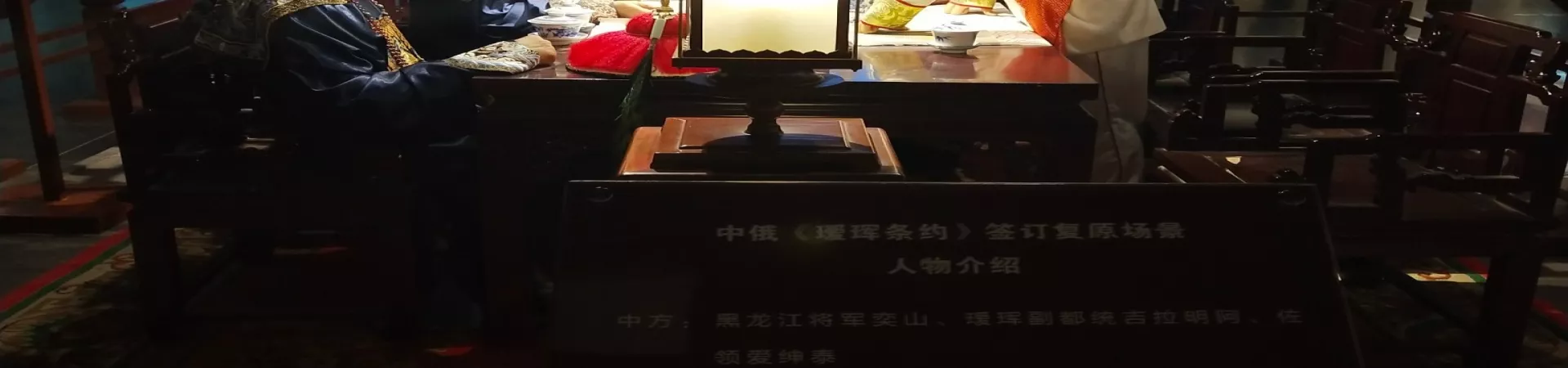
•• The Treaty of Aihui: A Watershed Moment It was here, in 1858, that the unequal Treaty of Aihui was negotiated and signed under duress. This treaty, a stark example of 19th-century imperialist aggression, forced China to cede over 600,000 square kilometers of territory north of the Heilongjiang (Amur) River to Russia and established a condominium over the land east of the Ussuri River. The museum's setting forces visitors to confront the tangible reality of this pivotal, painful moment that dramatically altered the map and destiny of Northeast Asia.
• Exploring the Museum's Narrative The museum's exhibitions are meticulously curated to guide visitors through the multifaceted layers of Sino-Russian eastern relations, extending far beyond the single treaty.
•• Comprehensive Historical Chronology The core exhibition provides a detailed chronological journey. It begins with early interactions, trade, and border delineations during the Ming and Qing dynasties, setting the stage for the escalating tensions. It then delves deeply into the 19th century, a period marked by Russian expansionism and a series of unequal treaties, with the Treaty of Aihui as the centerpiece. The narrative continues through the 20th century, covering the turbulent periods of the Russian Civil War, Japanese occupation, the Sino-Soviet alliance, subsequent border conflicts, and finally, the normalization and modern partnership of recent decades.
•• Thematic Displays and Artifacts Beyond timelines, the museum employs thematic sections and a rich collection of primary sources to give history a human face. 1. Cultural and Ethnographic Insights: Exhibits showcase the lives of the indigenous Hezhe (Nanai) and other ethnic groups who have inhabited this region for centuries, highlighting their unique cultures caught between larger powers. 2. Military and Diplomatic Relics: Visitors can see weapons, uniforms, maps, and diplomatic documents from different eras. Replicas of treaty texts, historical photographs, and personal effects of key figures like the Qing negotiator Yishan bring the past into sharp focus. 3. Archaeological Finds: Artifacts unearthed from the Aihui city site and surrounding areas, including daily utensils, architectural components, and coins, testify to the long-standing Chinese settlement and development in the region.
• Practical Information for Visitors To plan a meaningful visit to this significant site, please note the following details.
•• Opening Hours The museum operates on seasonal schedules: * Summer (June 1 - August 31): 09:10 - 16:00. Last admission is at 16:00. Open Monday through Sunday. * Winter (December 1 - February 28/29): 09:10 - 15:30. Last admission is at 15:30. Open Monday through Sunday. Hours for spring and autumn may vary; it is advisable to confirm ahead of your visit.
•• Admission For the most current information regarding ticket prices, potential discounts (for students, seniors, etc.), and group rates, it is recommended to contact the museum directly or consult official tourism platforms, as policies may be updated.
•• Transportation The museum is located in Aihui District, near Heihe City. The most common access is from Heihe. Visitors can take a long-distance bus from Heihe Passenger Bus Station to Aihui. The journey is relatively short. Upon arrival in Aihui town, the museum site is a key landmark and is accessible by local taxi or on foot from the bus stop.
•• Suggested Duration To fully absorb the historical weight of the location and explore the extensive exhibitions in a thoughtful manner, a visit typically requires between 1 to 3 hours. Allocating sufficient time allows for reflection upon the stories embedded in the landscape and the displays.
A visit to the Aihui History Museum is, therefore, an immersive experience. It is an encounter with the very soil where history was written and rewritten, offering a sobering yet essential understanding of the forces that have defined borders, identities, and international relations along the mighty Heilongjiang River. It stands as a silent guardian of memory, urging contemplation on the lessons of the past.