The Tomb of Duke Bao in Hefei
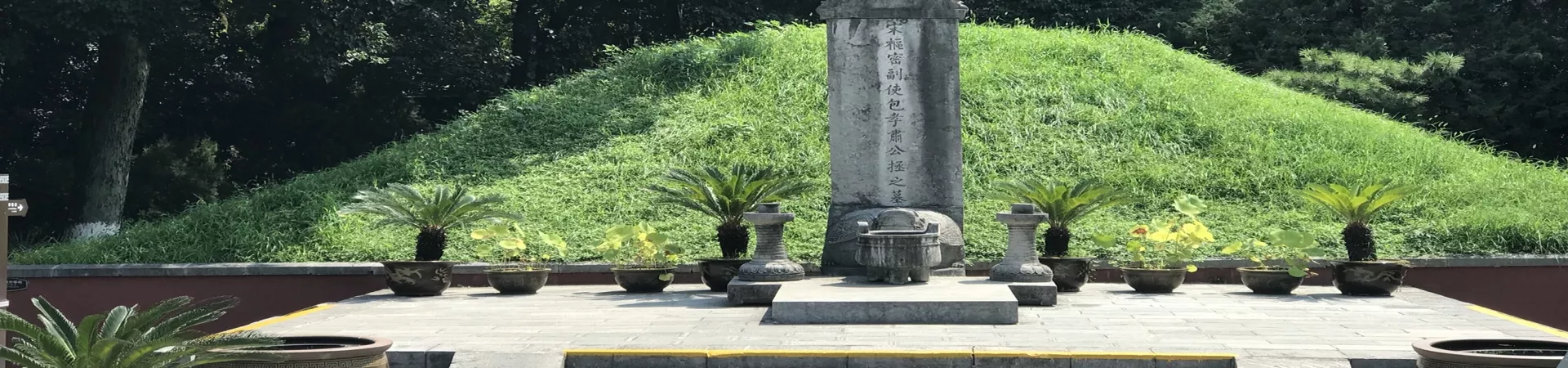
Subtitle: A Journey into History: Exploring the Tomb of Lord Bao in Hefei
1. Introduction to the Site Nestled within the heart of Hefei, Anhui Province, lies a site of profound historical reverence and cultural significance: the Tomb of Lord Bao, or Bao Gong Mu. This hallowed ground, formally known as the Bao Xiaosu Gong Cemetery (包孝肃公墓园), spans approximately three hectares and forms an integral part of the larger Bao Park complex, seamlessly connected to the adjacent Bao Gong Temple. It serves not merely as a final resting place but as a powerful, tangible monument to one of China's most iconic figures of justice and integrity, Bao Zheng (999-1062 AD), popularly venerated as Lord Bao or Bao Qingtian. For visitors, the tomb offers a solemn and immersive journey back to the Northern Song Dynasty, providing deep insights into the era's burial customs, architectural aesthetics, and the enduring legacy of a man whose name became synonymous with law, fairness, and moral fortitude.
2. Historical Context and Significance 2.1 The Life and Death of Bao Zheng Bao Zheng's story is the cornerstone of the site's importance. Born in Hefei, he rose through the ranks of the Northern Song bureaucracy to become a high-ranking official, ultimately serving as the Deputy Military Affairs Commissioner (枢密副使), a position equivalent to the second rank in the imperial court. Renowned for his incorruptibility, sharp intellect, and unwavering commitment to justice, he famously prosecuted corrupt nobles and officials regardless of their status, earning him the affectionate nickname "Bao Qingtian" (Bao the Blue Sky), symbolizing clarity and fairness. He passed away in 1062 AD in Kaifeng, the then capital. In accordance with tradition and his own wishes to return to his homeland, his son-in-law, Wen Xiao, transported his coffin back to Hefei the following year for burial.
2.2 Architectural Design and Symbolism The entire tomb complex is a meticulous recreation of the burial standards prescribed for a second-rank official during the Song Dynasty. This adherence to protocol makes it an invaluable archaeological and historical model. The layout and structures reflect Song-era geomantic principles and social hierarchy, designed to project solemnity and permanence. The grounds are characterized by a serene and dignified atmosphere, enhanced by ancient, towering cypress and pine trees that seem to stand as eternal sentinels, their greenery adding a touch of tranquil life to the solemn stonework.
3. Key Structures and Features of the Tomb Complex 3.1 The Main Tomb Mound The centerpiece of the complex is the main tomb of Bao Zheng itself. It is constructed in the distinct "覆斗型" (fudouxing) or "inverted-bucket" style—a square, pyramidal earth mound that was a typical form for high-ranking officials. This imposing structure symbolizes stability and a connection between earth and heaven.
3.2 The Underground Burial Chamber Beneath the main mound lies the sacred burial chamber. This is the true heart of the site. Here, visitors can find two key artifacts: * The Epitaph Stone: This stone slab, inscribed with the official biography and praises of Bao Zheng's life and virtues, serves as a crucial historical document verifying the tomb's authenticity and detailing his achievements. * The Nanmu Wood Coffin: The inner coffin, crafted from precious golden-silk nanmu wood, is known for its durability and fragrance, reserved for individuals of highest esteem. It is within this coffin that the remains of Bao Zheng were laid to rest.
4. Practical Visitor Information 4.1 Location and Access The Tomb of Lord Bao is situated within Bao Park in Hefei. The most convenient access is via public bus. Visitors can take bus routes 6, 11, 119, 154, or 226 and alight at the "Bao Gong Yuan" (Bao Park) stop. From there, it is a short and well-signposted walk to the tomb entrance.
4.2 Ticketing and Opening Hours * Ticket: Admission to the Tomb of Lord Bao is included in the general entrance ticket for Bao Park. There is no separate fee for the tomb itself. * General Adult Ticket for Bao Park: 50 RMB. * Child Ticket: 25 RMB. * Senior Citizens: Free admission (typically applicable to those over a certain age, usually 70, with valid ID). * Opening Hours: The park operates daily with seasonal variations for last entry. * Summer Hours (June 1 - August 31): 08:00 - 17:30. Last admission at 17:00. * Winter Hours (December 1 - February 28/29): 08:00 - 17:30. Last admission at 16:00.
4.3 Suggested Duration and Contact A thorough visit to the tomb complex, allowing time for contemplation and reading informational displays, typically requires between 1 to 3 hours. For any specific inquiries prior to a visit, the park management can be contacted at 0551-62886107 or 0551-62885950.
Walking through the Tomb of Lord Bao is more than a tourist activity; it is an engagement with a foundational Chinese cultural narrative. The rustle of the ancient pines, the solid geometry of the tomb mound, and the silent presence of the burial chamber collectively weave an atmosphere that transcends time. They invite reflection on the values Bao Zheng embodied—values that have been celebrated in countless operas, stories, and television series for nearly a millennium. The site stands as a testament to the fact that in the Chinese historical consciousness, true justice and integrity are never forgotten but are enshrined in memory, stone, and landscape. It offers a quiet space to appreciate how the legacy of a single individual can shape the moral imagination of a culture, making a visit here both an educational and a profoundly respectful experience.