Mingjiao Temple
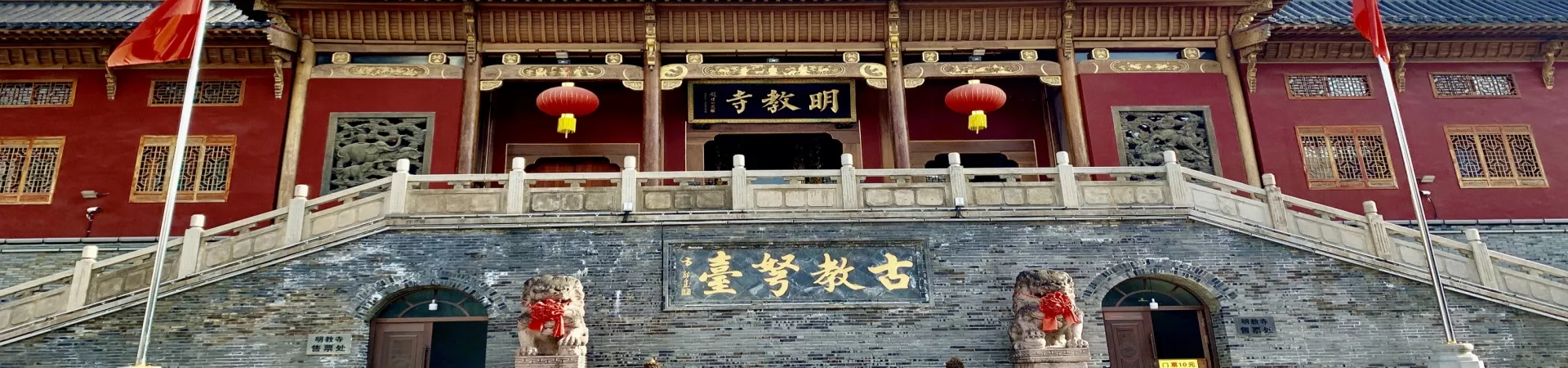
Subtitle: A Journey Through Time: Unveiling the History and Grandeur of Mingjiao Temple
Introduction: A Beacon of Faith Amidst Urban Bustle
Nestled not far from the serene expanse of Xiaoyaojin Park in the heart of Hefei, Anhui Province, stands the Mingjiao Temple, a venerable sanctuary of peace and history. This ancient temple complex offers a profound contrast to the modern city surrounding it, serving as a silent witness to centuries of devotion, destruction, and rebirth. Its story is not merely one of religious significance but a tapestry woven with legends, architectural resilience, and cultural continuity, making it an indispensable destination for any visitor seeking to understand the spiritual and historical layers of Hefei.
1. Historical Legacy: From Iron Buddha to National Treasure
The origins of Mingjiao Temple stretch back to the Southern Dynasties period, specifically during the reign of the Liang Dynasty (502-557 AD), marking it as one of the oldest Buddhist sites in the region. However, the temple's most defining legendary moment occurred during the Tang Dynasty. It is said that a large iron Buddha statue was unearthed on this very site, an event so significant that it earned the temple its initial name: "Tie Fo Si" or the Iron Buddha Temple. This discovery cemented the location's sacred status.
Its long history, unfortunately, has been punctuated by the ravages of war and conflict. The temple structures were repeatedly damaged or destroyed in various upheavals over the centuries. Yet, like a phoenix rising from the ashes, it was consistently rebuilt and restored in successive dynasties, each reconstruction adding a new chapter to its enduring legacy. This cycle of destruction and renewal speaks volumes about the persistent faith of its patrons. In recognition of its immense historical and cultural value, Mingjiao Temple has been designated as a National Key Buddhist Temple in the Han Chinese Region, a prestigious status that underscores its importance as a protected heritage site.
2. Architectural Layout and Grandeur: A Testament to Qing Dynasty Eminence
The current architectural ensemble of Mingjiao Temple, primarily dating from the Qing Dynasty, reflects the period when it was considered the preeminent temple among all monasteries in Hefei. The layout is classic of traditional Chinese Buddhist temple architecture, progressing through a series of halls that guide visitors on a symbolic spiritual journey.
The visit typically begins at the Shan Men (Mountain Gate), the main entrance that separates the mundane world from the sacred precincts. Passing through, one enters the first major hall, the Tian Wang Dian (Hall of the Heavenly Kings). Here, the majestic statue of the laughing Maitreya Buddha welcomes visitors, flanked by the four formidable Heavenly Kings who guard the Buddhist law and the directions of the compass.
The architectural and spiritual climax of the complex is the Da Xiong Bao Dian (Hall of the Great Hero), the main prayer hall. This grand structure houses the primary objects of veneration, often featuring statues of the historical Buddha, Sakyamuni, accompanied by his disciples or other bodhisattvas. The hall's scale and detailed craftsmanship are a clear testament to the temple's historical prominence.
Beyond the main hall, the temple grounds include other significant structures such as the Di Zang Dian (Hall of Ksitigarbha), dedicated to the bodhisattva who vows to save beings in the hell realms. Functional buildings like the Ke Tang (Guest Hall) for receiving visitors and the Liao Fang (Monks' Quarters) complete the self-contained monastic community. The harmonious arrangement of these buildings, with their traditional curved roofs, intricate wooden brackets (dougong), and serene courtyards, creates an atmosphere of profound tranquility.
3. Practical Visitor Information
To fully appreciate the temple, planning your visit with the following practical details in mind is essential.
3.1. Opening Hours and Admission The temple is open to the public daily from 6:30 AM to 6:00 PM, year-round. This schedule allows for visits in the soft morning light or the calm of the afternoon.
Admission is priced at 10 RMB per adult. A compassionate policy is in place for children: those under 1.2 meters in height enjoy free entry, while children between 1.2 and 1.4 meters tall are eligible for a half-price ticket (5 RMB).
3.2. How to Get There Mingjiao Temple is conveniently accessible via Hefei's public bus system. Multiple bus routes stop near the Xiaoyaojin (Xiaoyaojin Park) station, including routes 2, 15, 48, 106, 136, 137, 143, and 155. A short walk from this bus stop will lead you to the temple gates.
For those exploring the city's historical trail, a pleasant and direct 10-minute walk eastward from the Li Hongzhang Former Residence will also bring you to the temple, linking two of Hefei's most important cultural sites in one itinerary.
3.3. Suggested Duration and Experience A comprehensive visit to Mingjiao Temple typically requires 1 to 3 hours. This allows sufficient time to leisurely explore each hall, observe the architectural details, absorb the peaceful ambiance, and perhaps witness or participate in ongoing Buddhist rituals. It is a place that encourages quiet contemplation, inviting visitors to step away from the city's pace and immerse themselves in a space where history feels palpably alive.