Nanxun Town
Subtitle: A Timeless Journey Through Water, Wealth, and Culture
1. Introduction to Nanxun: The Aristocrat of Water Towns
Nestled in the northern part of Zhejiang Province, approximately 120 kilometers from the bustling metropolis of Shanghai and 90 kilometers from the historic city of Hangzhou, lies Nanxun Ancient Town. With a history spanning over 750 years, Nanxun is not merely another picturesque canal town; it is a living museum of China's late imperial and early modern eras. Awarded the prestigious status of a National 5A Tourist Attraction, it also holds titles such as "One of China's Ten Most Charming Towns" and "A Famous Historical and Cultural Town of China." What sets Nanxun apart is its unique legacy as a hub of immense wealth and sophisticated culture during the Ming and Qing dynasties, born from the lucrative silk trade. This prosperity funded the construction of stunning estates, libraries, and mansions that blend Chinese and Western architectural styles seamlessly, offering a visitor experience that is as intellectually enriching as it is visually captivating. Here, the serene poetry of classic Jiangnan water towns—with its stone bridges, meandering canals, and whitewashed walls—harmonizes with a profound historical narrative of commerce, scholarship, and global exchange.
2. Historical Significance and Cultural Heritage
2.1. A Legacy Forged by Silk Nanxun's rise to prominence is intrinsically linked to the silk industry. From the 15th century onwards, local merchants, known as the "Silk Lords," built vast fortunes by producing and trading high-quality silk. This wealth was not hoarded but channeled into education, philanthropy, and grand architectural projects, cultivating a unique urban culture that valued both commerce and Confucian ideals. The town became a center for literati, artists, and collectors.
2.2. Architectural Fusion: East Meets West The most tangible evidence of Nanxun's historical openness and prosperity is its architecture. As the Silk Lords made contact with Western traders in Shanghai, they incorporated European design elements into their traditional Jiangnan homes. This resulted in a distinctive style where ornate Chinese wood carvings and tranquil courtyards coexist with vibrant stained-glass windows, Romanesque columns, and French floor tiles. This fusion symbolizes a pivotal moment in China's encounter with the wider world.
3. Key Attractions and Landmarks
3.1. Grand Estates and Gardens * Xiaolianzhuang (Little Lotus Manor): The former retreat of the wealthy Liu family, this is a masterpiece of classical Chinese garden design. Centered around a serene lotus pond, it features elegant pavilions, rockeries, and ancient trees. The adjacent Jiaye Tang Library is a world-renowned private library, housing a vast collection of ancient wood-block-printed books in a beautifully serene compound. * Zhang Shiming's Former Residence: Perhaps the finest example of architectural fusion. This colossal compound seamlessly integrates traditional Chinese halls with a stunning Western-style ballroom featuring stained glass, gas lighting fixtures, and imported floor tiles. It vividly showcases the luxurious lifestyle and cosmopolitan tastes of Nanxun's merchant elite. * Liu's Staircase House (刘氏梯号): Also known as "Chongde Tang," this red-brick mansion features a striking European facade hiding behind a traditional Chinese entrance. Its interior courtyards and blend of styles offer another fascinating glimpse into the era's cultural synthesis.
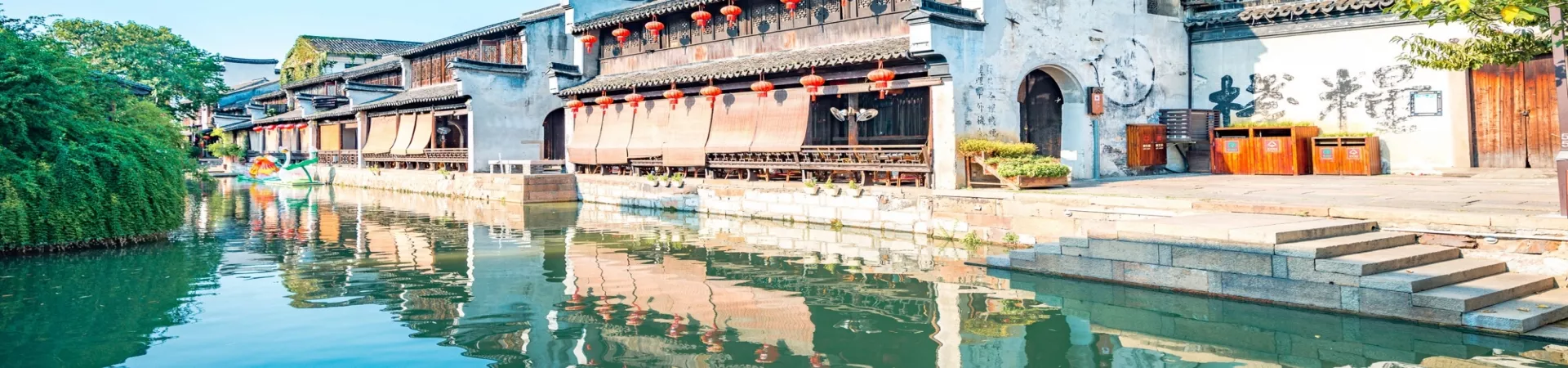
3.2. The Waterfront: Baijian Lou No visit is complete without a stroll along Baijian Lou (Hundred Rooms). This remarkable, continuous line of 100 riverfront houses was built along the old canal to accommodate the servants of a wedding procession centuries ago. With its unified architectural style, long verandas, arched colonnades, and stone bridges reflected in the calm water, it presents one of the most iconic and photogenic scenes of water town life, especially enchanting at dawn or dusk.
3.3. Other Notable Sites * Zhang Jingjiang's Former Residence: Dedicated to a prominent revolutionary financier who supported Sun Yat-sen, this residence offers insights into modern Chinese political history. * Ancient Stone Bridges: Bridges like Tongjin and Guanghui are not just crossings but historical landmarks, each with its own story and artistic design. * The Silk Workshops: Several small museums and workshops demonstrate the traditional process of silk reeling and weaving, connecting visitors directly to the source of Nanxun's historical wealth.
4. Practical Visitor Information
4.1. Transportation: How to Get There Nanxun is well-connected, though reaching it typically involves a combination of train and bus. * By Train: The nearest major railway stations are in Huzhou and Jiaxing. * From Huzhou Railway Station: Take city bus 101 (direct) or a combination of bus 21 and 101A to Taian Road Station in Nanxun. Alternatively, take a taxi (approx. 45 mins) or a shuttle bus from Huzhou's North Bus Station (frequent departures, ~1 hour, ~8 RMB). * From Jiaxing Railway Station: Take a local bus (e.g., No. 22, 4) to Jiaxing North Bus Station, then catch a direct bus to Nanxun (approx. 57 km). * Local Transport Within Town: The core scenic area is pedestrian-friendly. Human-pulled rickshaws are a charming and authentic way to travel short distances (approx. 3-4 RMB from Taian Road Station to Xiaolianzhuang). Taxis are also available for longer distances within the town.
4.2. Tickets and Opening Hours * Main Entrance Ticket: A composite ticket costs 80 RMB for adults and grants access to several key sites, including Xiaolianzhuang, Jiaye Tang, and Zhang Shiming's Former Residence. * Individual Attraction Tickets: If you prefer to visit only select sites, individual tickets are available (e.g., Zhang Shiming's House: 20 RMB, Liu's Staircase House: 20 RMB, Zhang Jingjiang's Residence: 20 RMB). * Operating Hours: The town is generally open from 08:00 to 17:30 (Summer) and 08:00 to 16:30 (Winter). Hours for individual mansions may vary slightly.
4.3. Suggested Itinerary and Tips * Time Recommended: A full day (8-10 hours) is ideal to explore the major sites at a leisurely pace, enjoy a local meal, and soak in the atmosphere. * Best Time to Visit: Spring (April-May) and Autumn (September-November) offer pleasant weather. Early mornings on weekdays are the least crowded. * Local Cuisine: Don't miss Nanxun's specialties, such as Xunzhen (braised pork), Xun tofu, Zhusun (bamboo shoot dishes), and various freshwater fish. Enjoy a meal at a waterside restaurant. * Contact: For the latest information, you can call the scenic area at 0572-3016999 or 0572-3018077.
A visit to Nanxun is a journey through layers of time—from the quiet rhythms of canal life to the opulent halls of merchant princes who shaped history. It is a place where every cobblestone, every carved beam, and every reflection in the water tells a story of cultural elegance and historical convergence.