Hu Xueyan’s Former Residence
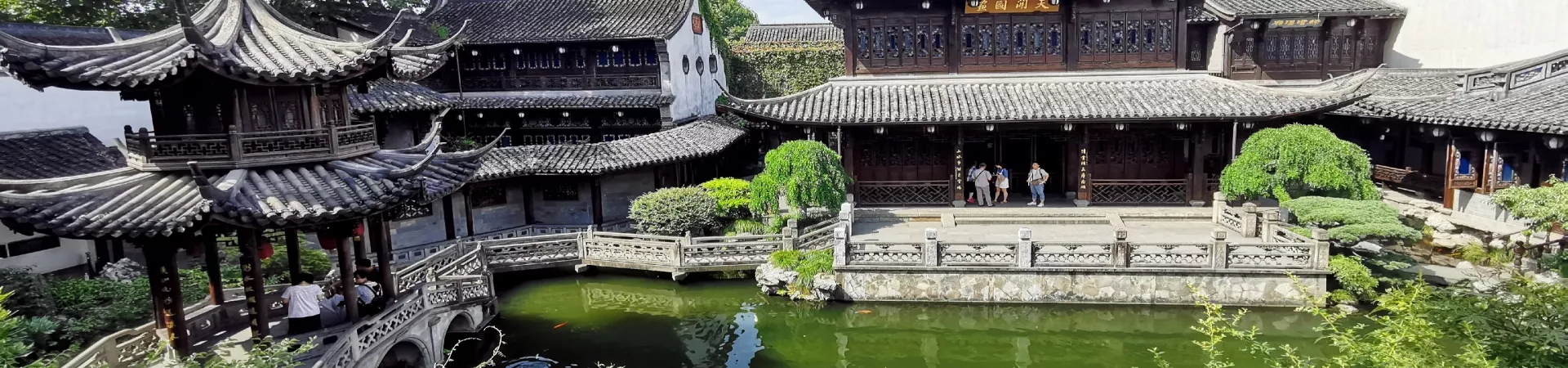
Subtitle: A Journey Through the Opulent World of a Late Qing Dynasty Tycoon
Introduction: The Legacy of Hu Xueyan Hu Xueyan's Former Residence stands as a monumental testament to the wealth, power, and sophisticated taste of one of the most influential merchants in late 19th-century China. Hu Xueyan, often celebrated as the richest man of the late Qing Dynasty, built this estate not merely as a home but as a profound statement of his success and cultural aspirations. The complex is renowned for its ingenious and lavish fusion of Chinese and Western architectural styles, creating a palatial Jiangnan garden residence that is frequently hailed as the "Foremost Mansion of a Chinese Magnate in the Late Qing Period." Visiting this site offers more than a historical tour; it is an immersive experience into the world of extreme luxury, artistic patronage, and strategic brilliance that defined an era of significant social and economic transition in China.
Architectural Mastery and Design Philosophy The architectural genius of the residence lies in its seamless integration of diverse elements into a harmonious whole. The layout is a masterpiece of classical Chinese garden design, adhering to principles that emphasize natural beauty, poetic allusion, and the creation of miniature landscapes. Every structure, pathway, and vista was meticulously planned to evoke a sense of wonder and tranquility.
The Central Jewel: Zhi Garden At the heart of the residential complex lies the Zhi Garden (芝园), the principal architectural group and the crowning glory of the estate. In its heyday, it was poetically praised by contemporaries as having "snatched a piece of the Feilai Feng peak" and being "a condensed version of the Lion Grove Garden." This high praise directly links it to two of China's most famous natural and landscaped wonders, underscoring its exceptional design. The garden is a microcosm of the Jiangnan water-and-rock aesthetic, featuring an exquisite arrangement of pavilions, towers, winding corridors, hidden passageways ("ming lang an nong"), delicate bridges, and serene ponds. The design encourages leisurely exploration, with each turn offering a new, carefully composed scene.
A Geological Marvel: The Artificial Cave Among its many splendors, the artificial rockery and cave system within the Zhi Garden hold particular significance. This sprawling construct is recognized as the largest existing man-made溶洞 (solutional cave) in China. It is not merely a pile of rocks but a complex, climbable landscape that mimics the eroded limestone caves found in nature, complete with stalactite-like formations, narrow passages, and hidden grottoes. It represents the pinnacle of the Chinese garden art of "borrowing scenery" and creating idealized nature, showcasing the immense resources and ambition Hu Xueyan commanded.
Artistic Treasures and Cultural Artifacts Beyond its structural beauty, the residence served as a private museum for Hu Xueyan's formidable collection of art and craftsmanship, reflecting his role as a connoisseur and his desire to cultivate a literati image.
Collection of Stone Carvings Dispersed throughout the gardens and buildings, visitors can find precious stone carvings and stele inscribed with calligraphy by some of the most revered masters from the Ming and Qing dynasties. This includes works by Dong Qichang, Zheng Banqiao, Tang Bohu (Tang Yin), and Wen Zhengming. These artifacts transform the estate's walls and pavements into an open-air gallery, blending literary and artistic excellence with the physical landscape.
Rare Redwood Official Sedans Inside the mansion's exhibition halls, two exceptionally rare redwood official sedans are on display. These ornate palanquins are far more than transportation vehicles; they are potent symbols of status and official privilege in imperial China. Their exquisite craftsmanship, featuring detailed carvings and robust construction, offers a tangible connection to the rituals and social hierarchies of the period, illustrating the access to official circles that Hu Xueyan's wealth afforded him.
Visitor Information
Location and Transportation The residence is located in the historic center of Hangzhou, near the ancient Drum Tower. * By Bus: Multiple public bus lines provide convenient access. Visitors can take routes 327, 34, 71, or 127 and alight at the "胡雪岩故居 (Hu Xueyan Guju)" bus stop. The entrance is a short walk from the stop.
Admission Details * General Admission: 20 RMB per adult. * Concession Tickets (Half-price): Available for: * Seniors aged 60-69 (with valid ID). * Full-time undergraduate students and below from Chinese institutions (with valid student ID). * Minors aged 6 (not inclusive) to 18 (inclusive). * Children with height between 1.2m (not inclusive) and 1.5m (inclusive). * Free Admission: Granted to: * Children with height of 1.2m and below, or aged 6 and below. * Seniors aged 70 and above (with valid ID). * Active military personnel, retired veterans, individuals with disabilities, teachers from Zhejiang province with over 30 years of service, family members of military martyrs, and personnel from the public security and fire rescue systems (with valid credentials).
Operating Hours * The site is open daily from 08:00 to 17:00. * Note: It is advisable to check for any last-minute changes, as specific opening times are subject to the management's discretion. Visitors should confirm the schedule prior to their visit, especially during public holidays or special events.