Broken bridge and residual snow
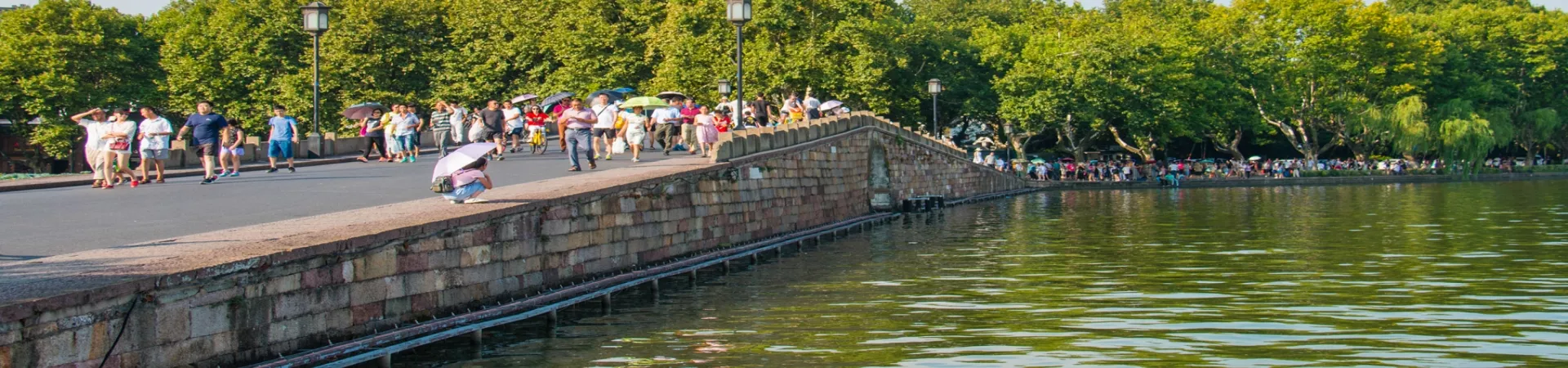
Subtitle: A Bridge Between Legend and Landscape: The Enduring Allure of Broken Bridge in Winter
1. Introduction: A Portal to Romance and Natural Artistry
Nestled at the eastern end of the famed Bai Causeway, the Broken Bridge (Duàn Qiáo) is far more than a mere stone arch over the waters of West Lake. It stands as one of the most iconic and poetically named vistas in Hangzhou, a perfect synthesis of human legend, classical aesthetics, and the transformative power of nature. For the visitor, it serves not just as a scenic point but as a living storybook and a strategic gateway. Its fame rests on two pillars: a timeless romantic tale that has captivated hearts for centuries, and a singular natural phenomenon that defines the essence of a West Lake winter. Approaching the bridge, one steps into a landscape painting where history, folklore, and seasonal beauty are intricately woven together.
2. The Legend: Where Myth Meets Mortal Stone
2.1. The Eternal Encounter of Xu Xian and Bai Niangzi The soul of the Broken Bridge is inextricably linked to one of China's most beloved folk tales, The Legend of the White Snake. This ancient story tells of a gentle scholar, Xu Xian, and Bai Suzhen, a powerful snake spirit who took human form. According to the legend, it was on this very bridge that their fates intertwined—a chance meeting during a rain shower that blossomed into a deep and tragic love story. Their tale, filled with magic, devotion, and defiance against rigid celestial laws, has been retold through opera, television series, and literature for generations.
2.2. Infusing the Architecture with Narrative This narrative has permanently imbued the bridge's stones with an aura of romance and poignant destiny. For many Chinese visitors, walking across the bridge is a pilgrimage into that story, a chance to tread the same path as the legendary lovers. The bridge's name, "Broken," thus takes on a dual meaning: while it references the visual winter phenomenon, it also subtly echoes the heartbreak and separation the lovers endured, making their eventual reunion here all the more powerful. It transforms the structure from a simple engineering feat into a symbol of enduring love and serendipitous connection.
3. The Phenomenon: Deciphering the "Broken Bridge with Lingering Snow"
3.1. The Scientific Poetry of a Winter's Day Beyond legend, the bridge earns its name and its top billing among the "Ten Views of West Lake" from a breathtaking seasonal spectacle. The key to understanding "Duàn Qiáo Cán Xuě" (断桥残雪) lies in its unique orientation and construction. The bridge is aligned east-west, with its northern side (the yin side) shaded and its southern side (the yang side) exposed to the sun.
3.2. The Illusion of the Broken Bridge On a day following a light winter snowfall, as the sun rises and temperatures climb, this orientation creates a magical disparity. The snow on the sunny southern side melts rapidly, revealing the dark grey stone of the bridge's arch. Meanwhile, the snow on the shaded northern side lingers, maintaining a pristine white blanket. When observed from a high vantage point on nearby Baoshi Hill, this contrast creates a stunning visual illusion: the bridge appears to be broken off in the middle, with one half seemingly vanished into the lake, leaving only a white, snowy segment. This transient masterpiece of nature—where the bridge is "broken" yet intact, where snow is both present and absent—epitomizes the subtle, poetic beauty that Chinese scholars and artists have celebrated for a millennium.
4. The Practical Guide: Experiencing the Bridge as a Traveler
4.1. Strategic Location and Itinerary Hub From a practical standpoint, the Broken Bridge is an ideal starting point for exploring West Lake. Stepping onto the bridge marks the beginning of the picturesque Bai Causeway, a man-made dike lined with willow and peach trees that stretches gracefully toward Solitary Hill (Gū Shān). This makes for a perfect walking itinerary. From here, visitors can stroll along the causeway, visiting sites like the Zhejiang Provincial Museum, the Zhongshan Park, and the historic Louwailou Restaurant, before continuing to other lake landmarks.
4.2. Essential Visitor Information
4.2.1. Transportation and Access The bridge is easily accessible by public transport, with several bus options bringing visitors close to its approaches. Key bus routes include: * Bus 118, 277, or 27: Alight at Geling (葛岭) Bus Stop and walk a short distance. * Bus 27: A dedicated "Geling Duàn Qiáo Cán Xuě (葛岭断桥残雪)" Bus Stop provides direct access. * Tourist & Scenic Buses: The romantic WE1314 route, the Digital Tourism Line 5, or the Bai Causeway to Leifeng Pagoda Special Line stop at Bai Causeway (白堤) Bus Stop.
Given its centrality, the bridge is also a convenient reach by taxi or ride-hailing services from anywhere in central Hangzhou.
4.2.2. Opening Hours and Visit Duration A significant advantage for visitors is its 24/7 open access, year-round. There are no gates or tickets, allowing for freedom to visit at any hour. A visit can be as brief as 15-30 minutes for a quick crossing and photo opportunity, or it can be extended into a longer contemplation, especially during the serene early morning or the beautifully lit evening. To fully appreciate its setting and begin the walk along Bai Causeway, allocating approximately one hour is recommended.
4.2.3. Best Time for the "Lingering Snow" View Witnessing the iconic "residual snow" scene requires specific conditions and a bit of luck. The ideal time is during or shortly after a snowfall in the depths of winter (typically December through February). The best viewing occurs in the morning after a night of light snow, before the afternoon sun melts the effect entirely. For the classic panoramic photo, make your way to the viewing platforms on Baoshi Hill (宝石山) to the north of the bridge.