Qingyan ancient town
Subtitle: A Journey Through Time in Guizhou's Well-Preserved Ming Dynasty Garrison Town
1. Introduction to Qingyan Ancient Town Nestled approximately 30 kilometers south of Guiyang, the capital of Guizhou Province, Qingyan Ancient Town stands as a magnificent relic of China's imperial past. Founded in 1378 during the Ming Dynasty, it was originally established as a military garrison to control local tribes and secure trade routes. Over the centuries, it evolved from a strategic fortress into a prosperous commercial and cultural hub. Today, it is celebrated as one of the "Four Great Ancient Towns of Guizhou," alongside Zhenyuan, Bing'an, and Longli, renowned for its exceptional state of preservation. The town offers visitors a captivating immersion into history, where ancient stone-paved lanes whisper tales of the Ming and Qing dynasties, and a unique cultural tapestry unfolds at every turn.
2. Historical Significance and Architectural Heritage 2.1. A Garrison Town's Legacy Qingyan's history is intrinsically linked to its military origins. Its very layout and formidable structures speak of its defensive purpose. The town was strategically built following the natural contours of the hills, a design principle that enhanced its defensibility and created its distinctive cascading appearance.
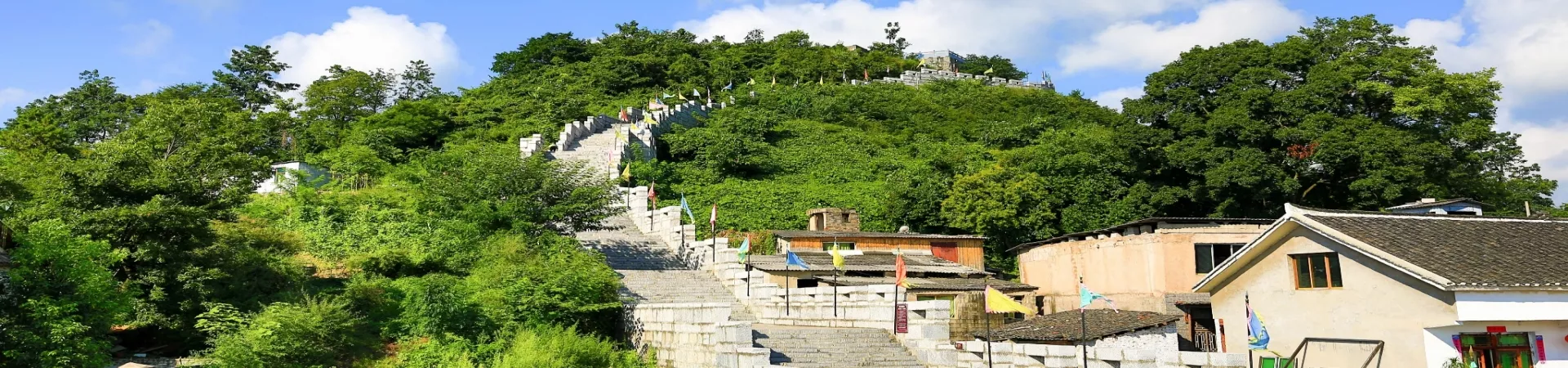
2.2. Architectural Mastery in Stone and Wood The town is an open-air museum of Ming and Qing architecture. A massive,蜿蜒 (wānyán) circuit of stone walls, constructed with locally quarried blocks, snakes along the ridges and cliffs, punctuated by four imposing gates facing the cardinal directions: East, West, South, and North. Within these walls, the town's architecture showcases exquisite craftsmanship. Intricate wood carvings adorn temple eaves, window lattices, and door frames of traditional courtyard homes, depicting mythological scenes, flora, and fauna with remarkable detail. Complementing these are the sophisticated stone carvings found on gate piers, steles, and archways, demonstrating the high artistic achievement of the era. This seamless integration of military might and civilian artistry forms the core of Qingyan's charm.
3. Exploring the Town's Unique Landscapes and Culture 3.1. Back Lane: The Soul of Qingyan Among its many alleys, Back Lane (Bei Jie) is undoubtedly the most iconic and photogenic. This narrow, serene pathway is defined by its enchanting walls, built entirely from layered slate stones. These walls, weathered by centuries, glow with a bluish hue in certain lights, creating a mystical atmosphere. The lane quietly follows the natural rise and fall of the hill, offering peaceful solitude and countless opportunities for photography, making it a must-visit for every traveler.
3.2. A Remarkable Confluence of Beliefs Qingyan presents a fascinating and rare example of religious harmony. Within its small confines, four major world religions—Buddhism, Taoism, Catholicism, and Christianity—have historically coexisted and continue to do so. Visitors can explore serene Buddhist temples and Taoist shrines nestled beside more unexpected sights: a historic Catholic church and a Christian church. This unique coexistence reflects the town's history as a commercial center open to external influences and ideas along ancient trade paths.
4. Practical Visitor Information 4.1. Admission Details A ticketing system regulates entry into the main historic preservation area of the town. * Standard Ticket: 60 RMB. This includes access to the ancient town streets, the ancient city walls, and key historic sites such as Ciyun Temple, Zhao Gong Ancestral Hall, Longquan Temple, the Former Residence of the Number One Scholar (Zhuangyuan), and the former dwelling of Premier Zhou Enlai's father. * Electric Cart Ticket: An optional 20 RMB for a cart ride within the town. * Discounted Tickets: Half-price tickets are available for minors (14-18 years) and students with valid ID. Special discounted rates of 20 RMB for Guizhou province residents and 10 RMB for Guiyang city residents apply during certain periods (e.g., Oct 9-Dec 31). * Free Admission: Policy covers children under 14 (with a paying adult), seniors over 70, military personnel in active service, disabled visitors, firefighters, and other eligible groups as listed.
4.2. Opening Hours and Suggested Duration The town is generally open from 9:00 AM to 5:00 PM daily throughout the year. To fully appreciate the architecture, explore the side alleys, visit a few key buildings, and enjoy local snacks, a visit of at least 3 hours is recommended. A half-day allows for a more leisurely and comprehensive experience.
4.3. Transportation Guide Reaching Qingyan from Guiyang is straightforward: * By Bus: Travelers can take a direct bus heading from Guiyang's main long-distance bus station towards Huishui and alight at Qingyan. Alternatively, from the Huaguoyuan Wetland Park bus stop in Guiyang, board public bus route 210, which terminates at Qingyan. * By Taxi/Ride-hailing: A taxi or ride-hailing service from downtown Guiyang offers a more direct and flexible, though more expensive, option, with a travel time of approximately 45 minutes to an hour depending on traffic. Upon arrival at the town's bus station or parking area, the entrance to the ancient town core is within a short walking distance.