Huaxi Yelang Valley
Subtitle: A Journey into a Whimsical Stone Kingdom: Exploring Huaxi Yelang Valley in Guiyang
1. Introduction: The Enigmatic Allure of Yelang Valley Nestled within the verdant, karst-studded landscape of Huaxi District in Guiyang, the capital of China's Guizhou province, lies a place that seems plucked from the pages of a myth. This is Huaxi Yelang Valley (花溪夜郎谷), a sprawling, immersive art park and a profound testament to one man's visionary dedication. Far from a conventional historical site or a typical natural park, Yelang Valley is a modern artistic interpretation of the ancient and mysterious Yelang culture, brought to life through stone, pottery, and relentless creativity. It offers visitors a unique, surreal experience—a labyrinth of fantastical stone sculptures, tranquil waterways, and rustic bridges that feels simultaneously ancient and avant-garde. It is a must-visit destination for those seeking art, photography, folklore, and a profound sense of wonder off the beaten tourist path.
2. The Genesis: An Artist's Lifelong Dream 2.1 The Visionary: Song Peilun The soul of Yelang Valley is Professor Song Peilun, a renowned Chinese artist and scholar. After spending decades abroad, he returned to his native Guizhou with a dream: to resurrect and pay homage to the ancient Yelang Kingdom, a mysterious tribal confederation that flourished in this region over 2,000 years ago. With his own funds and immense personal effort, he began transforming a deserted, rocky river valley into his monumental artwork.
2.2 Philosophy and Construction Rejecting modern machinery, Song, along with local villagers, employed traditional methods. For over twenty years, they manually quarried local stone, shaped clay, and used discarded tiles and ceramic fragments to construct the valley's features. This process itself is a core part of the park's philosophy—a harmonious dialogue between human artistry and the natural environment, emphasizing sustainability and cultural memory. Every sculpture, wall, and tower bears the mark of handcrafted authenticity.
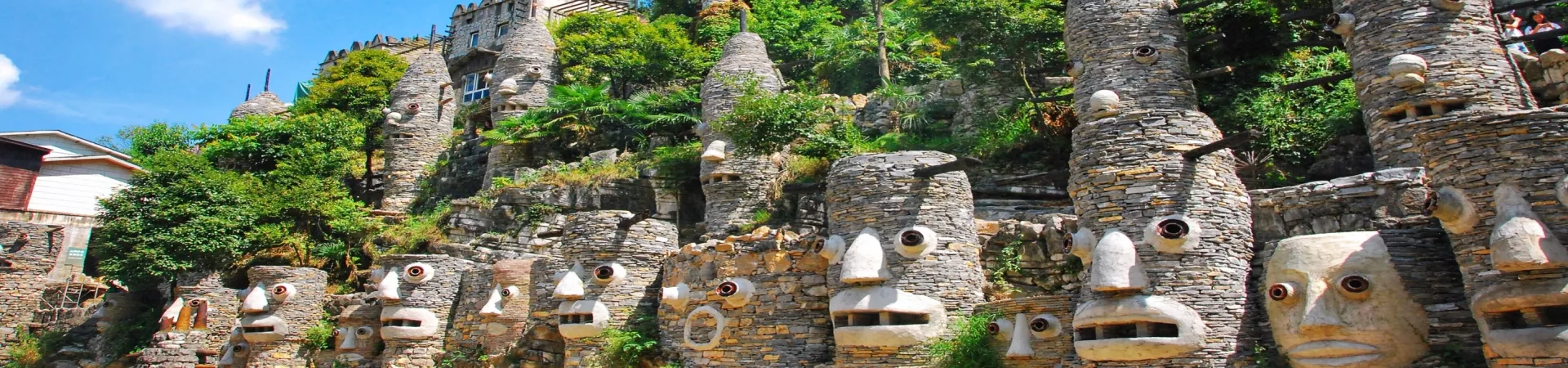
3. Navigating the Stone Wonderland: Key Features and Layout 3.1 The Grand Entrance and Totemic Forest The journey begins by descending into the valley, leaving the modern world behind. Visitors are immediately greeted by a forest of towering stone totems. These pillars, some reaching several meters high, are carved with enigmatic, exaggerated faces inspired by the masks and legends of the Yelang culture and local ethnic Miao and Dong traditions. Their solemn yet playful expressions set the tone for the entire exploration.
3.2 The Central Valley and Water Systems The heart of the park is the lush valley carved by a gentle stream. Meandering paths lead across charming stone bridges and stepping stones. The water mirrors the strange and wonderful stone figures that line its banks, doubling the visual impact. The sound of flowing water provides a constant, soothing soundtrack, enhancing the valley's mystical atmosphere.
3.3 Architectural Highlights: Towers, Theaters, and Workshops * The Stone Castle and Towers: Perched on the valley slopes are rustic stone structures resembling ancient castle ruins and watchtowers. They are not replicas but artistic evocations, offering fantastic vantage points for panoramic views of the entire sculpture garden. * The Open-Air Theater: One of the most impressive architectural feats is a semi-circular, stepped amphitheater built entirely into the hillside using stone and ceramic fragments. It hosts occasional cultural performances, blending modern artistic expression with its primordial backdrop. * The Pottery Workshop: Demonstrating the ongoing creative spirit, a working pottery studio on-site showcases the ceramic arts integral to the valley's construction. Visitors can sometimes see artisans at work, continuing the tradition of transforming clay into art.
4. Practical Information for the Visit 4.1 Location and Access Huaxi Yelang Valley is located approximately 20 kilometers south of central Guiyang. The most convenient way to reach it is by taxi or ride-hailing service (a 40-50 minute drive). Alternatively, tourists can take public bus routes to the Huaxi University Town area and then transfer to a local taxi for the final short distance.
4.2 Admission and Opening Hours The park maintains a simple and affordable access policy. * Ticket Price: A standard admission ticket is 20 RMB per person. * Operating Schedule: The valley is open daily from 8:30 AM to 7:00 PM. It is advisable to allocate at least 2-3 hours for a thorough, unhurried exploration. The light in the late afternoon often provides excellent conditions for photography.
4.3 Tips for an Enhanced Experience * Footwear: Wear sturdy, comfortable shoes with good grip, as the paths involve walking on natural stone and uneven surfaces. * Photography: The valley is a photographer's paradise. Every corner offers a unique composition. The interplay of light and shadow through the totems is particularly striking. * Mindset: Approach the visit with an open mind. This is not a traditional museum with plaques but an emotional and sensory experience. Let your imagination engage with the sculptures and the landscape. * Context: Reading briefly about the ancient Yelang Kingdom or Professor Song's story beforehand will deeply enrich your appreciation of the site's significance.
Huaxi Yelang Valley stands as a powerful reminder of the intersection between individual passion, cultural heritage, and artistic expression. It is a place that challenges conventional design, inviting visitors to step into a living sculpture, ponder a lost civilization, and marvel at what one determined artist can create from stone and vision.