Lingxian Wenbo Yuan
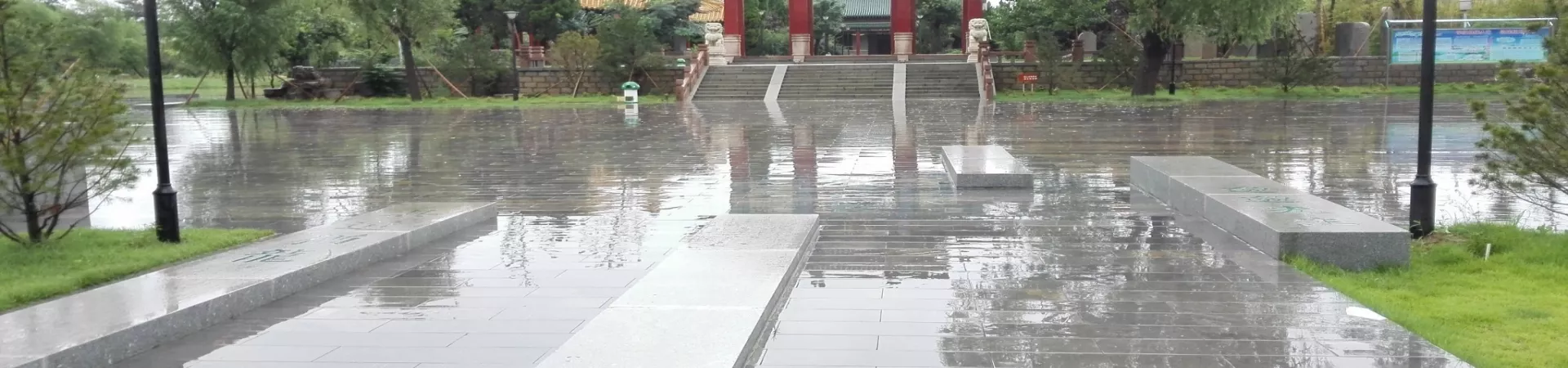
Subtitle: A Journey Through Time: Exploring the Cultural Heritage of Ling County's Wenboyuan
1. Introduction: A Portal to History in a Tranquil Park
Nestled within the serene expanse of the Ling County People's Park, the Ling County Wenboyuan (Ling County Cultural Museum Garden) stands as a quiet yet profound testament to over a millennium of Chinese cultural and artistic achievement. Located precisely 200 meters east of the southward direction from the intersection of Lingzhou Road and Yancheng Road, this cultural enclave, established in 1985, offers visitors a unique opportunity to encounter history not just behind glass, but integrated into a peaceful garden setting. While the complex itself houses several traditional structures, its heart and soul, and the primary reason for its national significance, is a single, magnificent stone stele. This artifact transforms the garden from a mere collection of buildings into a sacred space for admirers of history, literature, and calligraphy, preserving a tangible link to two of China's most revered ancient figures.
2. The Crown Jewel: The "Yanzi Stele" or "Portrait Eulogy Stele of Dongfang Shuo"
2.1. Historical and Artistic Significance The centerpiece of the Wenboyuan is the Portrait Eulogy Stele of Dongfang Shuo, more commonly known as the "Yanzi Stele." Classified as a National Grade One Cultural Relic, this stele is a masterpiece that bridges three dynasties. Its origins date back to the 13th year of the Tianbao era of the Tang Dynasty (754 AD), when it was originally erected at a temple dedicated to Dongfang Shuo in the ancient Yanci City (present-day Shentou Town, Ling County). Dongfang Shuo was a witty and wise courtier of the Western Han Dynasty, later immortalized as a Daoist immortal and a figure of folk legend. The stele's text, a eulogy praising Dongfang Shuo's character and virtues, was composed by Xiahou Zhan, a renowned literary scholar of the Western Jin Dynasty.
2.2. The Calligraphic Masterpiece of Yan Zhenqing However, the stele's paramount fame derives from the hand that inscribed it. The calligraphy is the work of Yan Zhenqing, a paramount master of Chinese calligraphy from the Tang Dynasty. Yan's style, known as "Yan楷" (Yan-style regular script), is celebrated for its robust, upright, majestic, and unadorned aesthetic, which came to symbolize moral integrity and strength. This stele represents a mature example of his groundbreaking style. The main body of the text consists of 1,073 large, powerful regular script characters, each about six centimeters in height, conveying a sense of monumental solidity and grace.
2.3. Architectural and Epigraphic Details The stele is a four-sided pillar, each face bearing inscriptions. The front (碑阳) and back (碑阴) each contain fifteen lines of text, while the left and right sides feature three lines each, with thirteen characters per line. The artistic value is further enhanced by the script variations on the stele's top, or "forehead." The forehead on the front side is inscribed in Seal script (篆书), an ancient and elegant form, while the back forehead is in Clerical script (隶书), with characters reaching ten centimeters in height. This combination of scripts on a single monument showcases the evolution and beauty of Chinese writing. Having survived for over 1,200 years, the stele was moved to the county seat during the Yuan Dynasty and now resides within the Wenboyuan for its protection.
3. The Garden Complex: Setting for a Treasure
3.1. Structures and Layout To house this invaluable relic appropriately, the Wenboyuan features a specially constructed sealed stele pavilion. This protective structure allows visitors to appreciate the stele in a controlled environment, safeguarding it from the elements while permitting close viewing. The garden compound also includes other traditional architectural elements such as the Yan Gong Shrine (颜公祠), a hall dedicated to honoring the memory of the great calligrapher Yan Zhenqing. This shrine fosters a space for reflection on the artist's enduring legacy. The integration of these structures within the landscaped grounds of the People's Park creates a harmonious environment where culture and nature coexist, inviting contemplation.
3.2. Visitor Experience and Atmosphere A visit to the Wenboyuan is as much about atmosphere as it is about archaeology. The location within the public park means the approach is through greenery and leisure spaces, gradually building a sense of anticipation. The focus is intensely centered on the appreciation of a single, supreme artifact. The experience is one of quiet reverence, encouraging visitors to slow down and ponder the weight of history carried by the stone—the literary words from the Jin, the transcendent brushwork from the Tang, and the story of a Han Dynasty personality, all coalescing in one spot.
4. Practical Information for Visitors
4.1. Access and Location The Wenboyuan is conveniently situated inside the Ling County People's Park, with its main access point being 200 meters east of the southern road from the Lingzhou Road and Yancheng Road intersection. This central location within the county makes it an accessible cultural destination.
4.2. Important Visitor Note Prospective visitors should take note of a crucial detail regarding access. Currently, the interior buildings of the Wenboyuan, including the sealed stele pavilion, are not open for public entry. The complex and its treasured stele can only be viewed from the exterior. This limitation means that while one can admire the traditional architecture of the pavilion and shrine buildings from outside, and gain a sense of the stele's setting, the closest detailed inspection of the stele's calligraphy is not possible at this time. It is advisable for visitors to manage expectations accordingly and appreciate the site for its historical ambiance and architectural beauty within the pleasant park surroundings.