Daxian Zhenfoshan
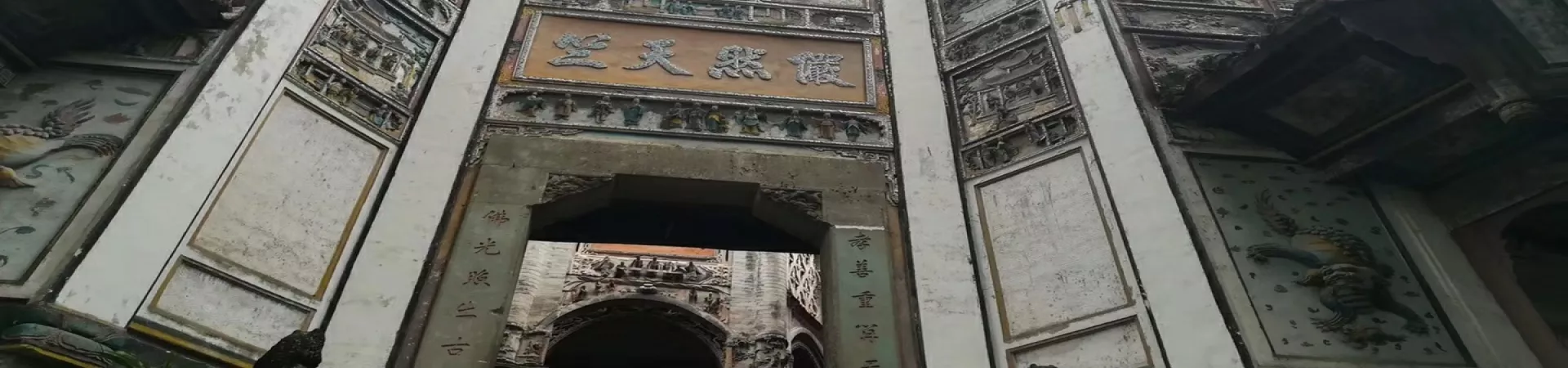
Subtitle: A Sacred Mountain of Filial Piety and Natural Splendor in Dazhou
1. Introduction and Historical Legend
Nestled in Daxian County, Dazhou, Sichuan Province, Zhenfo Mountain (True Buddha Mountain) stands as a unique and revered destination where profound Buddhist culture intertwines with captivating natural beauty. The mountain’s essence is deeply rooted in a captivating local legend that transcends typical religious origins, centering on the virtues of filial piety and compassion.
The story recounts that Sakyamuni Buddha, the historical Buddha, incarnated himself on Earth as a mortal named Jiang Dehua. From childhood, Jiang was a paragon of filial devotion and kindness. In extraordinary acts of sacrifice, he is said to have cut flesh from his own thigh five times to prepare medicinal soups for his ailing parents, a practice known as "gegu liaogin" symbolizing ultimate devotion. His compassion extended beyond his family, as he also used his knowledge to treat and heal local townspeople. Following these acts, he renounced worldly life, became a monk, and established a Buddhist hall on this very mountain. The temple he built was named "Dehua Temple" in his honor. As tales of his miraculous deeds and virtuous life spread, the site gained fame across the region, attracting pilgrims and evolving into a major center of worship with ever-thriving incense fires. This foundational myth of Jiang Dehua establishes Zhenfo Mountain not just as a religious site, but as a monument to the core Confucian-Buddhist values of filial respect and altruism.
2. Cultural and Architectural Heritage: The Temple Complex
The mountain's cultural heart is its cluster of historic temples, each contributing to the serene and devotional atmosphere.
2.1. Dehua Temple As the central and founding temple, Dehua Temple is the spiritual nucleus of Zhenfo Mountain. It embodies the legacy of Jiang Dehua. The temple complex, built and expanded over centuries, features traditional Chinese Buddhist architecture with ornate carvings, grand halls housing Buddhist statues, and peaceful courtyards. It serves as the main venue for religious ceremonies and is where pilgrims offer prayers, seeking blessings inspired by the temple's founding principle of compassionate action.
2.2. Yufo Temple (Jade Buddha Temple) and Jingang Temple (Diamond Temple) Flanking the central heritage are other significant monastic structures. Yufo Temple, often associated with enshrining statues of Buddha crafted from or resembling jade, adds to the spiritual richness. Jingang Temple, named after the "Vajra" or diamond warriors who protect Buddhist teachings, represents the protective and steadfast aspects of the faith. Together, these temples create a holistic religious environment catering to various aspects of Buddhist practice and devotion.
2.3. Lingyun Fort (Lingyun Zhai) Adding a layer of historical intrigue is Lingyun Fort. This structure hints at the mountain's strategic past, possibly serving as a defensive stronghold. It offers visitors a different perspective, blending the themes of spiritual refuge and physical security, and provides elevated vantage points for viewing the surrounding landscapes.
3. Natural Landscapes and Scenic Wonders
Beyond its temples, Zhenfo Mountain is celebrated for its diverse and picturesque natural formations, which are often imbued with their own folklore and poetic names.
3.1. Yanchi Lake (Rouge Lake) This serene body of water, named "Rouge Lake," likely derives its title from the beautiful reflection of surrounding foliage or rock hues on its surface, creating a blush of color. It offers a tranquil spot for reflection amidst the green mountains.
3.2. Unique Geological Formations The mountain's geology presents several remarkable features: * Sanxian Stone (Three Immortals Stone): A group of rocks believed to resemble or be associated with three legendary immortals, sparking the imagination about celestial visitors. * Hailuo Dong (Conch Shell Cave): A natural cave, possibly with spiral formations or acoustics reminiscent of a conch shell, inviting exploration. * Dao Jiliang (Knife Blade Ridge): A narrow, steep ridge resembling the back of a knife, offering adventurous hiking paths and thrilling views for the more active visitor.
3.3. Lianhua An (Lotus Nunnery) and Yunhua Mountain Lianhua An, or Lotus Nunnery, is a site where nature and spirituality merge, likely a quiet retreat named after the sacred Buddhist symbol of purity, the lotus. Yunhua Mountain (Cloud Flower Mountain), possibly referring to a peak within the range, suggests an area often shrouded in mist or adorned with blooming flora, providing breathtaking panoramic vistas of rolling hills and floating clouds.
4. Practical Visitor Information
4.1. Opening Hours The scenic area is open daily from 09:00 to 17:00. Last admission is at 17:00. These hours are consistent throughout the year, from January 1st to December 31st.
4.2. Contact Details For inquiries, visitors can contact the management at: 0818-3310025.
4.3. Transportation and Access The most flexible way to reach Zhenfo Mountain is by private vehicle. A detailed driving route from downtown Dazhou is as follows: Start in Dazhou city -> proceed onto Yongxing Road -> turn onto Jinlan Road -> merge onto Provincial Road S202 -> continue onto Tongda West Road -> enter Qixing Street -> reconnect with Provincial Road S202 which leads directly to the scenic area. Visitors should use a reliable map application for real-time navigation. Public transportation options such as tourist buses or long-distance coaches from Dazhou to Daxian may also be available, with local taxis or mini-buses completing the journey to the mountain base. It is advisable to check for the latest transport schedules locally.