DaQing ShiYou KeJiGuan
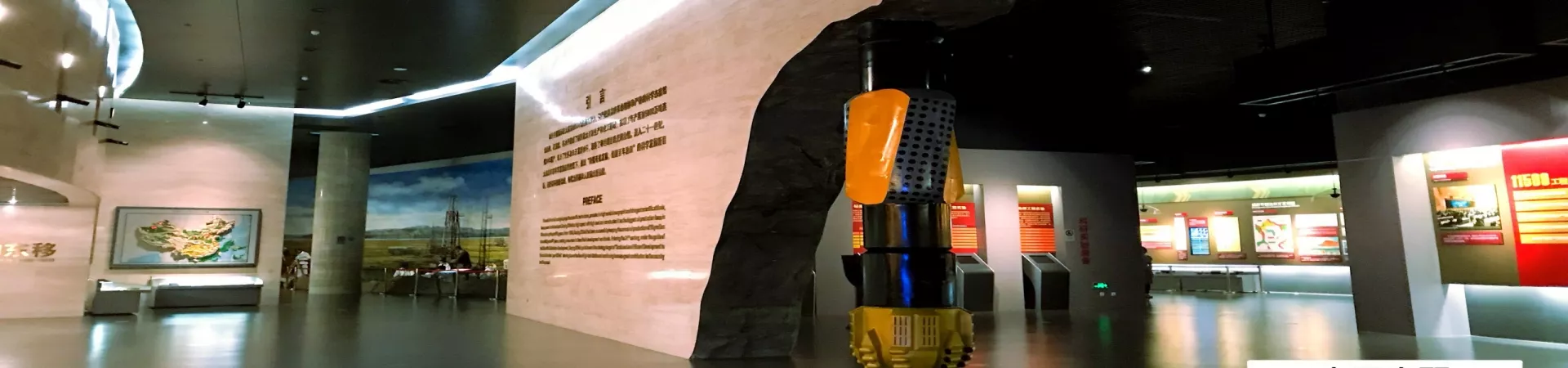
Subtitle: A Journey Through the Black Gold: Unveiling the Daqing Petroleum Science and Technology Museum
1. Introduction: The Heartbeat of China's Industrial Might Nestled in the heart of Daqing, Heilongjiang Province, lies a monument not of stone, but of spirit and science—the Daqing Petroleum Science and Technology Museum. More than just a collection of exhibits, it is the definitive narrative archive of China's most iconic oil field, a tribute to the gritty determination of the Daqing oil workers, and a fascinating window into the complex world of petroleum science. For any visitor seeking to understand modern China's industrial ascent, a journey here is indispensable. It tells a story of triumph over extreme adversity, showcasing how a barren marshland was transformed into the engine of a nation's growth through sheer human will and technological innovation.
2. The Historical Saga: From Barren Marsh to Industrial Beacon 2.1. The Daqing Spirit: Forging a Legacy in Ice and Mud The museum's historical section is a powerful immersion into the late 1950s and 1960s. Daqing's discovery in 1959 came at a critical time for a young, resource-needy nation. The exhibits vividly chronicle the legendary "Daqing Oil Campaign." Visitors encounter lifelike dioramas and poignant photographs depicting the first generation of workers battling unimaginable hardships—sub-zero temperatures, scarce food, and the infamous "Ganba" (work-hard) culture where they lived in makeshift mud huts and dug wells with rudimentary tools. This section enshrines the "Daqing Spirit," a philosophy of self-reliance, relentless dedication, and patriotic sacrifice that became a model for all of Chinese industry.
2.2. Key Figures and Technological Milestones A dedicated gallery honors the pioneering figures like "Iron Man" Wang Jinxi, whose famous vow—"Bring in the oil well even if it costs me my life"—epitomizes the era's resolve. Alongside these human stories, the museum charts the key technological breakthroughs: the development of water-flooding techniques for enhanced recovery, the innovation in drilling technologies suited to the complex Daqing geology, and the systematic management of a super-giant oilfield. This narrative illustrates how Daqing was not just an extraction site, but a massive, open-air laboratory for petroleum engineering.
3. The Science of Petroleum: From Ancient Organisms to Modern Life 3.1. Geology and Exploration: Unlocking Earth's Secrets Transitioning from history to earth science, the museum excels in making complex geology accessible. Interactive models and core samples explain the formation of the Songliao Basin, detailing how ancient lakes and organic matter, over millions of years of heat and pressure, created the vast oil reserves. Exhibits on exploration technologies showcase the evolution from basic seismic surveys to advanced 3D imaging and satellite data analysis, demonstrating how geologists "see" beneath the earth's surface.
3.2. Drilling, Extraction, and Refining This operational core of the museum features impressive scaled-down models of drilling rigs, pump jacks, and entire production platforms. Detailed cutaway models show the mechanics of drill bits and downhole tools. The refining process is broken down into a clear, step-by-step journey, from the arrival of crude oil to the distillation towers where it is separated into its component parts: gasoline, diesel, lubricants, and the petrochemical feedstocks that form the basis of countless modern products.
3.3. Petrochemicals and Our Daily Lives One of the most engaging sections for general visitors highlights the ubiquity of petroleum derivatives. Interactive displays and product trees visually connect a barrel of crude oil to a staggering array of everyday items—from clothing, plastics, and pharmaceuticals to cosmetics, fertilizers, and asphalt. This gallery powerfully underscores petroleum's integral, yet often invisible, role in contemporary society.
4. Immersive Experiences and Practical Information 4.1. Interactive Exhibits and Themed Pavilions The museum is designed for engagement. Visitors can operate simulated drilling consoles, experience a 4D theater presentation on the earth's geologic history, and walk through full-scale replicas of modern control rooms. Themed pavilions often focus on future technologies, such as green petroleum engineering, carbon capture, and renewable energy alternatives, positioning Daqing's legacy within the global energy transition.
4.2. Planning Your Visit To fully experience this comprehensive museum, planning is helpful. * Contact Information: For specific inquiries, you can reach the museum at 0459-5156114. * Opening Hours: The museum is open daily from 08:30 to 16:00. This schedule runs throughout the year, from January 1st to December 31st, including weekends. It is advisable to allocate at least 3-4 hours for a thorough visit. * Location and Context: Situated within Daqing's urban area, the museum is often part of a broader "industrial tourism" route, which can include visits to actual, still-functioning oil extraction sites (often called "oilfield sightseeing spots") to see the iconic "nodding donkeys" (pump jacks) dotting the landscape.
The Daqing Petroleum Science and Technology Museum ultimately offers a multidimensional experience. It is a memorial to human resilience, a classroom of earth and engineering science, and a testament to the material foundations of the modern world. It leaves visitors with a profound appreciation for the intricate journey of petroleum—from its ancient biological origins and its dramatic extraction history to its silent, pervasive presence in our daily lives.