Xiaogang Village
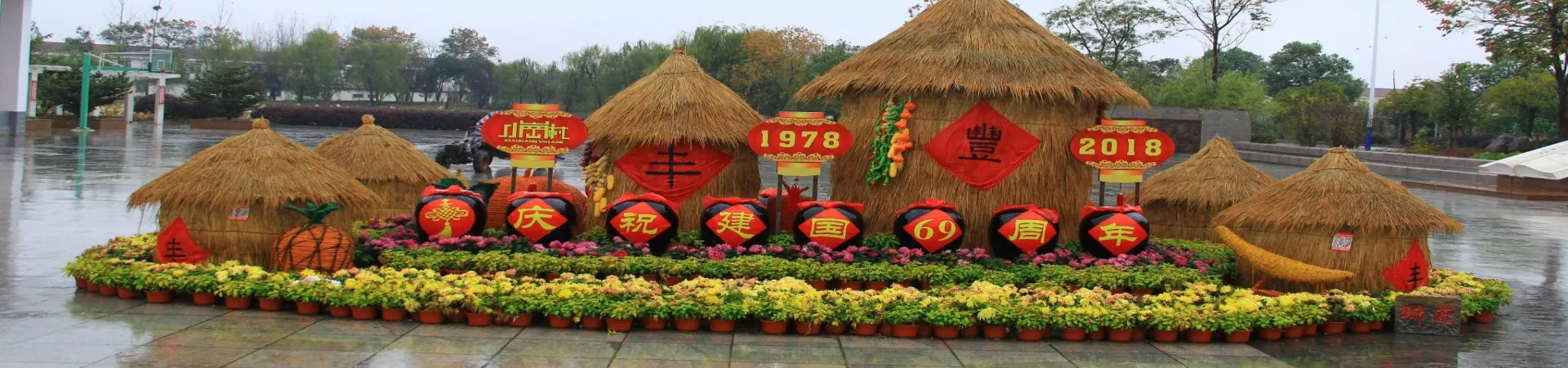
Subtitle: The Cradle of Rural Reform: A Journey Through Xiaogang Village's Legacy and Landscape
I. Introduction: A Land of Profound Heritage
Nestled on the southern bank of the Huai River in the northeastern part of Anhui Province, Fengyang County is a region blessed by nature and steeped in a profound historical and cultural legacy. This land, nurtured by the Huai River culture, is renowned as the birthplace of Zhu Yuanzhang, the founding emperor of the Ming Dynasty, earning it the title "Hometown of Emperors." Its fame extends to being the "Home of the Flower Drum Song," a "Land of Quartz," and a hub for folk art and culture. However, its most transformative and modern identity is that of the "Home of Reform," a title irrevocably linked to the courageous actions of the villagers of Xiaogang. From this rich tapestry of history, Xiaogang Village emerges not merely as a location but as a symbol—a living monument to a pivotal moment that reshaped China's contemporary history.
II. The Historic Pivot: The "Big Contract" That Changed a Nation
A. The Courageous Act of 1978 The story that elevated Xiaogang from an anonymous village to a name etched in national history began in the winter of 1978. Faced with poverty and seeking a path to survival and prosperity, 18 local farmers made a decision of extraordinary bravery and desperation. In a secret meeting, they signed a land contract with their fingerprints, agreeing to divide the communal land into family plots. This act, known as the "Household Contract Responsibility System" or the "Big Contract" (大包干), was undertaken at great personal risk, essentially a "pledge" made against the prevailing policies of the time.
B. The Birth of a Reform Spirit That single act of pressing red thumbprints onto a document became the first manifesto of China's rural reform. It ignited a spark that rapidly spread across the country, fundamentally altering the course of China's agricultural development and marking a crucial prelude to the nation's wider reform and opening-up era. From this struggle, the "Xiaogang Spirit" was born, characterized by three core principles: the self-reliant and tenacious drive for improvement, the pragmatic pursuit of truth and harmony, and the groundbreaking courage to pioneer new paths where none existed before. This spirit transformed Xiaogang into the celebrated "Number One Village of China's Rural Reform."
III. Experiencing Xiaogang Today: A Living Museum and Rural Retreat
A. Key Historical and Cultural Sites Now designated as a National AAAA-level Tourist Attraction, Xiaogang Village has developed into a comprehensive rural tourism area that seamlessly blends historical education with leisure. The centerpiece for visitors is the Big Contract Memorial Hall. This museum offers a detailed, immersive narrative of the 1978 event, preserving the atmosphere and significance of that historic decision through exhibits, documents, and multimedia presentations.
Adjacent to this modern memorial is "The Former Farmer's Home" (当年农家), a preserved or recreated site that vividly captures the living conditions, architecture, and daily life of a typical Xiaogang family around the era of the reform. It provides a tangible, poignant contrast to the village's present-day development. The Village Cultural Square serves as a communal heart, often hosting cultural performances, including the local Flower Drum Song, linking the village's revolutionary past to its artistic traditions.
B. Agricultural and Leisure Attractions Beyond its historical core, Xiaogang showcases the fruits of its reform through modern agritourism. The Grape Picking Gardens and Mushroom Greenhouses allow visitors to engage directly with the village's contemporary agricultural output, offering hands-on experiences especially popular during harvest seasons. The High-Efficiency Ecological Agriculture Demonstration Zone highlights advanced, sustainable farming techniques that have been adopted, illustrating the ongoing evolution of rural life and economy post-reform. These sites demonstrate that Xiaogang's story is not frozen in 1978 but is one of continuous growth and adaptation.
IV. Practical Visitor Information and Lasting Significance
A. Recognition and Accessibility Xiaogang Village's unique status has made it a must-visit destination for those interested in modern Chinese history, rural development, and cultural tourism. Its significance is underscored by the visits of Chinese leaders like Jiang Zemin and Hu Jintao, as well as numerous international dignitaries from over 30 countries. The village holds official titles including "National Patriotic Education Base," "One of China's Ten Famous Villages," "Anhui Provincial Historical and Cultural Village," and "Anhui Provincial Demonstration Site for Agritourism."
Located approximately 35 kilometers from Fengyang county town and about 15 kilometers from the Fengyang exit of the Nanjing-Luoyang Expressway, the village is readily accessible for independent travelers and tour groups.
B. Planning Your Visit * Ticket Information: Admission to the Xiaogang Village tourist area is priced at 15 RMB. * Operating Hours: The site operates in two sessions: a morning session from 08:30 to 12:00, and an afternoon session from 13:30 to 17:00. This schedule is maintained throughout the year, from Monday to Sunday. * Contact: For inquiries, visitors can call 0550-2225969.
A visit to Xiaogang Village is more than a scenic trip; it is an engagement with a living narrative of resilience and change. It offers a profound understanding of how a single, collective act of courage in a small Anhui village resonated across a nation, setting in motion waves of change whose effects are still felt today. Walking through its memorials, farms, and squares, one witnesses the enduring legacy of the Xiaogang Spirit—a testament to the power of pragmatic innovation and the enduring quest for a better life.