Ming Emperor's Mausoleum
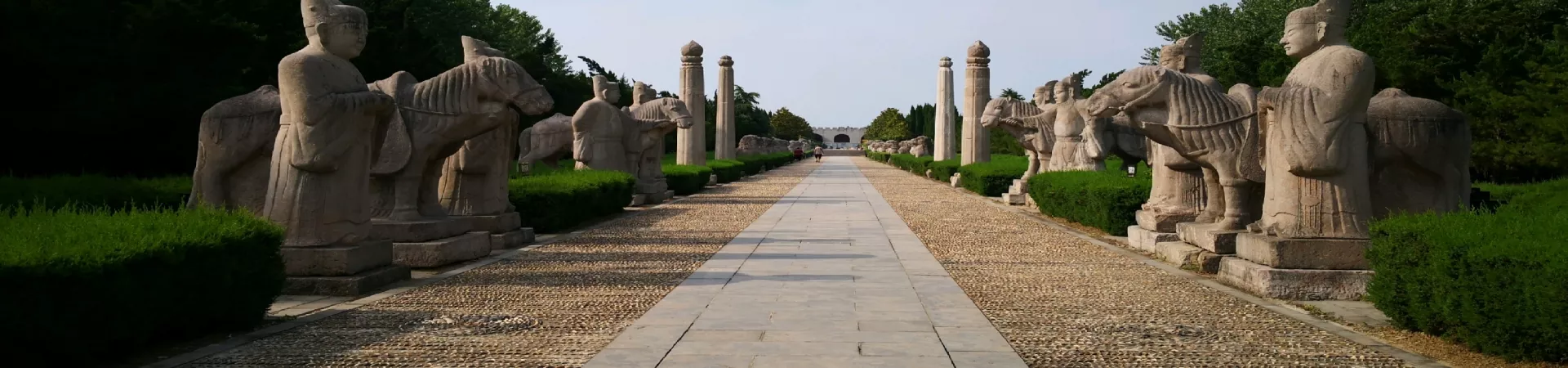
Subtitle: A Journey to the Roots of an Empire: Exploring the Minghuangling, Ancestral Tomb of the Hongwu Emperor
1. Introduction: The Humble Origins of Imperial Grandeur
Nestled in the quiet countryside approximately 7 kilometers southwest of Fengyang County in Chuzhou City, Anhui Province, lies a site of profound historical significance that challenges the typical narrative of imperial mausoleums. This is the Minghuangling, or the Ming Imperial Ancestral Tomb. Unlike the majestic and sprawling tombs of later emperors, such as the famous Ming Xiaoling in Nanjing or the Ming Tombs near Beijing, this site serves as a poignant reminder of the humble beginnings of one of China's most formidable dynasties. It is the final resting place of Zhu Yuanzhang's parents. Zhu Yuanzhang, who would later rise from destitution to become the Hongwu Emperor, founder of the Ming Dynasty (1368-1644), constructed this tomb for his parents, infusing it with a unique blend of personal filial piety and emerging imperial authority. A visit here is not just a tour of an ancient cemetery; it is an exploration of the foundational myth of the Ming Dynasty, where personal history intersects with the destiny of an empire.
2. Historical Context and Construction
2.1 From Poverty to Power: The Emperor's Motive The story of the Minghuangling is inextricably linked to the tumultuous life of Zhu Yuanzhang. Born into extreme poverty, he lost both his parents and several siblings to famine and disease during the chaotic final years of the Mongol-led Yuan Dynasty. Unable to afford a proper burial for his family, this tragedy left a deep scar. Decades later, after leading a successful rebellion and proclaiming himself emperor, one of Zhu Yuanzhang's first acts as the Hongwu Emperor was to posthumously honor his parents as emperors and empress. The construction of a grand imperial mausoleum for them was an act of supreme filial piety (xiao), a Confucian virtue paramount to his rule, and a powerful symbol of his dramatic transformation.
2.2 Architectural Timeline and Significance Construction began in 1366, while Zhu Yuanzhang was still consolidating his power base, and was completed in 1369, early in his reign. This timing is crucial. The mausoleum's design and scale were conceived not by a long-established imperial tradition, but by a new ruler defining the visual language of his nascent dynasty. It represents one of the earliest Ming imperial architectural projects, setting stylistic and ceremonial precedents for the tombs that would follow. The site was built upon the original, modest burial plot, dramatically enlarging and monumentalizing it to reflect the family's new, exalted status.
3. Key Features and Artistic Mastery
The Minghuangling is renowned for its remarkable state of preservation and its extraordinary stone sculptures. The layout follows traditional Chinese geomantic principles (feng shui), with a Sacred Way (shendao) leading to the burial mound.
3.1 The Unrivaled Stone Statuary Along the Sacred Way The most breathtaking feature is the procession of 32 pairs of stone statues lining the Sacred Way. This assembly includes mythical beasts, such as xiezhi (unicorn-lions) and qilin, as well as military officers, civil officials, horses, camels, and elephants. The number, variety, and particularly the artistic quality of these statues are what distinguish Minghuangling globally.
- 3.1.1 Scale and Detail: The sheer quantity is impressive, but it is the exquisite craftsmanship that elevates them to masterpieces. The sculptures are noted for their lifelike proportions, intricate detailing in armor, harnesses, and facial expressions, and a sense of solemn dignity. They represent a high point in Chinese stone carving, blending the robust styles of the late Yuan with the emerging grandeur of the Ming.
- 3.1.2 A World Record: The collection's significance is officially recognized, as it holds a Guinness World Record for the "largest number of stone statues of people and animals at an ancient Chinese mausoleum."
3.2 The Stele Pavilion: The Emperor's Personal Voice At the heart of the tomb complex stands the Stele Pavilion, housing two monumental stone tablets.
- 3.2.1 The Imperial Tomb Stele (Huangling Bei): This stele bears an inscription personally composed by the Hongwu Emperor. Its text is historically invaluable, as it is written in a vernacular, almost conversational style. In it, Zhu Yuanzhang recounts his family's suffering, his early life of hardship, and his rise to power. It is a rare, first-person narrative from an emperor, offering raw insight into his psyche and his desire to legitimize his rule through the virtue of filial devotion.
- 3.2.2 The Wordless Stele (Wuzi Bei): Standing opposite is a stele intentionally left blank. Theories abound regarding its purpose: it may symbolize the ineffable greatness of his parents' virtue, the boundless nature of his grief and gratitude, or simply follow an ancient tradition. Its silence stands in powerful contrast to the detailed narrative on the adjacent stele, inviting contemplation.
3.3 The Burial Mound The path culminates at the tumulus, or burial mound, which contains the remains of Zhu Shizhen (posthumously Emperor Ren) and his wife. The mound is a large, circular earthwork planted with trees, representing the final, tranquil resting place. Its simplicity, compared to the elaborate underground palaces of later imperial tombs, echoes the modest origins it commemorates.
4. Practical Visitor Information
4.1 Location and Access The Minghuangling is situated in Fengyang County, under the administration of Chuzhou City, Anhui Province. It is roughly 7 km southwest of the Fengyang county seat. Visitors typically travel to Chuzhou or Bengbu first, then take local buses or taxis to Fengyang and onward to the site.
4.2 Opening Hours and Admission The site is open to the public year-round. * Opening Hours: 08:00 - 17:30 daily. Last admission is at 17:00. * Admission Fees: * Standard Adult Ticket: 50 RMB. * Concession Ticket (for children and seniors): 25 RMB.
4.3 Contact Information For any inquiries prior to your visit, you can contact the site at: +86 550 6651640.
5. The Enduring Legacy Walking the Sacred Way of the Minghuangling, flanked by its majestic stone guardians, one walks the path that an emperor built for his parents. It is a monument where grand imperial ambition is deeply personal, where world-class art serves a story of family, memory, and legitimacy. It remains a less-visited but essential counterpart to the later Ming tombs, offering a unique and moving perspective on the founding of a dynasty that would rule China for nearly three centuries.