Langya Mountain Scenic Area
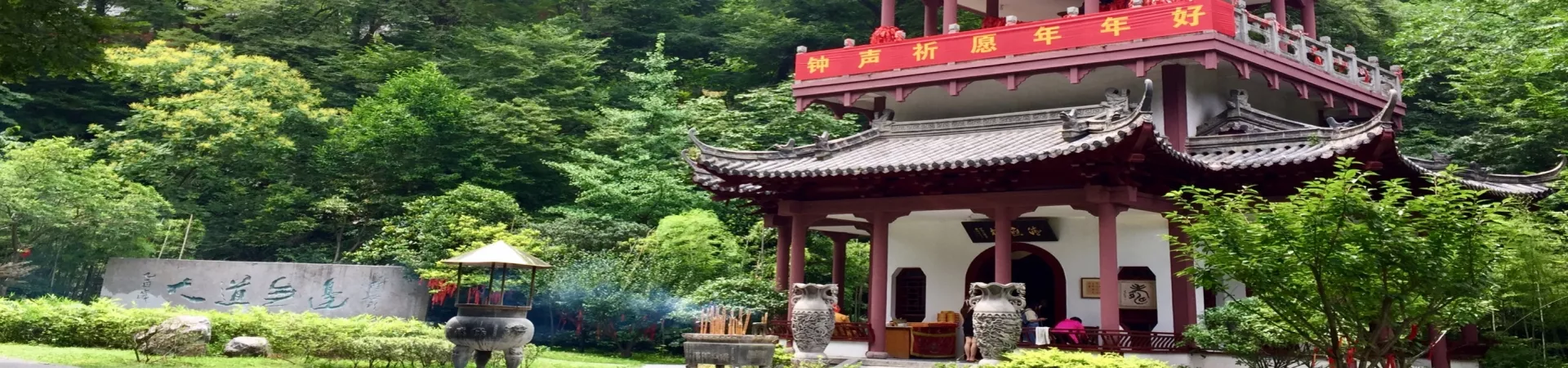
Subtitle: A Journey Through Time and Nature: The Complete Visitor's Guide to Langya Mountain Scenic Area
I. An Introduction to a Sacred Landscape
Nestled in the heart of Anhui Province, the Langya Mountain Scenic Area stands as a crown jewel of Eastern Anhui's natural and cultural heritage. This is not merely a picturesque range of hills; it is a living museum, a protected ecological sanctuary, and a profound source of literary inspiration. Its accolades speak to its national significance: a National Key Scenic Spot, a National Forest Park, a top-tier AAAA-rated Tourist Attraction, a National Key Cultural Relics Protection Unit, one of China's 24 Great Cultural Mountains, one of the Hundred Famous Mountains of China, and one of the Five Major Scenic Areas of Anhui Province. Encompassing approximately 240 square kilometers, the area is a vast, breathing expanse where ancient history is interwoven with vibrant, thriving ecosystems.
The mountain's reputation is captured in the timeless praise, "After Penglai (the mythical fairy island), there is no other mountain like this." For over a millennium, this "deeply lush and serene" landscape has captivated scholars, poets, and officials, compelling them to compose verses, construct pavilions, and leave an indelible mark on its stones and streams. A visit to Langya Mountain is thus a dual pilgrimage: one into the heart of classical Chinese culture and another into a remarkably preserved natural world.
II. The Natural Tapestry: Flora, Fauna, and Geology
A. A Biodiverse Haven With a forest coverage rate exceeding 90%, Langya Mountain is a veritable green lung and a crucial habitat. The area serves as a vital sanctuary for wildlife, particularly birds, with 54 species protected under the China-Japan Migratory Bird Protection Agreement. Botanically, it is equally distinguished. It is home to rare and endemic tree species such as the Langya Elm and the Zuiweng Elm, which are found scarcely elsewhere. The mountain's ecological importance is further highlighted by its possession of the most intact natural secondary forest in the limestone regions of China's transitional zone from the northern subtropical to warm temperate climates.
B. The Landscape's Defining Features The scenic area is composed of a majestic assembly of 81 peaks, including the main peaks of Motuoling, Fenghuang Mountain, Dafeng Mountain, Xiaofeng Mountain, and Langya Mountain itself. The classic beauty of Langya is articulated through six essential elements: dense forests, secluded caves, emerald lakes, flowing springs, famed pavilions, and ancient temples.
- Waterways and Springs: The mountain is crisscrossed with serene streams like the Langya Stream, Glass Marsh, and the meandering "Winding Stream for Floating Wine Cups." Natural springs, each with its own character and history—such as the Rang Spring (Yield Spring), Zhuoying Spring, and Zihui Spring—dot the landscape, providing spots for reflection and cool respite.
- Caves and Grottoes: A network of mystical caves invites exploration. The Guiyun Cave (Returning Clouds Cave), Xuehong Cave, Chongxi Cave, and Taoyuan Cave (Peach Blossom Spring Cave) each hold an air of ancient mystery and tranquility.
- The Forested Realm: Hiking through the deep ravines and valleys, visitors are enveloped by the lush, multi-layered canopy, experiencing the profound peace that has inspired poets for centuries.
III. The Cultural Heartbeat: History Inscribed in Stone and Wood
A. A Literary and Historical Pilgrimage The soul of Langya Mountain is inextricably linked to the luminaries of Chinese history who wandered its paths. From the Tang and Song dynasties onward, figures such as Li Youqing, Wei Yingwu, Ouyang Xiu, Xin Qiji, Wang Anshi, Mei Yaochen, Song Lian, Wen Zhengming, Zeng Gong, and Xue Shiyu were drawn here. They were not mere visitors; they were patrons and participants in the mountain's cultural development, funding the construction of temples and pavilions, and composing poetry that elevated Langya to an immortal status in the Chinese literary canon.
B. Enduring Cultural Monuments This rich history has materialized into a stunning array of cultural relics scattered throughout the hills.
- Architectural Treasures: The ancient Buddhist Langya Temple complex offers a place of solemn worship amidst fragrant incense. The iconic Zuiweng Pavilion (Old Drunkard's Pavilion), immortalized by the Northern Song literary giant Ouyang Xiu in his essay "The Old Drunkard's Pavilion Record," remains the symbolic heart of the area. Other notable structures include the Tongle Garden and the South Heavenly Gate.
- Inscribed History: Beyond buildings, history is etched into the mountain itself. Ancient passes, post roads, stone steles, tablets, and numerous cliff-face inscriptions (moya) serve as a direct, tangible connection to the past, each telling a part of Langya's long and storied narrative.
IV. Practical Information for Visitors
A. Getting There The scenic area is accessible via public transportation from downtown Chuzhou. Visitors can take bus routes 107 or 11 and alight at the Langya Mountain Scenic Area Station, followed by a short walk to the entrance.
B. Admission and Operating Hours * Ticket: A standard entrance ticket, which typically includes access to key sites like Zuiweng Pavilion, Tongle Garden, Langya Temple, and Nan Tian Men, is priced around 70 RMB. Please note: All price information is for reference only. It is highly recommended to verify the latest official prices prior to your visit. * Opening Hours: The scenic area is generally open daily from 07:30 to 17:30, with last admission at 17:00.
C. Suggested Visit Duration To fully appreciate the natural beauty and cultural depth of Langya Mountain without rushing, a minimum of 3 to 4 hours is recommended. Those wishing to embark on more extensive hikes or engage in deeper contemplation may easily spend an entire day.
D. Contact Information For the most current information, visitors can contact the scenic area at: 0550-3512999.
Information last updated: April 6, 2023.