Jiushan Cave
Subtitle: A Journey Through Time: Unveiling the Mysteries of Jiushan Cave in Chuzhou
1. Introduction to Jiushan Cave
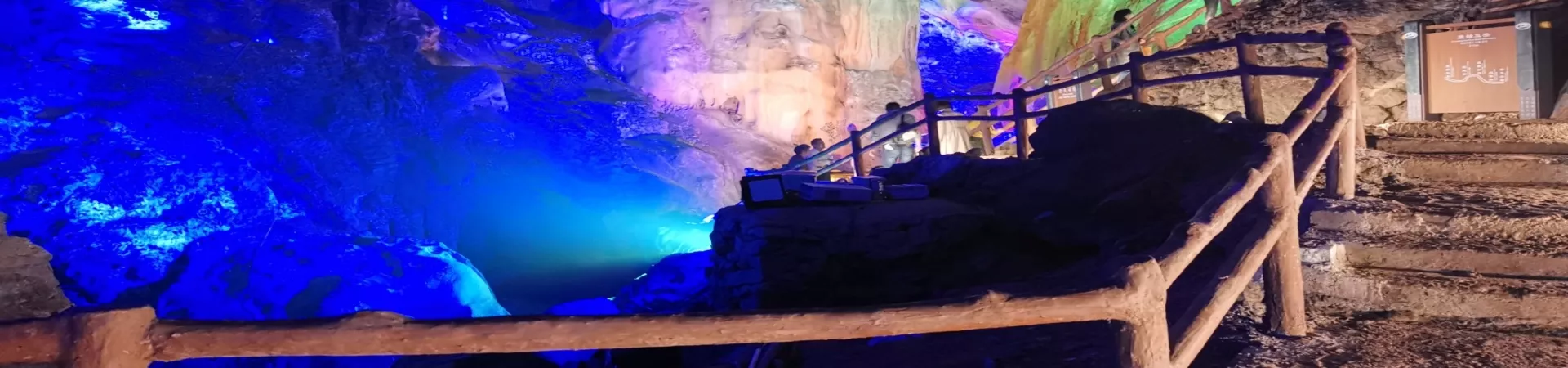
Nestled in the Chuzhou region of Anhui Province, China, lies the magnificent Jiushan Cave, a subterranean wonder whose name originates from the wild leeks (jiu cai) that once thrived on the warm mountainside above. This is far more than a simple geological formation; it is a portal to an almost unimaginably distant past. Boasting a geological history stretching back an astounding 500 million years, Jiushan Cave is a premier example of a karst limestone cave. Extending for 1,472 meters through the heart of the mountain, its character is defined by five quintessential attributes: depth, vastness, perilousness, peculiarity, and antiquity. These remarkable features have earned it the esteemed title of "The Premier Cave of Jiangbei" (North of the Yangtze River) among geologists and speleologists.
The cave's significance is not confined to the natural world; it is deeply interwoven with the tapestry of Chinese history. In the 14th century, during the tumultuous uprising that led to the founding of the Ming Dynasty, the cave served as a crucial strategic base for its founder, Zhu Yuanzhang. He utilized its hidden depths to garrison troops and hold clandestine military councils, adding a profound layer of historical resonance to the ancient stone. Furthermore, the pristine ecological environment surrounding the cave fosters a rare annual phenomenon. Each June, the cave's pools become a temporary habitat for Craspedacusta sowerbii, known as peach blossom jellyfish. These delicate, translucent creatures are considered "living fossils," having existed virtually unchanged for approximately 650 million years, making their appearance a fleeting, magical spectacle that connects the present to the dawn of complex life.
2. Exploring the Thematic Sections of the Cave
The exploration of Jiushan Cave is thoughtfully organized into distinct thematic sections, each offering a unique blend of natural grandeur and cultural allusion.
2.1. Section One: Tiger's Lair and Dragon's Den This opening section is named "Tiger's Lair and Dragon's Den," a powerful metaphor evoking military strength and strategic dominance. The name pays homage to two historical chapters: the resistance efforts of Southern Song dynasty hero Wang Weizhong against the Jin invaders, and later, Zhu Yuanzhang's use of the cave as a military stronghold. Unlike many purely natural caves, this section is notable for its historical atmosphere. Visitors encounter features like a Cultural Relics Exhibition Room, ancient pathways, a narrow pass aptly named "One Man Guards the Pass," a drill ground, a Lotus Platform, and a Central Command Tent. These elements transform the cavern into a rare human-centric landscape within a natural setting, allowing one to vividly imagine the strategic planning and daily life of soldiers hidden within the earth.
2.2. Section Two: Plucking Stars and Embracing the Moon Transitioning from historical narrative to celestial fantasy, the second section is called "Plucking Stars and Embracing the Moon." Here, the cave's formations inspire comparisons to myth and art, featuring landmarks such as the "Eastern Venus" and the "Jiushan Lingzhi Mushroom." The climax of this area is the ascent up the "Hundred-Step Cloud Ladder," which leads to the "Lunar Sky." This vast chamber offers a breathtaking view of what is poetically described as the "Flying Apsaras of the Moon Palace," where stalactites and stalagmites resemble elegant, frozen dancers in mid-performance, invoking the imagery of Chang'e, the Chinese moon goddess, and her celestial maidens.
2.3. Section Three: Encompassing the Five Sacred Mountains The journey continues into the most geologically dramatic segment: "Encompassing the Five Sacred Mountains." True to its name, this approximately 300-meter-long section synthesizes the iconic essence of China's five great mountains—the peculiarity of Huangshan, the peril of Huashan, the elegance of Emeishan, the precipitousness of Hengshan (Hunan), and the majesty of Taishan—all within the confines of the cave. The rock formations here vividly mimic various animals and legendary beasts, creating a petrified zoo. The ancient observation that "numerous stone shapes resemble man-made objects and creatures" perfectly captures this area. The scale and intricate detail induce a feeling of profound mystery, compelling visitors to simultaneously believe and doubt their own eyes, as if stepping into a primordial world of spiritual wonder.
2.4. Section Four: Crystal Streams and Emerald Reflections Following the grandeur of the mountains, the atmosphere shifts in the section known as "Crystal Streams and Emerald Reflections." This area highlights eight key scenic spots, including the "Jiushan Immortal Elder," "Hidden Dragon in the Yellow Wall," "Three Fairy Maidens," and "The Qiao Sisters Bathing." Each formation is not only a masterpiece of natural sculpture, possessing rugged and奇异 (qíyì, strange and wonderful) beauty, but is also adorned with ethereal and enchanting mythological tales that blur the line between rock and legend. The true highlight here is the opportunity for "Boating on the Jade Stream." While boating on a surface lake is pleasant, gliding on a silent, illuminated subterranean river beneath millions of years of layered stone is an experience of pure fantasy. The play of light on the water and ceilings creates a phantasmagorical, dreamlike ambiance that is utterly unique and mesmerizing.
3. Visitor Information
Jiushan Cave represents a perfect synthesis where spectacular natural景观 (jǐngguān, landscape) and rich cultural history are seamlessly combined, making it an exceptional destination for those seeking adventure, historical exploration, or simply a unique retreat.
3.1. Ticket and Opening Hours * Ticket Price: 50 RMB per person. * Opening Hours: 08:00 - 17:00 daily. Last admission is at 16:30. These hours are generally consistent throughout the year (January 1st to December 31st).
3.2. Suggested Visit Duration and Contact * Suggested Duration: A thorough exploration of the cave and its surroundings requires a minimum of 3 hours. * Contact Telephone: For the latest information, visitors can call 0550-6321288.
3.3. Transportation Jiushan Cave is located in Fengyang County, Chuzhou. While specific bus routes may vary, it is accessible by road from Chuzhou city or Hefei, the provincial capital. Visitors are advised to use navigation apps, check for tourist shuttle services from Fengyang, or arrange private transport for the most convenient access to the site.