Drunken Weng Pavilion
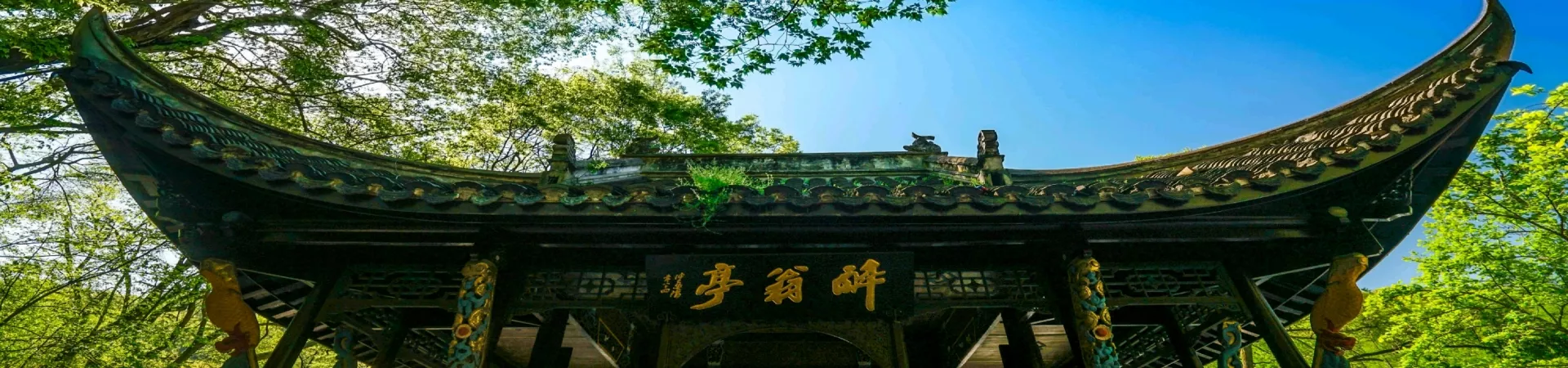
Subtitle: A Journey Through Time and Poetry in Chuzhou's Iconic Pavilion Complex
Introduction: The Legacy of the Drunken Old Man
Nestled within the verdant embrace of Langya Mountain in Chuzhou, Anhui province, lies the Zuiweng Ting, or the Pavilion of the Old Drunkard. Far more than a single structure, it is a meticulously designed classical garden complex covering approximately 1,000 square meters, serving as a living monument to a celebrated literary masterpiece. Its fame is eternally tied to the Northern Song Dynasty literary giant, Ouyang Xiu, who penned the timeless prose poem "The Record of the Pavilion of the Old Drunkard" in 1046. Disheartened by political strife, Ouyang Xiu found solace in the landscapes of Chuzhou, and his writing immortalized not just a pavilion but a philosophy of finding joy amidst nature and simple companionship. The entire complex, therefore, is a physical manifestation of that poetic sentiment, inviting visitors to step into the scroll of his writing.
Architectural Layout and the "Nine Scenes"
The genius of the Zuiweng Ting complex lies in its intimate scale and deliberate, picturesque arrangement. The layout is compact yet profound, leading visitors through a sequence of carefully composed scenes that unfold like verses in a poem. The design principle adheres to classical Chinese garden aesthetics—emphasizing winding paths, hidden views, and a harmonious blend of architecture with the natural mountain setting. It is a world away from sprawling imperial gardens, offering instead a journey of quiet discovery.
This journey is best experienced through its core attractions, collectively known as the "Nine Scenes of the Old Drunkard." Each structure possesses a unique character and function, yet together they form a cohesive narrative.
2.1. The Heart: Zuiweng Ting (Pavilion of the Old Drunkard) The namesake pavilion stands as the spiritual core of the complex. Built directly against the mountain and overlooking a meandering stream, it embodies the ideal described by Ouyang Xiu. Constructed with a simple, elegant design, it features a distinctive swallow-tail roof and open sides that frame the surrounding beauty. Here, one can almost envision the poet enjoying his wine with friends, listening to the murmuring water and rustling leaves, personifying his famous line, "The mind drunk is not on wine, but on the mountains and rivers."
2.2. The Literary Sanctuary: Baosong Zhai (Hall Preserving Song Inscriptions) Adjacent to the main pavilion, this hall serves as a treasury of history. Its primary purpose is to safeguard two monumental stone tablets. These tablets bear the engraved text of Ouyang Xiu's "The Record of the Pavilion of the Old Drunkard," transcribed in the powerful, elegant calligraphy of Su Shi, another literary titan of the Song Dynasty. The presence of these two masters' work in one place makes this hall a sacred site for admirers of Chinese literature and art, bridging poetry and brushstroke.
2.3. Commemorative Spaces: Feng Gong Ci (Shrine to Mr. Feng) & Gu Mei Ting (Ancient Plum Pavilion) The complex also honors other significant figures. Feng Gong Ci is a shrine dedicated to Feng Zisun, a prefect of Chuzhou during the Ming Dynasty who was instrumental in restoring and preserving the pavilion complex. Gu Mei Ting, or the Ancient Plum Pavilion, is built around a legendary plum tree said to have been planted by Ouyang Xiu himself. It symbolizes resilience and enduring elegance, blooming through centuries as a living connection to the past.
2.4. Scenic Vignettes: Yingxiang Ting, Yizai Ting, Yi Ting, and Lanyu Tai The remaining structures are poetic viewpoints and resting places that capture specific moods and moments. Yingxiang Ting (Pavilion of Shaded Fragrance) is often associated with the subtle scent of surrounding flowers and plants. Yizai Ting (Pavilion of Implied Meaning) encourages contemplation beyond the immediate view. Yi Ting (Pavilion of Ease) offers a spot for tranquil repose. Lanyu Tai (Terrace for Viewing the Remainder) provides a slightly elevated platform to gaze upon the rest of the garden and the distant landscape, completing the visual journey.
The Sensory Experience: A Poetic Landscape
Beyond the architecture, the true essence of Zuiweng Ting is its immersive environment. The complex is a masterpiece of integrating built forms with untouched nature. Ancient trees, their branches swaying gently, cast dappled shadows on stone pathways. The structures are artfully positioned at different levels, creating a delightful sense of visual rhythm and surprise around every corner. The clear waters of the mountain stream provide a constant, soothing auditory backdrop. The view frames lush, painting-like hills in the distance. This combination of elegant, human-made pavilions with the raw beauty of the mountain, stream, and forest perfectly creates the "poetic and picturesque" quality that defines classical Chinese landscape appreciation. The atmosphere is one of profound serenity and refined beauty, allowing every visitor to momentarily share in Ouyang Xiu's philosophical detachment and joy.
Practical Information for Visitors
To facilitate a smooth visit, please note the following practical details. The Zuiweng Ting complex is located within the larger Langya Mountain Scenic Area.
3.1. Tickets and Opening Hours Admission is covered by the entrance ticket to Langya Mountain Scenic Area. Ticket prices are approximately 95 RMB during the peak season and 80 RMB during the low season. The complex itself is open to visitors daily from 7:00 AM to 5:30 PM throughout the year.
3.2. Getting There The most common access is via public bus from downtown Chuzhou. Visitors can take bus route 4 to the Wuzhong Stop, then transfer to bus route 11, which goes directly to the main entrance of the Langya Mountain Scenic Area. From the park entrance, a pleasant walk along marked paths leads to the Zuiweng Ting complex.
3.3. Planning Your Visit A comprehensive exploration of the Zuiweng Ting complex, including time to appreciate the architecture, inscriptions, and ambiance, typically requires between one to three hours. For inquiries, the scenic area management can be contacted at 0550-3512999 or 0550-3513478. It is advisable to wear comfortable walking shoes, as the paths, while well-maintained, can be uneven in places.