Guichun River
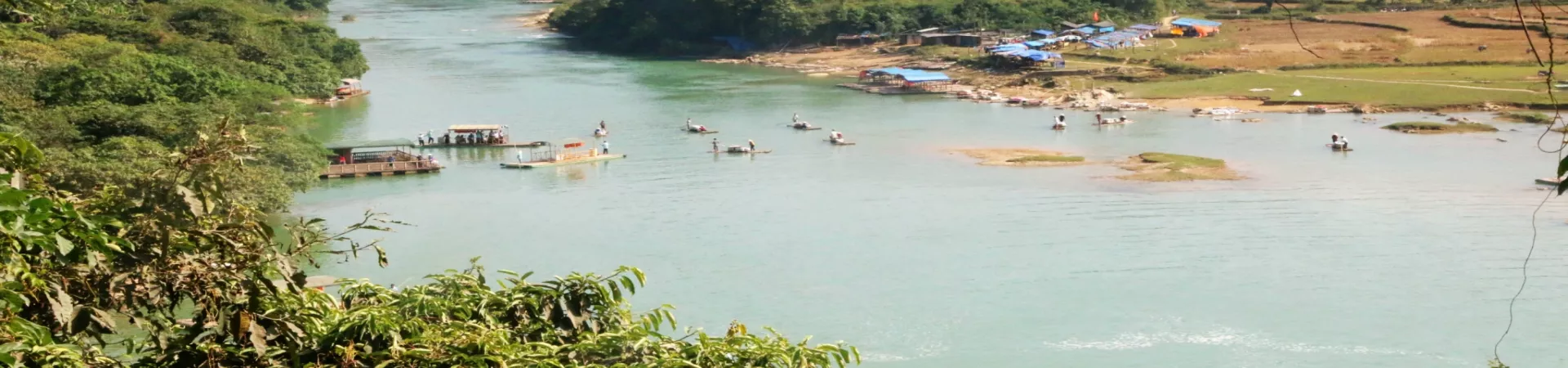
Subtitle: A Borderland Journey: From Shuolong Town to the Detian Waterfall
Introduction Flowing silently yet persistently along the border between China and Vietnam, the Guichun River carves a path of profound natural beauty and cultural intrigue. Its most captivating stretch unfolds between Shuolong Town and the world-renowned Detian Waterfall, a ten-li journey (approximately five kilometers) where the river itself becomes the protagonist. More than just a body of water, the Guichun River serves as a liquid border, a serene line dividing two nations while simultaneously connecting landscapes, lifestyles, and vistas. This journey along its banks is not merely a scenic drive but a slow immersion into a unique frontier region where every twist in the river reveals a new perspective, blending dramatic geology, meticulous agriculture, and cross-border tranquility into an unforgettable experience.
The River as a Frontier: A Tale of Two Banks A Natural Boundary Line For the entirety of its course from Shuolong to Detian, the Guichun River performs a gentle yet definitive role as the international boundary. This geographical fact transforms a simple river view into a moment of quiet contemplation. You are literally looking across a narrow stream into another country. The river's modest width makes the proximity intimate, fostering a unique sense of connection and contrast rather than stark separation.
Contrasting Landscapes Across the Water This intimacy allows for fascinating visual dialogues between the two shores. On the Vietnamese side, the landscape often retains a sense of untouched mystery. Lush, densely forested hills roll into the distance, with occasional glimpses of small, secluded villages or pathways that hint at a different way of life. It presents a vista that feels quietly enigmatic and inviting to the imagination.
On the Chinese side, the human touch is more immediately evident in the architecture. Scattered along the bank are the distinctive dwellings of local border residents. Among them, the traditional Ganlan-style houses of the Zhuang ethnicity stand out. These structures, often built on stilts, are architectural marvels adapted to the local climate and terrain. Their presence adds a layer of deep cultural heritage to the panorama, grounding the scene in the centuries-old traditions of the region's predominant ethnic group. The juxtaposition is continuous and compelling: the wild, mysterious allure of Vietnam against the culturally rich, inhabited charm of China's Guangxi.
The Ever-Present Canvas: Terraced Fields A Symphony in Green and Gold Regardless of which bank draws your eye, the backdrop is consistently dominated by one of humanity's most beautiful agricultural creations: terraced fields. These are not confined to distant hills but envelop the entire area, from the immediate riverbanks to the slopes surrounding the Detian Waterfall. They form a sprawling, textured canvas that changes with the seasons.
The Agricultural Tapestry In spring and summer, the terraces are a vibrant, cascading sea of emerald green rice shoots. By autumn, they transform into a breathtaking patchwork of burnished gold, ready for harvest. The tiers curve and flow with the contours of the mountains, creating soft, harmonious lines that contrast with the rugged karst peaks in the distance. This meticulous landscaping demonstrates a profound harmony between the local communities—both Zhuang and Vietnamese—and their environment. The terraces are a testament to sustainable living and provide a constantly shifting, utterly photogenic frame for every view of the river and waterfall.
The Journey's Climax: Detian Waterfall The Convergence of Waters The Guichun River's journey culminates in a spectacular crescendo at the Detian Waterfall. Here, the river gathers its full force before plunging over a three-tiered cliff in a thunderous display of power and mist. Detian is not just a Chinese landmark; it is a transnational natural wonder, jointly owned by China and Vietnam (where it is known as Ban Gioc Waterfall). The sight of the waterfall, with its multiple cascades stretching across the border, is the ultimate symbol of the region's shared natural heritage.
A Panoramic Sensory Experience The approach to the waterfall, guided by the river's flow, builds anticipation. The roar of water grows louder, and the air becomes cool and misty. From the viewing platforms on the Chinese side, you witness the immense curtain of water split by rocky outcrops, with the Vietnamese bank visible just beyond the spray. It is a place where the border seems most dramatic yet most beautiful, a powerful natural force that commands awe from all who witness it, regardless of nationality.
Practical Information for Visitors Visiting Duration To fully appreciate the Guichun River corridor and the Detian Waterfall, a visit of 1 to 3 hours is recommended. This allows sufficient time to walk along designated paths, absorb the panoramic views of both the river borders and the terraced fields, and experience the main waterfall viewpoints without feeling rushed. Many visitors choose to spend additional time exploring the broader geopark area.
Admission Details As operational policies can change, it is highly advisable to check the specific entrance fees and any potential bundled tour options directly with the official Detian Falls Scenic Area authorities. This can typically be done via official tourism websites or at the visitor center prior to your visit, ensuring you have the most current information.
Operating Hours A significant advantage for travelers is the site's accessibility. The area encompassing the Guichun River views and the Detian Waterfall is open all day, every day, throughout the year (from January 1st to December 31st, Monday through Sunday). This "open all hours" policy provides exceptional flexibility, allowing for visits during the soft morning light, the bright midday, or the dramatic afternoon shadows. However, always verify the latest access details for specific walking paths or boat rides, as these may have seasonal adjustments.