Boundary Monument No. 53 between China and Vietnam
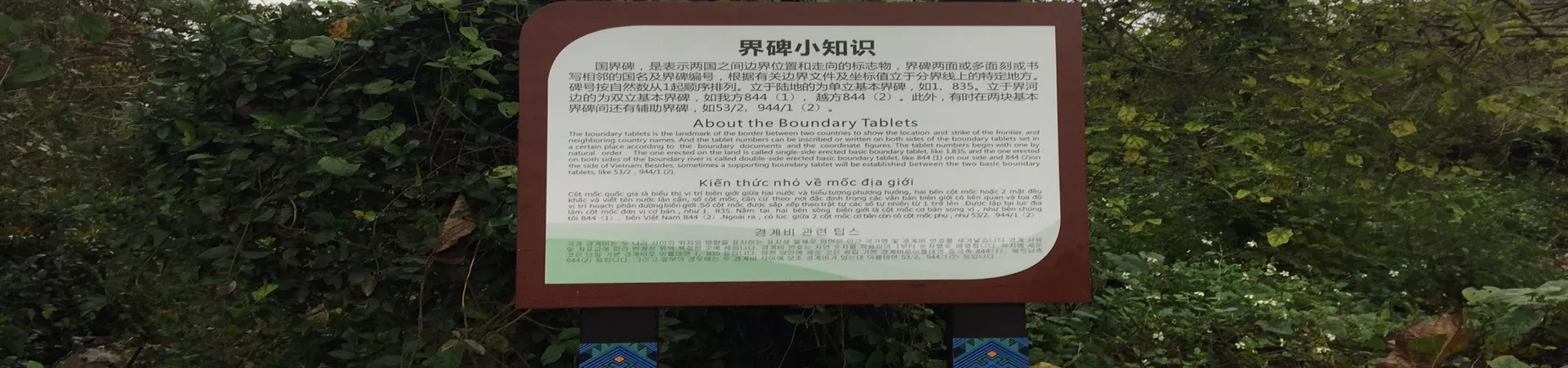
Subtitle: A Silent Sentinel at the Border: Unveiling the History of Sino-Vietnamese Boundary Marker No. 53
1. Introduction: A Stone Steeped in History Nestled along the modern-day border between China's Guangxi Zhuang Autonomous Region and Vietnam stands a quiet, yet profoundly significant historical artifact: the Sino-Vietnamese Boundary Marker No. 53. This weathered stone tablet is far more than a simple geographical indicator; it is a tangible piece of history, a silent witness to over a century of diplomatic agreements, regional shifts, and the daily lives of borderland communities. For visitors to Chongzuo and those interested in the intricate tapestry of Sino-Vietnamese relations, this marker offers a unique, physical connection to a pivotal era in East Asian history. Its story begins not in the contemporary period, but in the final decades of the Qing Dynasty, China's last imperial reign.
2. Historical Origins and Significance 2.1 A Qing Dynasty Edict in Stone The genesis of Boundary Marker No. 53 dates back to the late 19th century, a period of significant colonial pressure and shifting territorial demarcations in Southeast Asia. Erected in the year 1896 during the reign of the Guangxu Emperor, the marker was a product of border negotiations and treaties between the declining Qing Empire and the French administration, which then controlled Indochina. Its establishment was part of a broader effort to formally define the lengthy land border between the two political entities. The very act of placing this stone was a diplomatic statement, an attempt to crystallize a territorial agreement into a permanent, physical form.
2.2 The Inscription: "Chinese Guangxi Boundary" The primary inscription carved into the face of the marker is concise and authoritative: "中國廣西界" (Chinese Guangxi Boundary). These five Chinese characters are the core of its identity, unequivocally stating the jurisdiction of the land on which it stood. The style of the characters and the craftsmanship reflect the artistic conventions of the late Qing period. This inscription is the key historical text, representing the imperial claim and administrative reach of Guangxi province at that specific moment in time. It serves as a frozen snapshot of a historical border as defined by the treaties of that era.
3. Geographical Context and Symbolism 3.1 The "One-Second" Border Crossing One of the most intriguing aspects of Boundary Marker No. 53, often highlighted in visitor accounts, is its literal positioning on the border line. The marker itself is situated such that one side is officially Chinese territory, while the other side is Vietnamese territory. This led to the popular notion that crossing from one country to the other "takes only one second"—a step to the left or right of the stone would, symbolically and legally, place an individual in a different nation. This powerful symbolism made it a poignant site for contemplating the nature of borders, which are at once rigid political constructs and, in physical form, mere lines on the earth.
3.2 Location within the Chongzuo Landscape The marker is located in the Chongzuo region of Guangxi, an area renowned for its dramatic karst topography, lush landscapes, and other historical sites like the Detian-Ban Gioc Waterfalls, which themselves straddle the border. Its setting contributes to its significance. Placed within this scenic yet strategically important border zone, the marker historically served as a fixed point of reference in a sometimes ambiguous terrain. For modern visitors, understanding its location within the broader geography of Chongzuo enriches the experience, connecting a point of political history with the natural beauty of the region.
4. Practical Visitor Information and Current Status 4.1 Historical Accessibility and Visitor Experience Prior to 2018, Boundary Marker No. 53 was a point of interest for tourists traveling in the Chongzuo area. Visitors could approach the stone, observe the inscription, and reflect on its historical and symbolic meaning. The typical visit duration was relatively short, often cited as under an hour, focusing on viewing the marker, taking photographs, and contemplating the immediate border area. Its operational hours were generally aligned with daytime tourism, typically from 8:00 AM to 6:30 PM.
4.2 Important Update on Public Access Crucially, potential visitors must note a significant change in accessibility. According to official information updated in early 2023, public access to Boundary Marker No. 53 for tourist purposes was suspended starting in May 2018. The site is currently not open for public visitation. The specific reasons for this closure are often related to border management policies, security protocols, or site maintenance, which are subject to change by the relevant authorities. The historical marker remains in its location, but it is no longer an active tourist stop.
4.3 Planning a Visit: Essential Considerations For those interested in the history of the Sino-Vietnamese border, this closure necessitates a shift in planning. The primary recommendation is to seek official, up-to-date information before any attempt to visit the area. Travelers should consult the latest announcements from local Chongzuo tourism bureaus or relevant scenic area management offices for any changes in policy. The previously listed reference phone numbers may no longer provide current information regarding this specific site. The focus of a trip to the Chongzuo border region should therefore be directed toward other open and accessible attractions, such as the magnificent Detian-Ban Gioc Waterfalls or the stunning karst scenery, while appreciating the history of Boundary Marker No. 53 from a distance through its historical narrative.
While physically inaccessible, Sino-Vietnamese Boundary Marker No. 53 retains its importance as a historical object. It represents a specific chapter defined by late imperial diplomacy, a symbol of national sovereignty, and a focal point for understanding the perpetual evolution of borders and the relationships between neighboring nations. Its story continues to be a relevant part of the cultural and historical landscape of Chongzuo.