Banliang Ancient Village
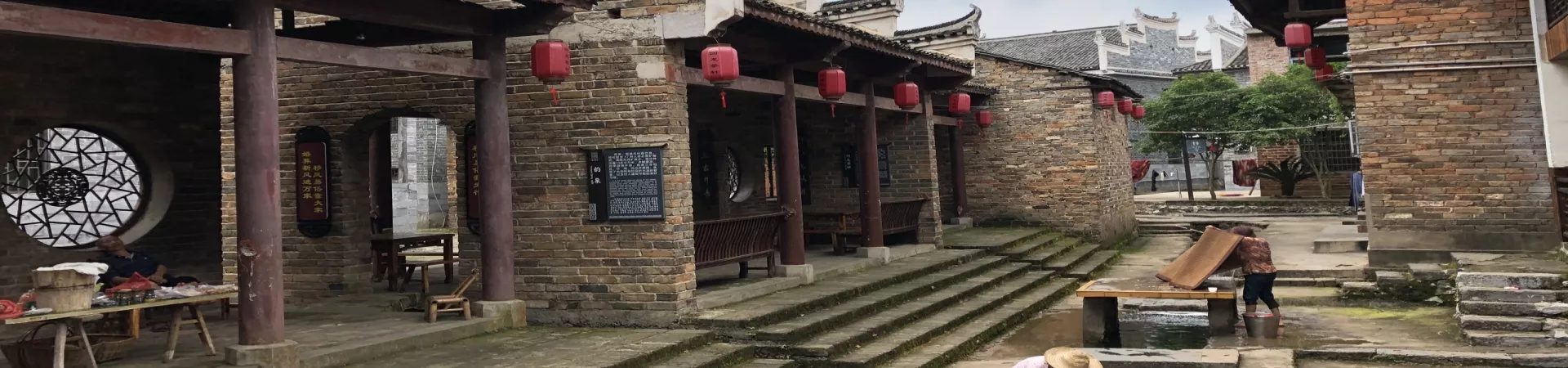
Subtitle: A Journey Through Six Centuries of History, Architecture, and Culture in Southern Hunan
1. Introduction to Banliang Ancient Village Nestled in the landscape of Chenzhou, Hunan Province, Banliang Ancient Village stands as a magnificent, living museum of Chinese history and traditional architecture. Its origins trace back to the late Song and early Yuan dynasties, with its zenith occurring throughout the Ming and Qing periods. Having flourished for over 600 years, the village spans approximately three square kilometers. It is masterfully laid out according to traditional Chinese feng shui principles, spreading gracefully against the backdrop of Xiangling (Elephant Ridge). The village presents an imposing and harmonious scale, with open vistas at its front, a meandering stream flowing alongside its boundaries, and an ancient post road cutting directly through its heart. This strategic and aesthetic layout immediately signals the profound planning and cultural depth that define Banliang.
2. Architectural Grandeur and Historical Layout 2.1. The Village Structure and Key Features The approach to Banliang is marked by three ancient ancestral halls arranged solemnly at the village entrance, announcing the clan-oriented social structure within. Stone-paved paths, the village's lifelines, connect a labyrinth of main streets and narrow alleys, guiding visitors past ancient pagodas, venerable wells, and curiously shaped remarkable stones. The overall atmosphere is one of serene, timeless beauty—a classic Chinese poetic scene of "small bridges, flowing water, and winding secluded paths" that feels like a world unto itself.
2.2. A Treasury of Ming and Qing Residences The village's most astounding heritage is its collection of more than 360 impeccably preserved residential buildings from the Ming and Qing eras. Having withstood centuries, these structures are a testament to exceptional ancient craftsmanship. Each house features intricately carved beams, painted rafters, and elegantly upturned eaves. The construction details are breathtaking: * Exquisite Materials: Walls of finely polished blue-grey bricks. * Symbolic Elements: Traditional "Men Dang Hu Dui" (door pillars and lintels) denoting family status. * Masterful Carvings: Lavish and sophisticated decorations in brick, stone, and wood, depicting flora, fauna, mythological scenes, and symbols of good fortune. Every detail reflects the high artistic achievement and wealth of the village's historical inhabitants.
3. The Cultural and Philosophical Core Banliang is far more than a cluster of old buildings; it is a profound repository of traditional Chinese thought and social organization. The entire village embodies ancient concepts that governed life for generations: * Clan Rituals and Confucian Tradition: The prominent ancestral halls underscore the central role of patriarchal clan systems and Confucian values of filial piety and social hierarchy. * Feng Shui and Philosophical Concepts: The village's选址 (site selection) and layout—backed by the mountain, facing water, and aligned for optimal qi flow—demonstrate deep-seated beliefs in harmony between humanity and nature, as well as philosophical ideas about balance and cosmic order. * Ecological and Construction Wisdom: The design incorporates practical ecological principles and advanced, time-tested construction techniques for ventilation, drainage, and temperature regulation.
This profound integration of form, function, and philosophy has earned Banliang the revered title of "The First Village of Southern Hunan," celebrated for its largest scale, most complete preservation, most exemplary feng shui, and richest cultural heritage.
4. Practical Visitor Information 4.1. Location and Transportation Banliang Ancient Village is located in Chenzhou. To get there: * From Chenzhou, take a long-distance bus headed for Matian, Leiyang, or Hengyang. * Crucial Step: Inform the driver in advance that you need to get off at the Banliang Ancient Village intersection (路口), and ask them to remind you. * From the intersection, take a local taxi to the actual village scenic area entrance.
4.2. Admission and Opening Hours * Ticket: Approximately 33 RMB for adults. Please note: This price is for reference only. Always check the official ticket booth for the most current pricing on the day of your visit. * Opening Hours: 08:30 - 17:00 daily (last entry at 17:00).
4.3. Suggested Visit Duration A thorough exploration of the village's alleys, architecture, and atmosphere requires a minimum of 3 hours. Visitors with a deep interest in history, photography, or cultural studies may wish to allocate more time.