Taifo Hall
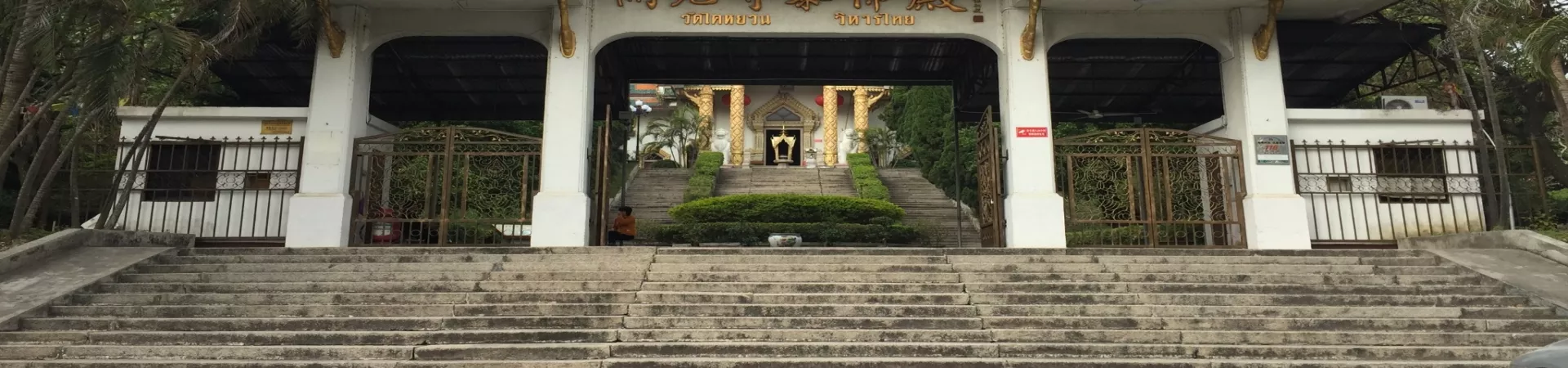
A Beacon of Sino-Thai Friendship: The Thai Buddha Hall of Chaozhou Kaiyuan Temple
Nestled on the eastern side of the Hanjiang Bridge and directly opposite Huiru Park in the historic city of Chaozhou, Guangdong Province, stands a remarkable architectural and spiritual landmark: the Thai Buddha Hall of Kaiyuan Temple. This magnificent complex holds the distinguished title of being the first large-scale Thai-style Buddhist temple in mainland China. Its existence is a profound testament to international cultural exchange, personal philanthropy, and the enduring bonds of friendship between nations.
The Genesis: A Philanthropist's Vision and Cross-Cultural Collaboration
The hall's origins are inextricably linked to the generosity and vision of Mr. Xie Huiru (1913-1996), an overseas Chinese leader and renowned philanthropist based in Thailand. Deeply connected to his ancestral homeland and devoted to fostering Buddhist dialogue, Mr. Xie donated substantial funds for the temple's construction. The project received official approval from the State Administration for Religious Affairs of China, underscoring its significance as a formal channel for cultural and religious exchange.
What makes the project particularly unique is its execution. Unlike many cultural projects that might involve foreign architects, the Thai Buddha Hall was entirely designed and constructed by local teams from Chaozhou. This directive required Chinese architects and craftsmen to meticulously study and interpret traditional Thai Buddhist architecture, resulting in a sincere and respectful homage built with local skill. The hall was officially inaugurated with a ribbon-cutting ceremony on the Lantern Festival in 1992, a symbolic date in the Chinese calendar marking community and light. Shortly thereafter, on April 11, 1992, a grand consecration ceremony was held for the temple's central icon, further solidifying its spiritual status.
Architectural Splendor: A Journey to Thailand in the Heart of Chaozhou
Stepping into the temple grounds is akin to being transported to the Kingdom of Thailand. The complex is a masterclass in classic Thai temple (Wat) architecture, offering visitors a vivid, immersive cultural experience without leaving China.
- The Central Viharn and the Majestic Bronze Buddha: The heart of the complex is the main prayer hall, or Viharn. Its most awe-inspiring feature is the enshrined Thai-style copper-cast Buddha statue. This majestic figure, cast in Thailand and consecrated in the 1992 ceremony, radiates serenity and embodies the distinctive Sukhothai or Ayutthaya style of Thai Buddhist art, characterized by graceful lines and a slender, elegant form.
- Distinctive Structural Elements: The architecture immediately captures the eye with its multi-tiered, sweeping roofs adorned with intricate finials. The ornate gables and eaves are often decorated with mirrored mosaics and detailed wood carvings depicting mythological creatures and floral motifs, glittering under the sun. The color scheme itself is distinctly Thai, featuring the lavish use of gold, vibrant reds, emerald greens, and brilliant oranges, creating a visually stunning and festive atmosphere.
- Supporting Structures and Symbolism: Surrounding the main hall are other quintessential structures like chedis (stupas), their bell-shaped forms soaring skyward, often covered in gold leaf or white plaster. Guarding the entrances are mythological figures such as Yakshas (giants) or Kinnaris (half-bird, half-human beings), common in Thai temple guardianship. The careful replication of these elements showcases the deep research and craftsmanship invested in the project.
Cultural and Spiritual Significance: More Than Just a Temple
The Thai Buddha Hall transcends its role as a place of worship; it is a vibrant symbol of several converging themes.
- A Monument to Sino-Thai Friendship: Officially hailed as "a new blossom in Sino-Thai friendship," the temple stands as a permanent, physical embodiment of the warm relations between China and Thailand. It celebrates shared Buddhist heritage and the bridging of cultures through mutual respect.
- A Fruit of Global Buddhist Dialogue: It is recognized as a significant achievement in international Buddhist exchange. It provides a platform for Chinese Buddhists and visitors to engage with Theravada Buddhist traditions and aesthetics, which differ from the Mahayana traditions more common in East Asia, thereby enriching the local religious landscape.
- A Jewel in Chaozhou's Cultural Crown: For Chaozhou, a city celebrated for its own rich history, exquisite Teochew cuisine, and unique architectural heritage, the Thai Buddha Hall adds an extraordinary layer of diversity. It complements the city's ancient Kaiyuan Temple (after which it is named) and other historical sites, presenting a striking contrast and highlighting Chaozhou's openness to the world.
Practical Information for Visitors
- Admission Fee: There is no entrance fee. The temple is open to all visitors free of charge, in line with its spirit of openness and accessibility.
- Operating Hours: The temple is open daily from 7:00 AM to 5:00 PM. Last entry is at 5:00 PM. It is advisable to visit during daylight hours to fully appreciate the vibrant colors and architectural details.
- Contact Information: For any inquiries, visitors can contact the temple at 0768-2225571.
- Visitor Experience: A visit here offers a peaceful retreat from the urban environment. The serene atmosphere, punctuated by the scent of incense and the sight of golden spires against the sky, is perfect for quiet contemplation, cultural appreciation, and photography. Its location near the Han River and Huiru Park also allows for a pleasant extended stroll in the area.
In essence, the Thai Buddha Hall is not merely a replica; it is a heartfelt gift, a diplomatic landmark, and a successful experiment in cultural translation. It allows every visitor to witness the beautiful fusion of Chaozhou's craftsmanship with Thailand's sacred architectural language, all within the context of enduring friendship and shared spiritual pursuit.