Jilue Huanggong Temple
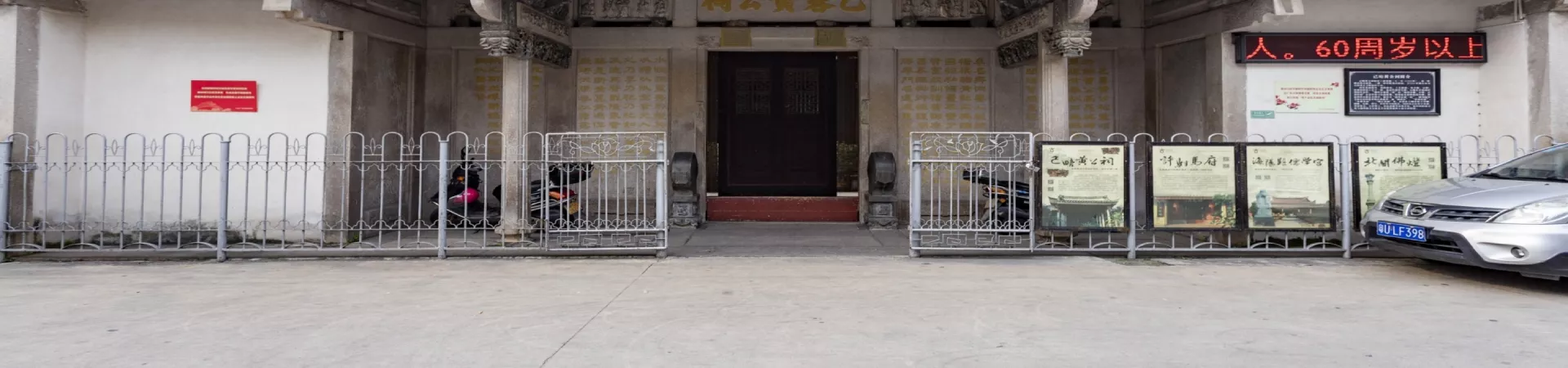
Subtitle: A Masterpiece of Chaoshan Woodcarving and Architectural Art
1. Introduction and Historical Context
Nestled in the heart of Chaozhou's ancient urban district, at No. 2 Tie Lane, Yi'an Road, stands the Jilue Huang Clan Ancestral Hall, a monument of profound cultural and artistic significance. Constructed in the 13th year of the Guangxu Emperor's reign during the Qing Dynasty (1887 AD), this ancestral hall serves not merely as a place of familial reverence but as a breathtaking, three-dimensional canvas showcasing the pinnacle of Chaoshan (Teochew) decorative arts. For over a century, it has silently narrated stories of craftsmanship, local legends, and aesthetic philosophy through its intricate wood and stone carvings. Its exceptional preservation and artistic merit have rightfully earned it the status of a National Key Cultural Relics Protection Unit, attracting scholars, art enthusiasts, and travelers from around the world seeking to witness its legendary beauty.
2. Architectural Layout and Spatial Harmony
The hall exemplifies the classic "two-progression courtyard" (二进院) layout common to traditional southern Chinese clan architecture, with a width of 15.4 meters and a depth of 25.7 meters. This design creates a journey from the public realm into a space of ancestral privacy and contemplation.
2.1. The Entrance and Facade The visit begins at the ornate entrance gatehouse. The lintel is prominently inscribed with the hall's name, "己略黄公祠" (Jilue Huang Clan Ancestral Hall), while the reverse side bears the admonition "孝思维则" (Filial Piety is the Model to Follow), setting a tone of traditional virtue. The framework of this gatehouse is lavishly decorated with exquisite stone carvings, preparing the visitor for the visual feast within.
2.2. The Courtyard and Hall Configuration Passing through the gate, one enters a central open-air skywell (天井), which provides light and ventilation. This courtyard is flanked on two sides by covered corridor verandas (廊轩), linking the front and rear structures. The main rear hall (后厅) features an attached "hugging" pavilion (抱厦), creating a distinctive and harmonious layout often described as "four halls facing each other."
3. The Pinnacle of Craftsmanship: Structural and Decorative Woodcarving
It is within the rear hall that the ancestral hall's most celebrated feature resides. Here, the wooden roof framework is a masterpiece of structural engineering and art, constructed in the iconic Chaoshan style known as "three-five papaya, eighteen blocks" (三五木瓜十八块坯). This complex system of beams, brackets, and purlins is not only load-bearing but forms the very foundation for the hall's legendary decorative program.
3.1. Themes and Narrative Content The beams, brackets, and friezes are transformed into a vivid storytelling medium. The carvings depict a rich tapestry of subjects: * Mythical Beasts and Auspicious Symbols: The ends of beams and crossbeams are adorned with dynamically carved dragons, phoenixes, lions, and other creatures symbolizing power, prosperity, and good fortune. * Operatic Epics and Folktales: Intricate narrative panels bring to life scenes from classic Chinese operas and stories, such as "The Bronze Sparrow Platform (铜雀台)," "Zhang Yu Boils the Sea (张羽煮海)," and "The Flooding of Jinshan Mountain (水漫金山)." These scenes showcase the carvers' ability to capture drama and movement. * Local Landscapes: Notably, the "Scenery of the Han River (韩江丽景)" reflects a pride in local geography, immortalizing the region's natural beauty in wood.
3.2. Technical Mastery and Artistic Techniques The artisans employed a breathtaking array of techniques to achieve depth and realism, transcending the limitations of space and time within a two-dimensional plane. These techniques include: * Full-round carving (圆雕): For detached, three-dimensional figures. * Incised carving (沉雕): For shallow, engraved lines. * Relief carving (浮雕): Where figures project from a background. * Openwork or pierced carving (镂空): Creating multiple layers and a sense of immense depth, often with several separate planes of action visible from a single viewpoint.
3.3. Finishing and Polychrome Effects The final artistic layer involves the sophisticated use of color and gilding, which can be categorized into three main styles: * Black Lacquer with Gilding (黑漆装金): Figures are painted black with key details highlighted in gold leaf, creating a majestic and solemn contrast. * Multicolored Gilding (五采装金): A polychrome effect where gold leaf is applied over multiple painted colors, resulting in a brilliantly ornate and festive appearance. * Plain Natural Wood Carving (本色素雕): Leaving the wood in its natural state or with a clear finish to highlight the purity of the grain and the skill of the carving itself.
The strategic combination of these techniques across the hall creates a visual rhythm, distinguishing primary from secondary elements and establishing clear compositional hierarchy and balance. It is this unparalleled synthesis of scale, narrative complexity, technical virtuosity, and artistic finish that has led the Jilue Huang Clan Ancestral Hall to be universally acclaimed as "The Premier Wonder of Chaozhou Woodcarving."
4. Practical Visitor Information
4.1. Location and Contact The ancestral hall is located at No. 2, Tie Lane, Yi'an Road, in the central urban area of Chaozhou City, Guangdong Province. * Telephone: +86 768 2251318; +86 768 2236699
4.2. Opening Hours * Tuesday to Sunday (and public holidays): 08:30 - 17:30. Last admission is at 17:00. * Mondays: Open all day (08:30-17:30, last admission 17:00). (Note: This schedule appears to indicate the hall is open seven days a week, but visitors are advised to confirm ahead of travel in case of changes.)
4.3. Admission Notes A special national policy is in place where medical professionals across China can enter free of charge by presenting their valid professional qualification certificate and national ID card. The specific end date for this policy should be confirmed directly with the scenic site management.