Han Yu Memorial Hall
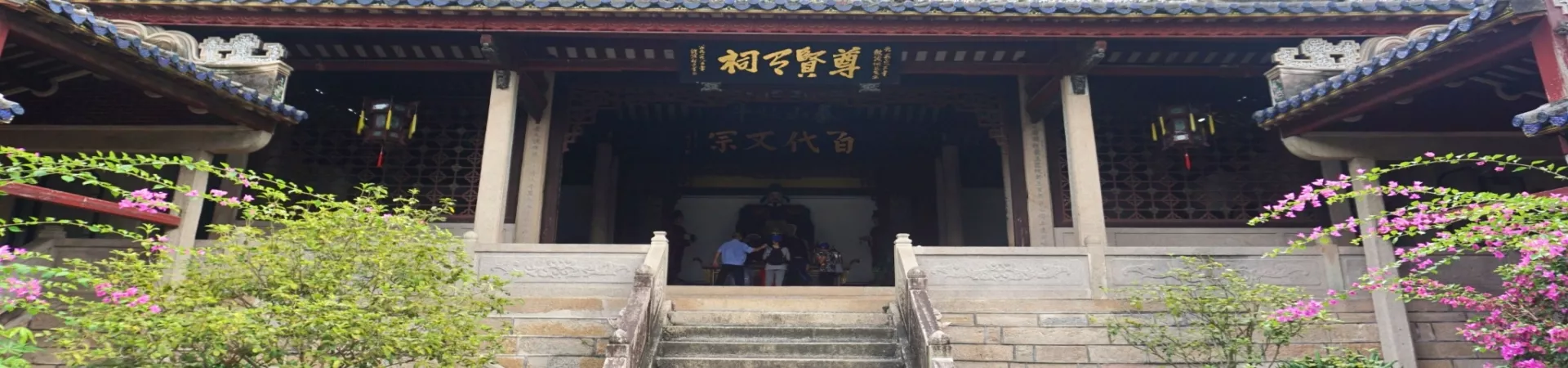
Subtitle: A Journey Through History and Culture at the Memorial Hall of Han Yu in Chaozhou
1. Introduction to the Memorial Hall of Han Yu
Nestled within the historic and culturally rich city of Chaozhou in Guangdong Province, China, the Memorial Hall of Han Yu stands as a profound tribute to one of the most celebrated figures in Chinese literary and political history. Han Yu (768–824 AD), a towering intellectual of the Tang Dynasty, was not only a master essayist and poet but also a dedicated statesman whose influence extended far beyond his lifetime. Although his direct administrative tenure in the Chaozhou region was relatively brief, his impact was deep and enduring, leaving an indelible mark on the local culture, education, and spiritual landscape. This memorial hall, established to honor his legacy, is far more than a static museum; it is a dynamic cultural space where visitors can immerse themselves in the world of a Confucian scholar, understand his philosophical contributions, and appreciate the historical context of his exile to the southern frontiers of the empire. The site seamlessly blends traditional Lingnan architectural elegance with scholarly reverence, offering a serene and contemplative environment for both education and reflection.
2. Historical Significance and Legacy of Han Yu
2.1. Han Yu: The Man and His Exile To fully appreciate the memorial hall, one must understand the man it honors. Han Yu was a central proponent of the Classical Prose Movement, advocating for a return to clear, purposeful writing over the ornate style prevalent in his time. His essays on Confucian doctrine, governance, and social responsibility remain foundational texts. His outspoken nature, however, led to his dismissal from the imperial court and exile to Chaozhou (then a remote and culturally distinct prefecture) in 819 AD. Rather than succumbing to despair, Han Yu approached his exile as an opportunity for service.
2.2. Transformative Impact on Chaozhou During his short eight-month stay, Han Yu initiated transformative changes. He took decisive action against local practices he found harmful, most famously driving away crocodiles that plagued the waterways—an event memorialized in his eloquent essay "The Prayer to the Crocodile." More lastingly, he vigorously promoted education and Confucian values, establishing schools and nurturing local talent. His respect for and engagement with the local populace helped bridge cultural gaps and integrate Chaozhou more fully into the broader Chinese cultural sphere. For these efforts, he is remembered not as a distant bureaucrat but as a beloved "Governor Han" who worked tirelessly for the people's welfare.
2.3. The Hall as a Symbol of Gratitude The Memorial Hall itself, located on the picturesque slopes of Bijia Hill near the Han River, is built on a site historically associated with his governance. Its construction and continued preservation symbolize Chaozhou's centuries-old gratitude. It serves as a physical anchor for his legacy, ensuring that his spirit of integrity, civic duty, and literary excellence continues to inspire future generations.
3. Visitor Experience and Practical Information
3.1. Layout and Architectural Features The memorial complex is a fine example of classical Chinese garden and temple architecture, adapted to the local Lingnan style. Visitors typically follow an ascending path that mirrors a journey of scholarly pursuit. Key structures include: * The Main Memorial Hall: The central pavilion houses a dignified statue of Han Yu, along with inscribed steles (stone tablets) bearing his most famous texts and commemorative writings from later admirers. * Exhibition Rooms: These rooms display detailed biographical information, historical documents, and artifacts related to Han Yu's life, his literary works, and his specific activities in Chaozhou. Calligraphy and paintings inspired by his poetry are also featured. * Ancillary Pavilions and Gardens: Scattered throughout the grounds are smaller pavilions, ancient trees, and rock gardens. These provide quiet spots for contemplation and often feature couplets and inscriptions praising Han Yu's character and achievements. The overall design encourages a leisurely pace, inviting visitors to connect with the scholarly atmosphere.
3.2. Practical Details for Planning Your Visit * Opening Hours: The memorial hall is open from 08:30 to 17:00, Tuesday through Sunday. On Mondays, it operates with shorter hours, from 08:00 to 12:00. It is important to note that if a Monday coincides with a national public holiday, the hall will operate under normal opening hours (08:30-17:00). * Admission: There is no entrance fee. The hall is freely accessible to the public, reflecting its role as a community cultural asset. * Suggested Duration: A comprehensive visit, including time to read exhibits, admire the architecture, and enjoy the tranquil surroundings, typically takes under one hour. However, scholars or those with a deep interest in Chinese history and literature may wish to spend longer. * Contact Information: For any specific inquiries, visitors can contact the hall at +86-768-2523581.
4. Cultural Context and Broader Itinerary Integration
4.1. The Hall in the Tapestry of Chaozhou Culture A visit to the Han Yu Memorial Hall is most rewarding when understood as a key chapter in Chaozhou's story. The city is renowned for its unique and well-preserved cultural identity, including Teochew opera, intricate woodcarving, exquisite porcelain (particularly from the nearby Fengxi Kiln), and a distinctive culinary tradition. Han Yu's legacy is interwoven with this identity; his promotion of literacy and central Chinese culture coexisted with, and perhaps even helped to refine, the strong local character. The hall is thus a gateway to understanding the synthesis of national and regional cultures that defines Chaozhou.
4.2. Combining Your Visit with Other Local Attractions The memorial hall's location makes it an ideal part of a broader cultural tour of Chaozhou. It is situated in close proximity to other significant landmarks: * Guangji Bridge (Xiangzi Bridge): This ancient pontoon bridge, a masterpiece of engineering, is a UNESCO World Heritage Site and offers stunning views of the Han River, which is named after Han Yu himself. * Kaiyuan Temple: One of the most important Buddhist temples in the region, showcasing magnificent temple architecture and historical relics. * Chaozhou Ancient City Wall and Gates: Exploring the old town streets, sampling local snacks like bak kut teh (meat bone tea) and yuanyang (oyster omelet), and visiting craft workshops provide a vibrant contrast to the scholarly calm of the memorial hall.
A well-rounded day could begin with the historical and literary immersion at the Han Yu Memorial Hall, followed by a walk across the iconic Guangji Bridge, and conclude with exploration and dining within the bustling lanes of the ancient city, creating a rich, multi-layered experience of Chaozhou's enduring heritage.