Kaiyuan Temple
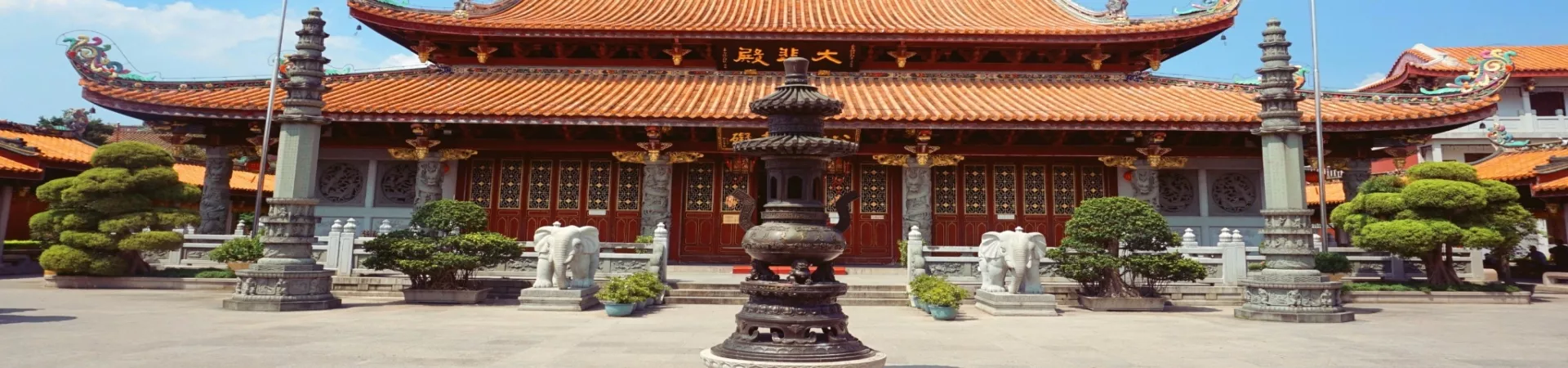
A Journey Through Time: Unveiling the Architectural and Spiritual Tapestry of Chaozhou Kaiyuan Temple
Nestled on Kaiyuan Road in the heart of Chaozhou City, Guangdong Province, the Kaiyuan Temple stands as a monumental testament to Chinese Buddhist history, architectural evolution, and unbroken spiritual devotion. More than just a temple; it is a living museum, its very stones narrating a saga that began in the Tang Dynasty and continues to resonate today.
1. Historical Foundations: From Imperial Decree to Modern Sanctuary
The temple's origin is precisely anchored in history, commissioned by Emperor Xuanzong of the Tang Dynasty in the 26th year of the Kaiyuan era (738 AD). This imperial patronage at its inception bestowed upon it a name and a stature that would endure for centuries. Throughout its long life, the temple has been known by various official names, reflecting the changing dynasties and their patronage. During the Yuan Dynasty, it was referred to as the "Kaiyuan Longevity Chan Temple," while the Ming Dynasty renamed it the "Kaiyuan Zhenguo Chan Temple" (Kaiyuan Temple Guarding the State). From the Qing Dynasty onward, both the formal "Kaiyuan Zhenguo Chan Temple" and the simpler "Kaiyuan Temple" have been used interchangeably. Despite the passage of time and the rise and fall of empires, the temple has been conscientiously maintained and repaired in every successive dynasty, ensuring the preservation of its core structure and spiritual function.
The 20th century, however, brought its greatest trial. During the Cultural Revolution, the temple suffered severe damage and desecration. Its survival and glorious restoration are largely attributed to the devout generosity of overseas Chinese communities and compatriots from Hong Kong and Macao. Their significant donations funded a comprehensive renovation project in 1982, which painstakingly restored the complex to its former majesty, allowing it to reclaim its role as a central pillar of faith and culture in Chaozhou.
2. Architectural Grandeur: A Palimpsest of Dynastic Styles
Occupying a spacious area of approximately 20,000 square meters, the Kaiyuan Temple presents a fascinating architectural palimpsest. Its most fundamental and remarkable feature is the retention of the original Tang Dynasty courtyard layout. This symmetrical, axial planning provides the serene and orderly spatial foundation for the entire complex.
Upon this Tang blueprint, the temple beautifully integrates and showcases the distinct architectural artistry of the Song, Yuan, Ming, and Qing dynasties. This makes a walk through its halls a chronological journey through Chinese religious architecture.
- 2.1. The Great Hall (Mahavira Hall): Often the centerpiece, this hall likely exhibits heavy brackets (dougong) from the Song or Ming periods, supporting sweeping, elegant roofs adorned with intricate ridge figurines.
- 2.2. Stone Pagodas and Columns: Look for majestic stone pagodas or carved sutra pillars that may date back to the Tang or Song eras, their surfaces worn but inscriptions still faintly visible.
- 2.3. Decorative Details: Ornate woodcarvings on beams and doorways, glazed ceramic roof decorations, and detailed stone bas-reliefs often bear the hallmarks of Ming and Qing craftsmanship, adding layers of decorative sophistication to the older structural forms.
This harmonious blend of styles is not a mere collage but a cohesive whole, demonstrating the temple's continuous adaptation and reverence for its own past.
3. The Visitor's Experience: Practical Information and Spiritual Ambiance
Today, the Kaiyuan Temple is not only an active place of worship, with incense smoke perpetually weaving through its courtyards, but also a premier destination for cultural and historical tourism.
3.1. Planning Your Visit * Opening Hours: The temple is open in two sessions daily: 07:00 - 12:00 (morning session) and 13:00 - 17:00 (afternoon session). Last admission is at 11:00 for the morning session and 16:00 for the afternoon session. These hours apply year-round, Monday through Sunday. * Admission: A remarkable aspect of the temple is that it offers free admission, making this cultural treasure accessible to all. * Suggested Duration: To fully appreciate the architecture, artifacts, and tranquil atmosphere, plan to spend between 1 to 3 hours exploring the grounds at a leisurely pace.
3.2. Immersive Atmosphere Upon entering, visitors are enveloped in an atmosphere of profound serenity juxtaposed with vibrant spiritual life. The scent of sandalwood incense fills the air, the sound of chanting monks or Buddhist scriptures may drift from a hall, and the sight of local devotees performing prayers offers a glimpse into living religious practice. The temple's numerous halls house statues of Buddhas and Bodhisattvas, some of which are historically significant artworks in their own right.
4. Cultural Significance: A Pillar of Lingnan Heritage
The Kaiyuan Temple's significance extends far beyond its physical boundaries. It serves as a crucial spiritual anchor for the Teochew (Chaozhou) people, both locally and across the global diaspora. For the overseas communities whose contributions saved it, the temple symbolizes a tangible link to their ancestral homeland and cultural roots. Architecturally, it is an indispensable reference for studying the evolution of Buddhist temple construction in southern China, particularly in the Lingnan region. Its resilience—surviving dynastic changes, social upheaval, and meticulous restoration—mirrors the enduring spirit of Chaozhou culture itself: deeply traditional, adaptable, and perpetually renewed. It stands as a silent yet powerful educator, offering lessons in history, art, religion, and community to every visitor who walks its ancient paths.