Youshun Temple
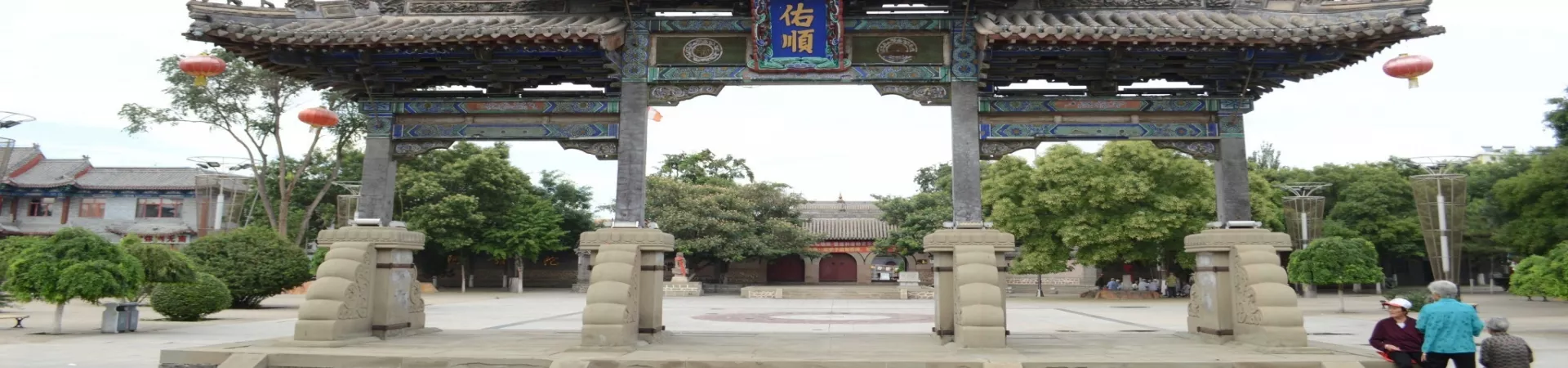
Subtitle: A Living Chronicle of Faith and Cultural Fusion in Chaoyang
1. Introduction: A Spiritual Beacon in the Northeast
Nestled in the heart of Chaoyang City, Liaoning Province, the Youshun Temple stands not merely as an architectural relic but as a vibrant, breathing testament to over three centuries of spiritual devotion and cultural interchange. Unlike many ancient temples secluded in mountains, Youshun Temple is intimately woven into the urban fabric of Chaoyang, offering a serene sanctuary amidst the city's hustle. Its significance transcends its religious function; it is a pivotal landmark in the history of Tibetan Buddhism's spread into the northeastern regions of China and a profound symbol of the enduring cultural and ethnic unity between the Manchu, Mongolian, and Han peoples. Founded in 1699 during the Kangxi era of the Qing Dynasty, the temple's very inception was a state-sponsored project aimed at fostering harmony and consolidating the frontier, making its walls repositories of stories far beyond scripture.
2. Historical Tapestry: From Imperial Edict to Spiritual Haven
2.1. Foundation and Imperial Patronage The temple's origin is steeped in imperial purpose. Commissioned by the Kangxi Emperor and constructed under the supervision of a Mongolian prince, its establishment was a strategic and cultural masterstroke. It served as a tangible manifestation of the Qing court's policy to integrate the Mongol regions through shared spiritual traditions, specifically Tibetan Buddhism (Lamaism). The name "Youshun," meaning "to assist and pacify," perfectly encapsulates this mission of fostering stability and allegiance through faith.
2.2. Architectural Evolution and Resilience Throughout the 18th century, Youshun Temple underwent significant expansions, most notably under the Qianlong Emperor, who granted it imperial stele and elevated its status. This period solidified its layout and grandeur. The temple's history, however, is not without chapters of adversity. It has weathered natural disasters, the turbulence of wars, and the neglect of changing times. Its survival and subsequent restoration are a credit to its enduring importance in the community's heart. Each restoration effort, particularly in recent decades, has been a careful act of preserving not just bricks and mortar, but a continuous thread of living history.
3. Architectural Layout and Sacred Artistry
The temple complex is a classic example of Sino-Tibetan architectural synthesis, following a strict north-south axial layout common to Chinese temples, while incorporating distinct Tibetan Buddhist artistic elements.
3.1. The Mountain Gate and Heavenly King Hall The journey begins at the imposing Mountain Gate, which immediately establishes the temple's dignified presence. Passing through, visitors encounter the Hall of the Heavenly Kings, guarded by the four formidable celestial kings, protectors of the Buddhist law and the temple grounds.
3.2. The Central Axis: Heart of Devotion The axis leads to the core sacred structures: * The Main Hall (Mahavira Hall): This is the architectural and spiritual centerpiece. Housing statues of Sakyamuni Buddha, Amitabha Buddha, and the Medicine Buddha, it is where major ceremonies are held. The hall's design, with its sweeping eaves and intricate dougong brackets, reflects Han Chinese style, while the interior thangka paintings and ritual objects showcase Tibetan influence. * The Hall of Mahayana: Situated behind the Main Hall, this space is dedicated to the teachings of Mahayana Buddhism and often features statues of Bodhisattvas like Avalokitesvara (Guanyin) or Manjushri.
3.3. Distinctive Tibetan Buddhist Elements * Scripture Hall and Lamas' Quarters: Flanking the central axis are auxiliary halls, including a scripture hall for storing sacred texts and living quarters for lamas, highlighting the temple's function as an active monastic center. * Stupas and Prayer Wheels: Scattered throughout the courtyard, white stupas (chortens) and rows of bronze prayer wheels are quintessential Tibetan Buddhist features. Circling the stupas and spinning the wheels, inscribed with mantras, are acts of devotion and merit-making for pilgrims. * Murals and Thangkas: The interior walls are adorned with vibrant murals depicting Buddhist cosmologies, guardian deities, and scenes from the Buddha's life. These artworks serve as both decoration and profound visual teachings.
4. Cultural Significance and Living Heritage
4.1. A Hub for Ethnic Harmony For centuries, Youshun Temple has been a unique crossroads. It attracted Mongolian and Tibetan monks for study and practice, while Han Chinese artisans contributed to its construction and upkeep. This collaboration made it a living workshop of ethnic and artistic fusion, a role that cemented its place as a unifying symbol in the region's diverse cultural landscape.
4.2. Rituals and Festivals: The Temple Comes Alive The temple's true essence is most palpable during its religious observances. While daily rituals maintain the rhythm of monastic life, it is during major Buddhist festivals—such as the Buddha's Birthday, the Monlam Prayer Festival, and the ceremonial dances (Cham) held on specific lunar dates—that the temple transforms. The air fills with the sonorous chants of sutras, the scent of juniper incense, and the sight of devotees from various backgrounds participating in shared reverence. These events are not performances for tourists but authentic expressions of a living faith tradition.
4.3. A Modern Destination for Seekers and Scholars Today, Youshun Temple fulfills multiple roles. For the faithful, it remains an active place of worship and pilgrimage. For visitors, it offers a profound glimpse into a unique chapter of Chinese religious history and architectural artistry. Scholars are drawn to its well-preserved steles, artifacts, and its documented history as a case study in Qing dynasty frontier policy and religious art. Its location in downtown Chaoyang makes it an accessible and essential stop for anyone seeking to understand the deep historical and cultural layers of western Liaoning.