Chaoyang South Tower
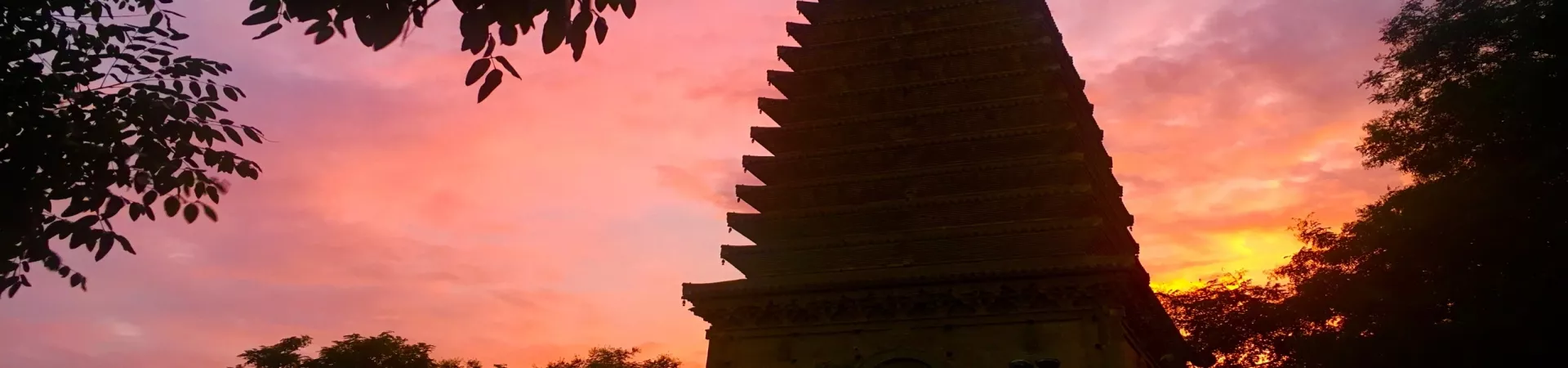
Subtitle: A Millennium-Old Sentinel: Unveiling the Architectural and Historical Grandeur of Chaoyang South Pagoda
1. Introduction: The Skyline's Ancient Pillar Rising approximately 45 meters against the modern skyline of Chaoyang City in Liaoning Province, the Chaoyang South Pagoda stands as a silent yet profound testament to the region's deep historical and cultural strata. This architectural marvel, a square, hollow, thirteen-tiered dense-eave brick pagoda facing south, is far more than a mere relic; it is a chronicle in brick and mortar, a spiritual landmark, and a masterpiece of Liao Dynasty (907–1125) craftsmanship. For the discerning visitor, it offers a captivating journey into an era where Buddhist faith, nomadic Khitan culture, and sophisticated engineering converged to create enduring beauty.
2. Historical Context and Significance 2.1. Foundations in the Liao Dynasty The pagoda's origins trace back to the Liao Dynasty, a powerful empire established by the Khitan people. The Liao rulers, while maintaining their nomadic traditions, were ardent patrons of Buddhism, which flourished under their reign. Chaoyang, historically known as Longcheng, was a significant cultural and religious center within the Liao territory. The construction of the South Pagoda, along with its counterparts in the city, was intrinsically linked to the dynasty's policy of using monumental religious architecture to consolidate power, demonstrate piety, and legitimize their rule over conquered territories. It served as a grand stupa, likely housing sacred Buddhist relics (sarira), and functioned as a central point for worship and monastic activity.
2.2. A Legacy of Preservation and Discovery Unlike many ancient structures lost to time, the Chaoyang South Pagoda has endured through centuries, albeit with necessary restorations that have carefully preserved its original Liao character. Archaeological work in and around the pagoda has yielded significant discoveries, including artifacts and inscriptions that shed light on its history and the vibrant Buddhist community it supported. Its preservation allows it to serve as a crucial physical document for understanding the religious art, architectural technology, and social dynamics of Northeast China during a pivotal historical period.
3. Architectural Analysis and Artistic Splendor The pagoda is a quintessential example of the "dense-eave" style (miyan ta) perfected during the Liao and Jin dynasties. Its design is a sophisticated layered composition, each section possessing distinct symbolic and aesthetic functions.
3.1. Structural Composition: From Earth to Heaven The pagoda's form follows a traditional vertical hierarchy symbolizing the Buddhist cosmos: * The Base: The solid foundation represents the earthly realm, providing stability and grounding for the entire structure. * The Sumeru Pedestal (Xumizuo): This intricately carved platform, named after the mythical Mount Sumeru believed to be the center of the Buddhist universe, forms the transition between the earthly and the divine. It is often adorned with elaborate brick carvings. * The Pagoda Body (Tashen): The main shaft of the pagoda. On the south-facing side (the primary facade), one typically finds a false door or a sculpted niche that once housed a statue of a Buddha or Bodhisattva. The other three sides often feature engraved sutras or decorative false windows. * The Thirteen Tiers of Eaves (Tayan): The defining feature of its style, the thirteen closely stacked, upwardly curving eaves create a rhythmic, cascading silhouette. Each tier is supported by intricate brick brackets (dougong). The number thirteen, considered auspicious in Buddhism, may symbolize the stages toward enlightenment. * The Finial (Tacha): The spire at the very top, often comprising a base, a canopy, and a precious pearl. It symbolizes the ultimate attainment of Nirvana, piercing the heavens.
3.2. Embellishments and Iconography While the primary material is brick, the artistry lies in the detailed brick carvings and the remnants of decorative elements. The Sumeru pedestal and the body of the pagoda likely feature bas-reliefs of lotus petals, celestial musicians (feitian), guardian figures, and Buddhist symbols. Traces of colored glaze or painted stucco might be visible, hinting at the pagoda's originally polychromatic and resplendent appearance, which would have made it a dazzling focal point in the ancient landscape.
4. The Visitor Experience and Practical Information 4.1. Engaging with the Pagoda Visiting the Chaoyang South Pagoda is an immersive experience. The recommended approach is circumambulation—walking clockwise around the structure, a meditative practice in Buddhism representing the path towards enlightenment. This allows for appreciation of the carvings on each side and the changing play of light and shadow on the brickwork. Observing the pagoda from different distances is also rewarding; from afar, its elegant, soaring profile dominates the view, while up close, the texture of the ancient bricks and the details of the craftsmanship become palpable. The site often exudes a serene atmosphere, offering a moment of tranquility away from the urban bustle.
4.2. Integration with Chaoyang's Cultural Tapestry The South Pagoda is not an isolated monument. It is an integral part of Chaoyang's "Three Pagodas" heritage, which includes the North Pagoda and the East Pagoda. A visit is greatly enhanced by exploring these related sites and the Chaoyang City Museum, which houses artifacts recovered from the pagodas, providing crucial context. The pagoda stands as a direct link to Chaoyang's status as a historical hub on the frontiers of Chinese civilization.
4.3. Essential Details for Planning Your Visit * Location: The pagoda is situated within the urban area of Chaoyang City, Liaoning Province, China. Specific location details should be confirmed via updated maps or local guides. * Contact Information: For the most current information regarding opening hours, entrance fees, or special access, visitors can inquire using the following contact number: +86-421-2813498. * Best Practices: Visitors are encouraged to maintain a respectful demeanor, as the site remains a cultural and historical treasure. Photography is generally permitted, but the use of flash or tripods may be restricted. Checking local tourism websites for any seasonal events or temporary closures before your visit is always advisable.
The Chaoyang South Pagoda, in its silent majesty, continues to narrate a story of devotion, power, and artistic achievement. It invites visitors to look beyond its weathered bricks and see the vision of a dynasty that sought to reach for the heavens, leaving an indelible mark on the landscape and history of China's Northeast.