Puppet Emperor's Palace (Wei Huang Gong)
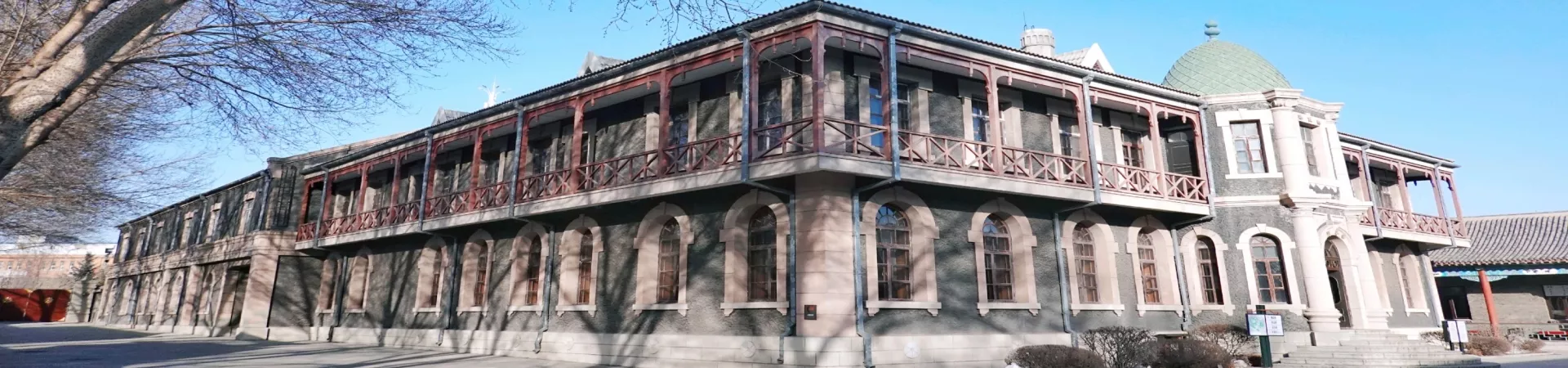
Subtitle: A Journey into the Final Chapter of China's Imperial History
1. Introduction: The Palace of a Puppet Emperor Nestled within the urban landscape of Changchun, the Museum of the Imperial Palace of Manchukuo stands as a silent yet profound witness to a complex and tumultuous period in modern Chinese history. This institution is uniquely situated on the original site of the palace used by Aisin Gioro Puyi, the last emperor of China, during his tenure as the puppet ruler of the Japanese-controlled state of Manchukuo from 1932 to 1945. More than just a collection of buildings, the museum serves as a tangible historical text, offering visitors an immersive exploration of the architectural spaces, personal artifacts, and political theater that defined this era of occupation, collaboration, and national resistance. It presents a poignant narrative of a figure caught between his imperial legacy and the harsh realities of geopolitical manipulation.
2. Exploring the Palace Complex: Layout and Major Structures The palace grounds are architecturally and functionally divided into two distinct sections: the Outer Court for political activities and the Inner Court for daily living. This division helps visitors navigate the dual, often conflicting, roles of Puyi—the public head of state and the private individual.
2.1. The Outer Court: The Stage for Political Theater The Outer Court was designed for ceremonies, audiences, and state functions meant to project the legitimacy of the Manchukuo regime. Key structures here now form the core of the museum's historical exhibitions. * The Qinmin Building: This was the main office building where Puyi conducted his nominal official duties and received guests. Its interiors and exhibits detail the administrative facade of the puppet government. * The Huaiyuan Building: Adjacent to the Qinmin Building, it housed the Imperial Guard and serves as a space for exhibitions on the military and ceremonial aspects of the court.
2.2. The Inner Court: The Private Realm of the Imperial Household The Inner Court was the residence for Puyi, his empress Wan Rong, and other consorts. The architecture and personal relics here reveal the isolated, controlled, and often tragic personal lives within the palace walls. * Jixi Building: This is perhaps the most evocative building in the complex. Serving as the private living quarters for Puyi and his wife, Empress Wan Rong, its rooms are preserved to reflect their daily life. Exhibits poignantly illustrate Wan Rong's struggles with opium addiction and deepening depression, offering a stark contrast to the formal pomp of the Outer Court. * Tongde Hall: A later addition built under Japanese direction, this grand hall was intended for grand receptions and banquets. Its mixed architectural style—featuring Chinese roof elements on a Western-style reinforced concrete structure—symbolizes the forced amalgamation of cultures under the occupation. Notably, Puyi himself was suspicious of the building, fearing hidden surveillance devices, and rarely used its living quarters.
3. Collections and Exhibitions: From Imperial Relics to Regional History The museum's collections bring history to life through a diverse array of artifacts and thematic exhibitions.
3.1. Artifacts of the Manchukuo Period The core collection consists of original items from the palace, providing intimate glimpses into this period. Key exhibits include Puyi's personal limousine, a powerful symbol of his modern yet constrained existence; imperial seals and documents; photographs; household items; and the personal effects of the imperial family. These objects collectively narrate a story of faded imperial glory, personal confinement, and the meticulous stage-management of Puyi's public image.
3.2. The Jilin Provincial Museum Annex A significant portion of the palace complex, primarily within the Inner Court area, is dedicated to the Jilin Provincial Museum. This section expands the historical narrative beyond the 20th century, delving into the rich, ancient tapestry of Northeast China. * Exhibition Focus: It houses important archaeological finds and historical materials related to the various feudal kingdoms and dynasties that flourished in the region, such as the Goguryeo (Gaogouli), Balhae (Bohai), Liao, and Jin dynasties. This provides crucial context, showcasing that the region has long been a cradle of sophisticated cultures and powerful states, long before the modern era of conflict.
4. Practical Visitor Information
4.1. Tickets, Opening Hours, and Booking * Ticket Prices: A tiered pricing system is in effect. Standard adult tickets are 70 RMB. Concessions are available: students (20 RMB), military personnel (30 RMB), and seniors aged 60-64 (35 RMB). Free admission is granted to seniors over 65, individuals with disabilities, and children under 1.3 meters in height. * Operating Hours: Hours vary seasonally. From April 16 to October 15, the museum is open from 8:30 AM to 5:20 PM, with last entry at 4:20 PM. From October 16 to April 15 of the following year, hours are 8:30 AM to 4:50 PM, with last entry at 3:40 PM. It is open daily. * Booking Advice: To ensure entry and streamline the process, it is highly recommended to book tickets in advance through the museum's official WeChat account ("伪满皇宫博物院"). Note that bookings are limited to one reservation per valid ID per day.
4.2. Transportation and Accessibility The museum is conveniently accessible via Changchun's public transport network. * By Metro: The most straightforward method is to take Metro Line 3 or Line 4 and alight at the "Weiman Huanggong" (伪满皇宫) station. The museum entrance is within a short walking distance from the station exit. * By Bus: Multiple bus routes serve the area. A common option is Bus 264, which stops at the "Weiman Huanggong" bus stop. From there, it is approximately a 200-meter walk to the museum gates.
4.3. Suggested Duration and Contact * Visit Duration: To thoroughly explore both the Manchukuo historical sections and the Jilin Provincial Museum annex, a visit of 2 to 3.5 hours is recommended. This allows time to engage with the extensive exhibits and absorb the historical atmosphere of the site. * Contact: For specific inquiries, visitors can call the museum at 0431-82866611.