Jinjiang Wooden House Village
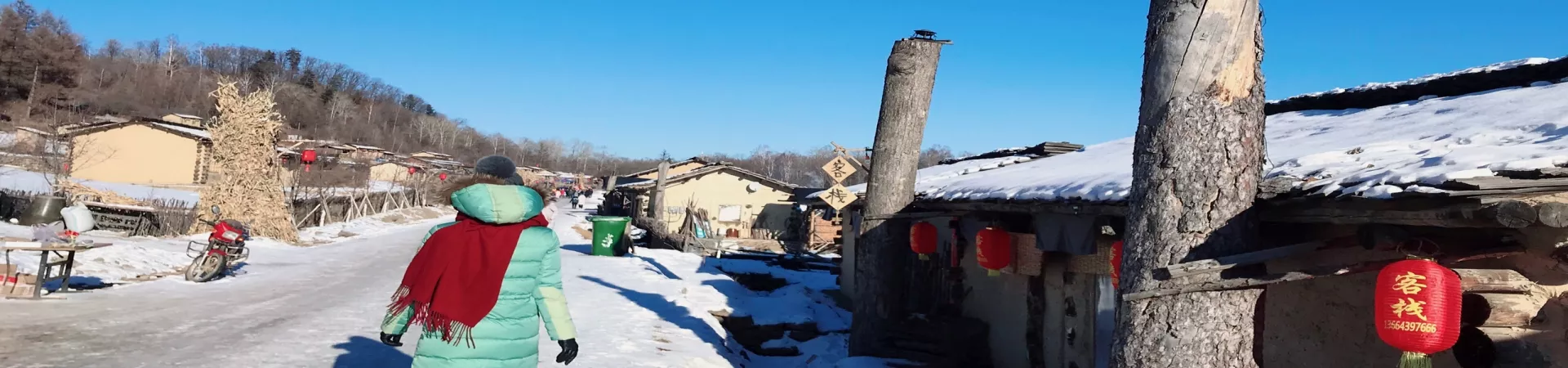
Subtitle: A Journey Through Time: Exploring Jinjiang Wooden House Village, a Preserved Manchu Settlement Nestled in the Heart of Changbai Mountain
1. Introduction: The Last of Its Kind
Tucked deep within the majestic, forested slopes of the Changbai Mountain range lies a living relic of history and cultural perseverance: Jinjiang Wooden House Village. Originally known as "Gudingzi" (Lonely Summit), this secluded settlement is far more than a scenic stop; it is a nationally protected ancient village and a key cultural heritage site under state protection. It represents the last surviving, continuously inhabited cluster of traditional Manchu wooden architecture in Northeast China and the greater Changbai Mountain region. Hailed as the best-preserved wooden house community discovered to date, Jinjiang Village offers an unparalleled window into the ingenious adaptation and sustainable living practices of the Manchu people, whose legacy is etched into every hand-hewn log and chimney stack.
2. The Architectural Marvel: "Mu Keleng" and "Hulan"
The soul of Jinjiang Village resides in its unique structures, locally known as "Mu Keleng." This term refers to the traditional log cabin construction technique, a masterpiece of pre-modern engineering perfected by Manchu ancestors. Without using a single nail, these dwellings are crafted from interlocking horizontally stacked pine or fir logs, their corners meticulously notched and joined. This method provided exceptional insulation against the region's harsh, prolonged winters and humid summers, showcasing a profound understanding of local materials and climate.
A distinctive feature complementing the Mu Keleng is the "Hulan" – the detached chimney. Built from hollowed-out tree trunks or wooden boards, these standalone chimneys rise a short distance from the main house, connected by a short underground tunnel. This ingenious design significantly reduced the risk of fire, a constant threat in densely built wooden communities. The cultural significance of this architecture was even acknowledged by Emperor Qianlong during his eastern tour in the 18th century. Upon witnessing these "wooden pillar chimneys," he was moved to compose a verse, noting: "Wooden pillars and chimneys remain the old custom; through paper windows, the sunlight casts a fresh, pleasant glow." His poem immortalizes the very scene visitors encounter today, bridging centuries through a shared observation.
3. The Visitor Experience: Immersion in Tradition
A visit to Jinjiang Village is a step into a slower, more tactile world. The recommended duration for a thorough exploration is 1 to 3 hours, allowing ample time to absorb the atmosphere and details.
3.1. A Village Frozen in Time Wandering through the village, you are surrounded by structures built entirely of wood – homes, barns, and fences – all harmonizing with the towering ancient trees and pristine forests that envelop the settlement. The air is fragrant with pine, and the quiet is broken only by natural sounds. You can approach these historic homes, observe the texture of the weathered logs, and study the construction up close. It is an opportunity to contemplate the sheer ingenuity required to create such durable, functional, and aesthetically pleasing shelters using only the forest's bounty.
3.2. Unique Seasonal Activities Depending on the season, the village offers distinctive ways to explore. In the winter months, the experience is transformed by snow. Visitors can partake in a nostalgic ox-drawn sleigh ride, gliding silently through the snow-blanketed lanes. This is not merely transport; it is a reenactment of the primary winter mobility used by Northeast China's early settlers, offering a genuine feel for their foundational snow sports and daily life amidst deep winters.
4. Practical Information for Planning Your Visit
To ensure a smooth and enriching trip to Jinjiang Wooden House Village, please note the following practical details.
4.1. Operating Hours The village is open to visitors daily from 8:30 AM to 4:30 PM. This schedule is generally consistent throughout the year, from January 1st to December 31st.
4.2. Ticketing and Fees As a protected cultural site, access to the village is managed. For the most accurate and current information regarding admission tickets, including pricing and any potential discounts, it is highly recommended to consult directly with the scenic area administration prior to your visit. Policies and fees may be subject to change.
4.3. Location and Context The village's remote location in the heart of the Changbai Mountain area is key to its preservation. The journey there takes you through vast expanses of protected wilderness, setting the stage for the discovery of this cultural gem. Its isolation has acted as a guardian, allowing the Mu Keleng and the way of life they represent to endure as a final, fragile link to a vanishing chapter of Manchu heritage and human adaptation in one of China's most revered natural landscapes.