Lezhi Baoguo Temple
Subtitle: A Journey to Serenity: Exploring the Ancient Baoguo Temple in Lezhi
1. Introduction: A Sanctuary in Time
Nestled amidst the rolling hills and lush bamboo forests of Lezhi County, in the heart of Sichuan's Ziyang City, lies the Baoguo Temple (报国寺). More than just a historical site, it is a living tapestry woven with threads of ancient Buddhist devotion, architectural elegance, and profound natural tranquility. For over a millennium, this sacred complex has stood as a spiritual beacon, offering pilgrims a path to contemplation and providing visitors a remarkable escape from the modern world into a realm of cultural and scenic splendor. A visit here is not merely a sightseeing trip; it is an immersive experience that engages the senses and calms the spirit, inviting one to walk through centuries of history and faith.
2. Historical and Cultural Significance
2.1. Origins and Legacy The origins of Baoguo Temple stretch back to the Sui and Tang dynasties (approximately 6th-7th centuries AD), with significant expansions and renovations occurring during subsequent eras, particularly the Ming and Qing dynasties. Its name, "Baoguo," translates to "Repay the Nation," reflecting a deep-seated Buddhist philosophy of gratitude and service to one's country and community. This ethos has been central to the temple's identity throughout its long history.
2.2. Architectural Harmony The temple complex is a masterpiece of traditional Chinese Buddhist architecture, meticulously designed to harmonize with its natural surroundings. The layout follows a classic axial symmetry, guiding visitors through a series of courtyards and halls that gradually ascend, symbolizing the spiritual journey towards enlightenment.
- Main Halls: The core of the temple features grand halls such as the Heavenly King Hall (天王殿), the Mahavira Hall (大雄宝殿), and the Sutra Pavilion (藏经楼). Each hall houses exquisite statues of Buddhas, Bodhisattvas, and guardian deities, crafted with intricate detail and serene expressions. The craftsmanship in the woodwork, stone carvings, and roof ornaments showcases the pinnacle of Sichuan's religious art.
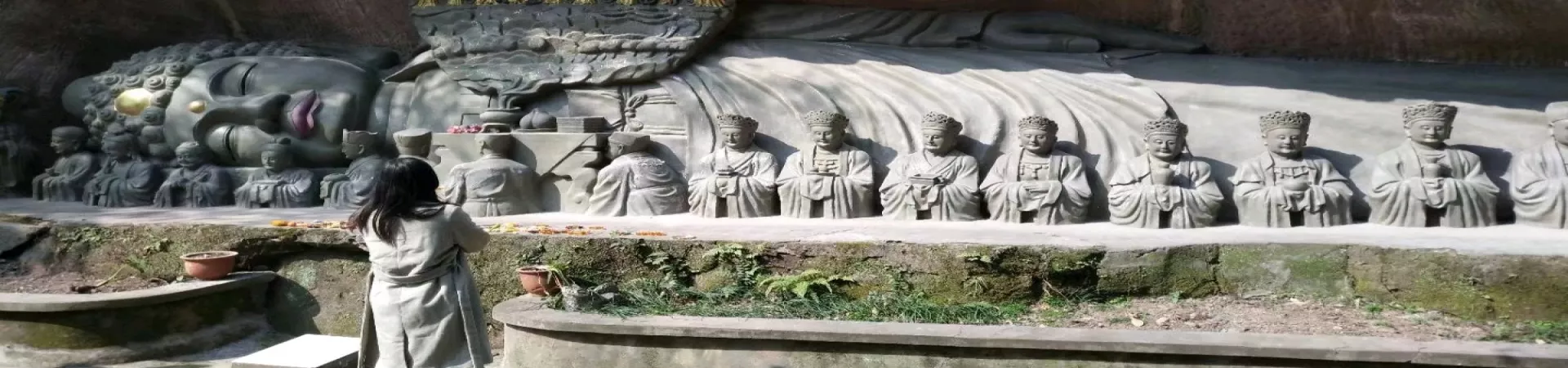
- The Thousand-Buddha Grottoes: One of the temple's most extraordinary features is its collection of cliff-side grottoes. Carved directly into the sandstone, these niches contain hundreds of Buddha images, ranging from small, delicate figures to larger, more imposing sculptures. Dating primarily from the Tang to Song dynasties, these silent stone sentinels offer a tangible connection to the devotional practices of ancient artisans and worshippers.
3. The Visitor Experience: A Multisensory Retreat
3.1. Navigating the Temple Grounds Entering Baoguo Temple is like stepping into another world. The air is filled with the subtle scent of sandalwood incense and the distant, rhythmic chanting of monks. Ancient, gnarled cypress and gingko trees, some over a thousand years old, provide dappled shade over stone-paved paths. The sound of trickling water from natural springs and the chorus of birds create a natural symphony that enhances the atmosphere of peace. Visitors are encouraged to wander slowly, allowing the serene environment to wash over them, discovering hidden courtyards, ancient steles (stone tablets), and quiet corners perfect for reflection.
3.2. Spiritual and Cultural Activities While respecting its primary function as an active Buddhist monastery, the temple welcomes all who seek cultural enrichment or quietude. Observing or participating in daily rituals can be a profoundly moving experience. The temple also serves as a cultural repository, where one can learn about Buddhist philosophy, traditional Chinese temple etiquette, and the history of Buddhism in Sichuan.
4. Practical Information for Planning Your Visit
To ensure a smooth and respectful visit, please note the following essential details.
4.1. Location and Access Baoguo Temple is located in Lezhi County, which is under the administration of Ziyang City, Sichuan Province, China. It is approximately a 1.5 to 2-hour drive from the center of Chengdu. Visitors can reach Lezhi by long-distance bus or train from Chengdu and then take a local taxi or bus to the temple, which is situated a short distance from the main town, often within a designated scenic area.
4.2. Opening Hours and Admission The temple is open to the public daily. It is highly advisable to check for any changes before your visit, but the standard operating hours are: * Opening Time: 08:00 * Closing Time: 16:30 (Last admission is at 16:30) * Days: Monday through Sunday, year-round. Planning an early arrival is recommended to fully enjoy the morning tranquility and avoid potential afternoon crowds.
4.3. Visitor Etiquette and Tips As a place of worship and cultural heritage, respectful conduct is paramount. * Dress Code: Modest attire is required. Shoulders and knees should be covered. * Photography: Photography is usually permitted in outdoor courtyards, but it is strictly prohibited inside the main shrine halls or of the monks without explicit permission. Always look for signs or ask a staff member. * Conduct: Maintain a quiet demeanor. Avoid loud conversations, and do not touch religious artifacts or statues. * Contact: For the most current information, especially regarding special events or temporary closures, you may contact the temple at +86-28-23079003.
4.4. Enhancing Your Journey The region surrounding Lezhi is known for its agricultural beauty, particularly its citrus groves. Combining a visit to Baoguo Temple with exploration of the local countryside or a taste of authentic Sichuan cuisine in Lezhi town can make for a perfect day trip or a relaxing weekend retreat from the urban energy of Chengdu. The journey itself, through the serene landscapes of rural Sichuan, becomes an integral part of the pilgrimage to this ancient sanctuary.