Mengshan Temple
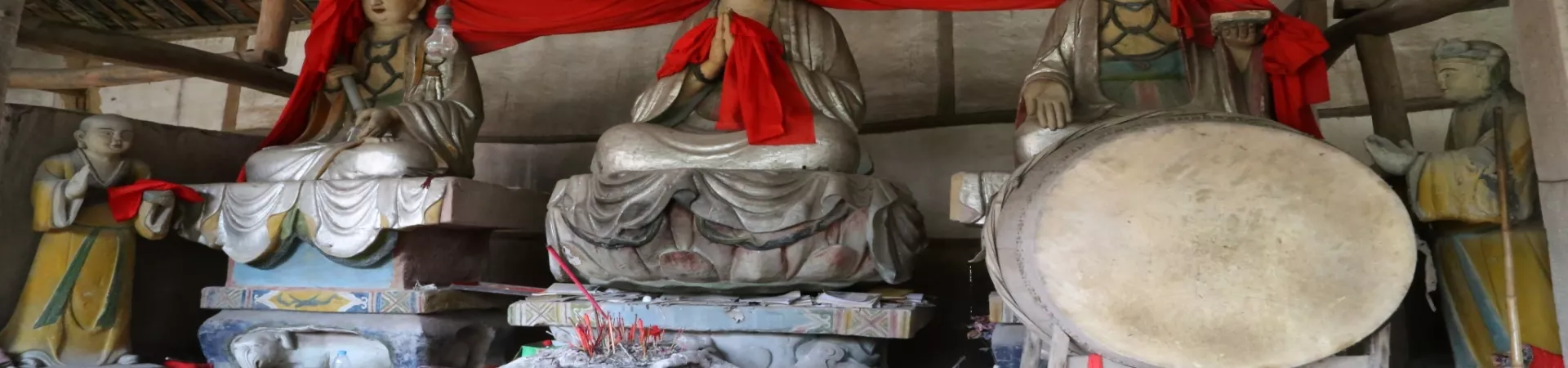
Subtitle: A Journey Through Time: Uncovering the Serene Beauty and Historical Layers of Mingshan Temple in Ziyang
Introduction: A Sanctuary Carved in Stone and Spirit
Nestled amidst the rolling hills and lush greenery of Ziyang City in China's Sichuan Province, Mingshan Temple (茗山寺) stands not merely as a place of worship, but as a profound testament to centuries of spiritual devotion, artistic endeavor, and historical confluence. Far from the bustling crowds of more famous sites, it offers a uniquely tranquil and introspective experience for the discerning traveler. This ancient temple complex, with origins shrouded in the mists of the Tang Dynasty (618-907 AD), has been a continuous center of Buddhist practice, evolving through dynastic changes and natural elements. A visit here is less about checking a monument off a list and more about engaging in a quiet dialogue with history, art, and nature. The temple's architecture, a harmonious blend with its mountainous surroundings, its revered statues, and the palpable aura of peace collectively narrate a story that transcends words, inviting visitors to step into a living chronicle of Chinese religious and cultural heritage.
I. Historical Tapestry: From Tang Dynasty Roots to Modern Preservation
1.1 Origins and Early Significance The foundation of Mingshan Temple is traditionally traced back to the Tang Dynasty, a golden age for Chinese Buddhism. During this period, Buddhism flourished, supported by imperial patronage and widespread public devotion. It is believed that the temple was established on this particular mountainside due to its exceptional feng shui—the harmonious balance of wind and water—and its natural seclusion, ideal for monastic meditation and study. The initial structures would have been simpler wooden edifices, serving as a hermitage or a local center for Buddhist teachings. Its early history, though not exhaustively documented in imperial records, is preserved in local legends, temple stele inscriptions, and the very persistence of the site itself, suggesting its importance as a spiritual anchor for the region.
1.2 Evolution Through Song, Ming, and Qing Dynasties The temple truly began to acquire its lasting physical and artistic character in the subsequent Song Dynasty (960-1279 AD), a period renowned for cultural refinement and religious art. Major expansions and renovations were undertaken, often funded by devout merchants, local gentry, and monastic communities. The most significant artistic treasures housed within the temple, including many of its exquisite statues, date from this era, showcasing the elegant and humane artistic style typical of Song Buddhist sculpture.
Further enhancements and reconstructions continued through the Ming (1368-1644) and Qing (1644-1912) dynasties. Each period left its architectural imprint, from the robust and intricate wooden brackets of Ming halls to the detailed decorative motifs of the Qing. These layers of construction are not merely historical footnotes; they are visible in the varied roof lines, courtyard layouts, and architectural details that a careful observer can discern today. The temple thus became a palimpsest, its stones and timbers bearing witness to the changing tastes, technologies, and devotional practices of over a millennium.
1.3 Contemporary Recognition and Conservation In recognition of its immense historical and cultural value, Mingshan Temple has been designated as a National Key Cultural Relics Protection Unit. This status underscores its significance as part of China's protected heritage and has facilitated ongoing conservation efforts. Modern preservation work is conducted with great care, aiming to stabilize the ancient structures, protect the delicate statues from environmental damage, and preserve the site's authenticity while ensuring its accessibility for future generations. This delicate balance between protection and presentation makes a visit here particularly meaningful, as one witnesses heritage actively being safeguarded.
II. Architectural and Artistic Splendor: A Feast for the Soul
2.1 The Mountain-Integrated Layout Unlike the rigid, symmetrical layouts of urban temples, Mingshan Temple exemplifies the classical Chinese principle of "harmony between man and nature." Its various halls, pavilions, and living quarters are strategically dispersed along the mountain slope, following the natural contours of the land. Visitors ascend along stone-paved paths and stairways that wind through ancient trees, with each turn revealing a new structure framed by foliage or overlooking a valley. This design creates a journey of discovery, where the architecture never overwhelms the landscape but instead complements it, enhancing the sense of serenity and spiritual ascent.
2.2 The Main Hall and Its Sacred Statues The heart of the temple is its main prayer hall, a structure that often bears the hallmarks of Qing-era renovation while housing much older treasures. Within this solemn space, the air is thick with the scent of incense and centuries of prayer. The central focus is the enshrined Buddha statue, typically representing Sakyamuni or Amitabha, radiating calm and compassion. Flanking the main figure are often statues of disciples like Ananda and Kasyapa, or bodhisattvas such as Guanyin (Avalokitesvara) and Manjushri. The craftsmanship of these icons, especially those from the Song period, is remarkable for its lifelike proportions, serene facial expressions, and fluid drapery, representing a high point in Chinese religious sculpture.
2.3 Notable Artistic Highlights Beyond the main hall, the temple complex holds several specific artistic gems: * Clay Sculptures and Wooden Carvings: Throughout the auxiliary halls, one can find intricate clay figures of arhats (enlightened disciples) and guardian deities, each with vivid, individualized expressions. The temple's wooden beams, brackets, and altars are often adorned with carvings of lotus flowers, mythical beasts, and auspicious clouds, demonstrating superb artisan skill. * Stone Steles and Inscriptions: Scattered in courtyards or embedded in walls are ancient stone steles. These tablets are carved with inscriptions recording the temple's history, details of renovations, or Buddhist sutras. They serve as invaluable primary documents, offering direct insights into the temple's past patrons and its evolving role in the community. * Natural Integration: The artistic experience is not confined to man-made objects. A particular rock formation might be revered as a natural manifestation of a deity, or an ancient, gnarled tree might be considered a living part of the temple's spiritual ecosystem. This blurring of the line between art and nature is a defining feature.
III. The Visitor Experience: A Practical Guide for Immersion
3.1 Journey to the Temple Reaching Mingshan Temple is part of its charm. Ziyang City is well-connected by road and rail to major hubs like Chengdu. From Ziyang's city center, a scenic drive or local bus journey leads into the countryside. The final approach to the temple often involves a gentle hike up the mountain path, allowing visitors to shed the noise of the modern world and mentally prepare for the tranquility ahead. The surrounding landscape of Sichuan—verdant, humid, and softly misted—provides a perfect backdrop.
3.2 Navigating the Temple Complex Upon arrival, it is recommended to proceed at a leisurely pace. Start from the lower gates and ascend gradually. Key points to explore include: * The Heavenly King Hall at the entrance, often guarded by statues of the Four Heavenly Kings. * The Main Grand Hall, as described, for quiet contemplation. * The Bell and Drum Towers, symbolic structures in any Buddhist temple. * Various side halls and meditation courtyards, where one might observe or even participate in monastic routines. * The higher pavilions, which offer breathtaking panoramic views of the surrounding mountains and valleys.
3.3 Cultural Etiquette and Best Practices To ensure a respectful and enriching visit: * Dress Modestly: Shoulders and knees should be covered as a sign of respect in sacred spaces. * Observe Silence: Speak softly, especially inside the halls. This respects both worshippers and the contemplative atmosphere. * Photography: Always look for signs. Flash photography is usually prohibited inside halls to protect the ancient pigments of statues and murals. * Interaction: Monks or nuns may be engaged in prayer or chores. Observe without intrusion. A simple nod of acknowledgement is appropriate. * Timing: Early mornings on weekdays are ideal to avoid crowds and experience the temple at its most peaceful. The light at dawn or late afternoon also enhances the beauty of the architecture and scenery.
IV. Cultural and Spiritual Significance: Beyond the Physical Structure
4.1 A Living Center of Buddhism Mingshan Temple is not a museum frozen in time; it remains an active monastery. The presence of resident monks or nuns who maintain daily rituals—chanting sutras, striking the bell at dawn and the drum at dusk, and meditating—breathes life into the ancient stones. For visitors, witnessing these routines, or simply sensing the rhythm of monastic life, adds a profound dimension to the experience, connecting the historical artifact to a living spiritual tradition.
4.2 A Repository of Local Identity and Folklore For centuries, the temple has been intertwined with the life of the local community. It has served as a place for festivals, prayers for good harvests, and personal milestones. Numerous local legends are associated with the temple—miraculous healings, protective interventions, or the mystical origins of certain statues or trees. These stories, passed down orally, form an intangible cultural heritage that gives the site deep local meaning beyond its national historical status.
4.3 A Destination for Reflection and Connection In today's fast-paced world, Mingshan Temple offers a rare sanctuary for introspection. The combination of natural beauty, ancient art, and spiritual ambiance creates an environment conducive to slowing down, disconnecting from digital distractions, and reflecting. Whether one is drawn by religious interest, historical curiosity, or a simple need for peace, the temple provides a space to connect with something larger than oneself—be it history, nature, or an inner sense of calm.