Zigong Salt Industry History Museum
Subtitle: A Journey Through Time: Unveiling the Salt Industry Legacy at Zigong's Salt History Museum
1. Introduction: A Monument to Prosperity and Ingenuity
Nestled in the bustling heart of Zigong's Ziliujing District, on Jiefang Road, stands an architectural marvel that is far more than just a museum; it is a testament to centuries of industrial prowess, cultural exchange, and artistic achievement. The Zigong Salt History Museum, housed within the historic Xiqin Guild Hall, offers visitors a profound journey into the soul of the "Salt Capital" of China. This institution is not merely a collection of artifacts but a vibrant narrative woven into the very fabric of its stunning Qing Dynasty architecture, telling the epic story of Sichuan's salt production from its ancient origins to its industrial zenith.
2. The Architectural Masterpiece: Xiqin Guild Hall
2.1. Historical Origins and Construction The museum's home, the Xiqin Guild Hall, is itself the primary exhibit. Its story begins in 1736, during the first year of the Qing Emperor Qianlong's reign. Funded by a consortium of wealthy Shaanxi salt merchants who came to Ziliujing to capitalize on the booming salt industry, the guild hall served as a clubhouse, a temple, and a powerful symbol of their commercial success and communal identity. The original design was a masterful blend of Ming and Qing palatial styles with distinct regional folk architectural elements, creating a structure both grandiose and intricate.
2.2. Expansion and Artistic Splendor In 1827, under the guidance of the renowned architect Yang Xuesan, the complex underwent a significant expansion. The layout is ingeniously designed on a rising central axis, with each successive hall built higher than the last, creating a visually striking and awe-inspiring progression. The architectural decoration is nothing short of breathtaking. Every corner reveals exquisite wood carvings depicting mythological scenes, flora, and fauna. Stone inscriptions record historical events, while colorful paintings and detailed clay sculptures adorn beams, brackets, and eaves. This symphony of craftsmanship transforms the building into a three-dimensional art gallery, showcasing the peak of Qing decorative arts. Its majestic halls and unique silhouette are further enhanced by its picturesque backdrop against the scenic Longfeng Mountain and its dynamic contrast with the lively urban front. Recognizing its unparalleled value, the State Council designated the Xiqin Guild Hall as a National Key Cultural Relics Protection Unit in January 1988.
3. From Guild Hall to National Museum: A Phoenix Reborn
3.1. Preservation and a New Purpose The 20th century brought challenges. Before 1949, the guild hall served as the local government seat for the Republic of China and fell into severe disrepair. After the founding of the People's Republic, the building was preserved and repaired. A pivotal moment came in the spring of 1959 when Deng Xiaoping and other central leaders visited. Deeply impressed, they emphasized the critical need for its protection. This high-level attention catalyzed its transformation. Recognizing that the guild hall was a historical artifact intrinsically linked to Zigong's salt industry, authorities decided to repurpose it as the "Zigong Salt History Museum." A comprehensive restoration project was launched, ensuring the building's structural integrity while adapting its spaces for modern museology.
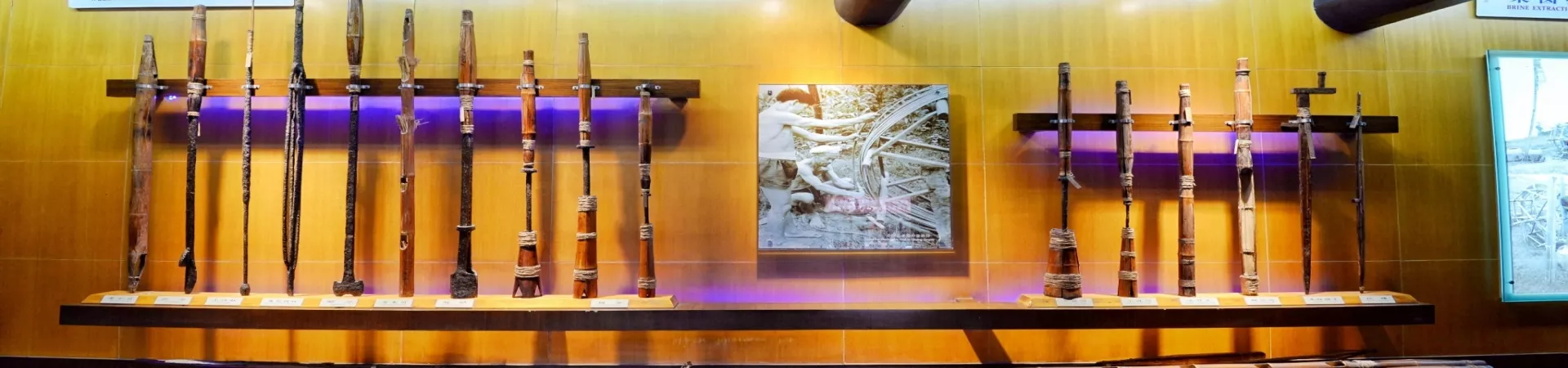
3.2. The Modern Museum Experience Today, the museum brilliantly fulfills its dual role: preserving an architectural treasure and narrating a technological saga. Through thoughtful exhibition design, it houses an extensive collection of historical documents, literature, and physical objects related to well salt development. The core of its display is a remarkable array of ancient drilling, well repair, and fishing tools—the very instruments that powered the salt industry. The museum employs modern multimedia techniques, including sound, light, and electrical displays, to create immersive dioramas and models. These exhibits vividly reconstruct the evolution of well salt production technology over two millennia, making complex engineering feats accessible and engaging. The museum's international significance was acknowledged when UNESCO featured it as the "Zigong Museum of Salt Industry Technology," introducing it to a global audience.
4. Exploring the Core Exhibitions: A Technological Epic
4.1. The Deep-Rock Drilling Technology A central theme of the museum is the celebration of Zigong's deep-rock drilling technology, a Chinese innovation that was centuries ahead of its time. The exhibits meticulously detail the zhuotong technique, a percussion drilling method using iron bits attached to bamboo cables, which allowed ancient craftsmen to bore holes over 1,000 meters deep. Visitors can see full-scale replicas of drilling derricks and understand the sequential process of drilling, casing, and managing a salt well.
4.2. Tools and Techniques of Well Management Beyond drilling, the museum elucidates the sophisticated science of well management. Displays of specialized tools for fishing—retrieving broken equipment from incredible depths—and for well repair highlight the problem-solving ingenuity required to maintain these deep, pressurized wells. This section underscores the high-risk, high-skill nature of the historical salt industry.
4.3. Economic and Social History The narrative extends beyond technology to explore the sweeping economic and social history triggered by the salt boom. Exhibits trace the industry's development from the legendary opening of the first salt wells in the region by Li Bing, the Qin Dynasty governor, over 2,200 years ago. The museum illustrates how salt wealth transformed Zigong, funding magnificent architecture, fostering trade routes, and creating a unique urban culture. It provides invaluable material for research into ancient Chinese economics, labor organization, and commercial law.
5. Practical Visitor Information
5.1. Location and Accessibility The museum is located at the middle section of Jiefang Road, Ziliujing District, Zigong City, Sichuan Province. It is easily accessible by public transport or taxi from anywhere in the city center.
5.2. Opening Hours and Admission * Opening Hours: 08:30 - 17:30 daily (last admission at 17:00). * General Admission Ticket: 35 RMB. * Concession Tickets (Half-price): Available for seniors aged 60-64 (with valid ID) and full-time undergraduate students and below (with valid student ID). * Free Admission: Granted to children under 1.2 meters tall or aged 6 and below, seniors aged 65 and above (with valid ID), active military personnel, and persons with disabilities (with valid ID).
5.3. Suggested Visit Duration A thorough exploration of both the architectural details and the extensive exhibitions typically requires 1 to 3 hours. Visitors are encouraged to take their time to appreciate the craftsmanship of the guild hall and the depth of the historical displays.
5.4. Contact Information For any inquiries, visitors can contact the museum at: 0813-2202083.