Zigong Dinosaur Museum
A Journey Through Deep Time: Exploring the Zigong Dinosaur Museum
Nestled in the northeastern suburbs of Zigong City, Sichuan Province, approximately 11 kilometers from the city center, lies a portal to a prehistoric world. The Zigong Dinosaur Museum is not merely a repository of ancient bones; it is China's only museum built directly on a dinosaur fossil burial site. This distinction places it among the nation's most significant on-site archaeological museums, following the renowned Banpo Neolithic Village and the Terracotta Army pits of Emperor Qin Shi Huang. The museum complex seamlessly integrates the main exhibition hall, expansive green belts, and auxiliary buildings, creating an environment where the past and present coexist.
1. The Site: Where Giants Once Roamed The museum's unparalleled authenticity stems from its location at the Dashanpu Dinosaur Fossil Quarry. This was a serendipitous discovery in the 1970s, revealing one of the most concentrated, diverse, and well-preserved Middle Jurassic dinosaur fossil assemblages ever found. Unlike museums that display specimens collected from various locations, here visitors stand on the very ground where these creatures lived, died, and were fossilized millions of years ago.
1.1. The Dashanpu Quarry: A Window into the Jurassic The heart of the museum is the colossal excavation hall. Visitors are greeted by a breathtaking in-situ spectacle: a vast, layered bone bed where hundreds of dinosaur fossils remain embedded in the sandstone exactly as they were discovered. This "burial ground" features a dense concentration of skeletons, primarily belonging to sauropods (long-necked giants), stegosaurs, and carnivorous theropods. The site suggests a catastrophic event, possibly a drought, that led to a mass mortality, providing an unprecedented snapshot of a Jurassic ecosystem.
1.2. Architectural Harmony with History The museum's design philosophy prioritizes the preservation and presentation of the site itself. The main exhibition hall envelops the key excavation areas, allowing for climate control and protection while offering multi-level walkways that provide panoramic views of the fossil beds. This architectural approach ensures the fossils' integrity and offers visitors an immersive, 360-degree perspective on the scale of the discovery.
2. Treasures of the Mesozoic: Iconic Exhibits Beyond the main quarry, the museum houses an extensive collection of exquisitely prepared fossils and mounted skeletons, many of which are type specimens bearing great scientific importance.
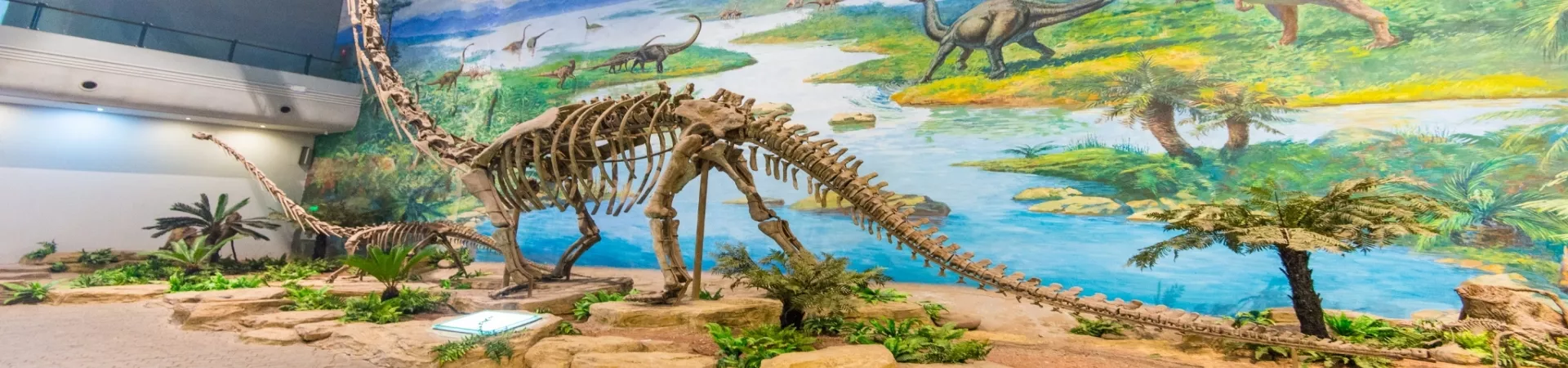
2.1. The Giants of Dashanpu The museum showcases the complete skeletons of dinosaurs unique to this region. Highlights include Shunosaurus, a medium-sized sauropod distinguished by a tail club; Omeisaurus, another massive sauropod with an extraordinarily long neck; and Huayangosaurus, one of the most primitive and completely known stegosaurs. The meticulous mounting of these skeletons, some reaching over 20 meters in length, inspires awe and illustrates the diversity of dinosaur life during the Jurassic period.
2.2. Exceptional Preservation and Diversity The quality of preservation at Dashanpu is exceptional. The exhibits include not just bones but also rare finds such as fossilized skin impressions, gastroliths (stomach stones), and even coprolites (fossilized dung). The collection extends beyond dinosaurs to include contemporaneous animals like pterosaurs, marine reptiles such as plesiosaurs, and early amphibians, painting a comprehensive picture of the ancient fauna.
3. Planning Your Visit: Practical Information To ensure a smooth and enriching experience, here are the essential details for planning your trip to the Zigong Dinosaur Museum.
3.1. Admission Fees and Operating Hours The museum operates year-round, with seasonal adjustments to its opening hours. Standard admission is priced at 40 RMB. The museum offers a considerate discount policy:
- Concession Tickets (Half-price): Available to seniors aged 60-64 with valid ID during national statutory holidays, and to full-time students (undergraduate and below) with a valid student ID.
- Free Admission: Granted to children under 1.3 meters in height, seniors aged 65 and above with valid ID, active-duty military personnel, individuals with disabilities, and seniors aged 60-64 with valid ID outside of national statutory holidays.
Operating Hours:
- May 5th - December 31st: 8:30 AM - 5:30 PM (last entry at 5:00 PM).
- April 30th - May 4th: 8:30 AM - 6:00 PM (last entry at 5:15 PM). It is highly recommended to verify the latest ticket prices and hours directly with the museum before your visit, as this information is subject to change.
3.2. Making the Most of Your Tour A comprehensive visit typically requires 2 to 3 hours. The museum is well-signposted in both Chinese and English. Audio guides or guided tour services (inquiry recommended on-site) can greatly enhance understanding of the exhibits. The on-site facilities include rest areas, a gift shop offering dinosaur-themed souvenirs, and clean restroom facilities. The surrounding green spaces provide a pleasant area for reflection after exploring the indoor exhibits.
4. The Museum's Legacy: A Global Paleontological Pillar The Zigong Dinosaur Museum transcends its role as a tourist attraction. It functions as a world-class research center for Jurassic stratigraphy and paleontology.
4.1. A Hub for Scientific Research The museum maintains an active paleontological laboratory where scientists from around the world study the unique Dashanpu fossils. Their ongoing work continues to yield new discoveries and insights into dinosaur biology, behavior, and the environmental conditions of the Middle Jurassic, a period less understood than the later Cretaceous.
4.2. Educational Outreach and Cultural Impact Through dynamic exhibitions, interactive displays (especially appealing to younger visitors), and educational programs, the museum plays a crucial role in fostering public understanding of earth sciences, evolution, and the importance of preserving natural history. It stands as a symbol of Zigong's identity, transforming the city's historical salt industry fame into a new reputation as the "Dinosaur Capital."