Zhoucun Shaobing (Baked cake in griddle) Museum
Subtitle: A Journey Through Time and Taste: Exploring the Zhoucun Sesame Cake Museum
Introduction: Stepping into a Living Legacy
Nestled on the eastern side of the southern segment of Dajie Street in Zibo, Shandong, the Zhoucun Sesame Cake Museum announces itself not with modern grandeur, but with the dignified charm of heritage. High-hanging red lanterns cast a warm glow upon a gleaming golden plaque, while official markers flanking the entrance—"China Time-honored Brand" and "National-Level Intangible Cultural Heritage"—serve as silent testaments to the profound significance held within. Passing through its gates is not merely an entry into a building but a transition into a living narrative, one woven from the aromas of toasted flour, sesame, and centuries of craftsmanship. The museum stands as the cultural heart of Zhoucun, a district synonymous with its iconic, paper-thin sesame cake, dedicated to preserving, explaining, and celebrating the story behind this culinary treasure.
The Museum Experience: Architecture and Artifacts
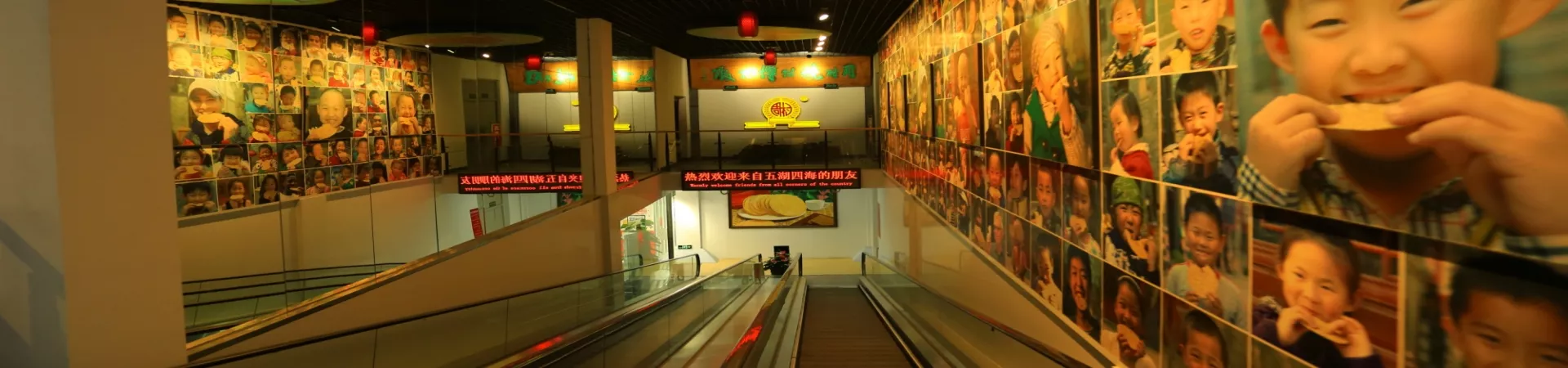
1. A Setting Steeped in History The museum complex itself is the first exhibit. The architecture echoes traditional northern Chinese styles, with courtyards and structures that evoke the late Qing and early Republican periods, the era during which the Zhoucun sesame cake solidified its fame. The atmosphere is one of quiet reverence for the past. 2. Vestiges of a Bygone Era Throughout the space, visitors encounter tangible links to history. Faded photographs, rich with the patina of time, line the walls, capturing scenes of old Zhoucun, bustling market streets, and the early artisans at work. These images provide a poignant visual backdrop. 3. The Tools of Tradition Among the most compelling artifacts are the original stone mills (shinian), preserved and displayed with care. These massive stone wheels, once turned by human or animal power, were used to grind the finest flour, the essential foundation for the cake's exquisite texture. Their silent, solid presence speaks volumes about the physical labor and artisanal precision that defined the craft's origins.
The Heart of the Story: Culture and Craftsmanship
1. The "Ode to the Sesame Cake" (烧饼赋) Central to the museum's narrative is the magnificent "Ode to the Sesame Cake," a literary centerpiece displayed prominently in the main hall. This extensive text, spanning thousands of Chinese characters, is far more than a description. It is a lyrical homage, a scholarly tribute that 2. Chronicles of Character and Reputation meticulously details the unique characteristics of the Zhoucun sesame cake—its remarkable thinness and fragility, its satisfying crispness, the perfect golden hue speckled with sesame seeds, and its complex, savory-sweet flavor profile. The ode elaborates on the cake's unparalleled reputation, which spread along ancient trade routes like the Silk Road, making it a celebrated specialty. Furthermore, it 3. A Legacy Etched in Time poetically traces the product's century-spanning journey. It recounts tales of its origins, its refinement over generations, the challenges of preservation, and its ultimate recognition as a cultural icon. This document elevates the sesame cake from a mere snack to a subject of philosophical and historical contemplation.
The Living Tradition: Observation and Appreciation
1. Windows into the Workshop A visit to the museum is incomplete without witnessing the craft in action. While a full-scale production may not always be ongoing, the museum often features 2. The Artisan's Dance demonstration areas or large windows overlooking workshop spaces. Here, visitors can observe, often in mesmerized silence, as master bakers perform their swift, practiced ballet. The process is a marvel of efficiency and skill: rolling the dough with long pins into near-transparent sheets, expertly draping them over a specialized drum-shaped oven, and carefully monitoring the split-second baking process over open flames. The rhythmic motions, passed down through rigorous apprenticeship, highlight why this skill is deemed intangible cultural heritage—it resides in the muscle memory and nuanced judgment of the artisan. 3. Sensory Engagement The experience engages all senses: the sight of the golden cakes being peeled from the oven, the sound of their delicate crunch, the warm, nutty aroma that permeates the air, and ultimately, the sublime taste of a fresh, warm cake procured from the museum's shop.
Practical Information for Visitors
1. Planning Your Visit * Suggested Duration: To fully absorb the exhibits, read the historical accounts, watch any demonstrations, and savor the experience, allocating approximately 1 to 3 hours is recommended. * Opening Hours: The museum is open daily from 9:00 AM to 8:00 PM throughout the year (Monday through Sunday, January 1st to December 31st).
2. Logistics and Access * Admission: For the most current information regarding ticket prices, potential discounts, or group rates, it is advisable to consult directly with the museum's ticket office or check their official channels prior to your visit. * Transportation: The museum is accessible by public bus. A convenient route is to take Bus 34 and alight at its terminal station, from which the museum is within walking distance. For those using taxis or ride-sharing services, simply providing the name "Zhoucun Sesame Cake Museum" (周村烧饼博物馆) will suffice.
The Zhoucun Sesame Cake Museum successfully frames a simple food item within the vast context of local identity, economic history, and artisanal philosophy. It moves beyond display cases to create an immersive environment where the past is palpable, and the enduring appeal of the Zhoucun sesame cake is understood as a story of cultural resilience, geographical pride, and unparalleled culinary finesse.