Zhoucun ancient city
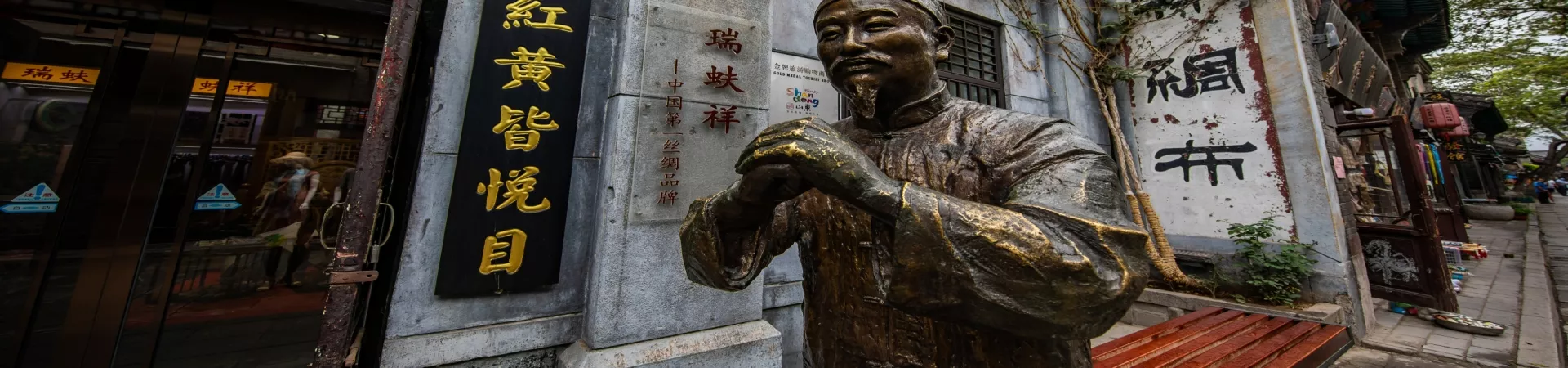
Subtitle: A Journey Through Time in Zibo's Living Museum of Commerce
1. Introduction: The Heart of Ancient Commerce Nestled in the western part of Zhoucun district in Zibo City, Shandong Province, lies the Zhoucun Ancient Commercial City, a remarkable preservation of China's mercantile heritage. Designated as a key provincial tourism development project in 2001, this area is far more than a static historical site; it is a vibrant tapestry of lanes, courtyards, and architectures that collectively narrate centuries of commercial prosperity. Experts from the Chinese Ancient Architecture Preservation Committee have rightfully acclaimed it as "a living museum complex of ancient Chinese commercial architecture," offering visitors an unparalleled immersive journey into the bustling commercial world of imperial China.
2. Historical Evolution: From Ming Foundations to Qing Dynasty Heyday 2.1. The Birth and Form of the Main Street The central artery of this ancient city is known simply as "Da Jie" (Main Street). Its story begins in the early 15th century, during the Ming Dynasty's Yongle period (around 1410 AD). It was in the ninth year of the Chongzhen reign (1636 AD) that the street's fundamental layout took shape. Stretching approximately two li (one kilometer) from the intersection of Sishi Street and Yinzi Street in the south to the Shuoyi Gate in the north, the street was historically divided into northern and southern sections by the Beiji Pavilion. Today, the well-preserved 400-meter southern section offers a tangible connection to the past.
2.2. The Rise to Commercial Eminence The street's destiny as a major trade hub was cemented in the late Qing Dynasty. The influential Meng family from Zhangqiu's Jiujun, operators of the famed "Eight Great Xiang" stores, established their businesses here, attracting wealthy merchants from near and far. Da Jie rapidly evolved into a central marketplace specializing in cloth and sundry goods. A pivotal moment arrived in 1904 when Zhoucun was officially opened as a commercial port. This status catapulted its trade connections to a national scale, establishing frequent business dealings with major cities like Qingdao, Jinan, Beijing, Tianjin, Shanghai, and Guangzhou. This era marked the zenith of Da Jie's prosperity, encapsulated in the contemporary saying, "The street is not large, but it earns a bushel of gold daily."
3. Architectural and Cultural Tapestry 3.1. A Living Architectural Museum Wandering through the ancient commercial city, visitors are greeted by a captivating maze of interconnected streets and alleys, lined with shops boasting diverse and distinct architectural styles. The complex stands as a physical encyclopedia of traditional Chinese commercial architecture, where every facade, courtyard, and decorative element tells a story of craftsmanship and commercial identity.
3.2. Surrounding Historical and Cultural Sites The commercial core is enriched by significant cultural and historical sites at its periphery, making the area a comprehensive repository of Zhoucun's heritage. To the south, visitors can explore the former headquarters of the Shandong Army that fought against Yuan Shikai and the historic Kuixing Pavilion temple. The northern area hosts the Mingjiao Temple, the Qianfo Pavilion (Thousand-Buddha Pavilion), and the Huilong Bridge. These sites collectively frame the ancient commercial center, blending natural scenery with deep cultural and religious history.
4. Practical Visitor Information 4.1. Ticketing and Attractions Within Access to the Zhoucun Ancient Commercial City is managed through a flexible ticketing system, allowing visitors to choose between a full-experience pass or individual attraction tickets. The main attractions include: * All-Access Pass: Covers entry to multiple key sites. Adult ticket: 50 RMB; Student ticket: 25 RMB. * Individual Venues: * Folk Custom Exhibition Hall: Adult 10 RMB / Student 5 RMB * Zhuangyuan Mansion (Top Scholar's Residence): Adult 20 RMB / Student 10 RMB * Draft Bank Exhibition Hall: Adult 10 RMB / Student 5 RMB * Great Dyehouse: Adult 20 RMB / Student 10 RMB * Kaka Magic Photo Gallery: Adult 10 RMB / Student 5 RMB Ticket prices are valid year-round, Monday through Sunday.
4.2. Opening Hours and Visit Duration The ancient commercial city is open to visitors daily from 08:30 to 17:00, with the last admission at 16:00. These hours remain consistent throughout the year. To fully appreciate the historical ambiance, explore the main street, visit several key buildings and museums, and soak in the surrounding cultural sites, a minimum of three hours is recommended. For a more leisurely and thorough exploration, allocating half a day is ideal.
4.3. Contact Information For inquiries, visitors can contact the management office at 0533-6430009 or 0533-6436166.