Lushan National Forest Park
Subtitle: A Guide to Lushan National Forest Park: The Pinnacle of Central Shandong's Natural Beauty
Introduction to Lushan National Forest Park
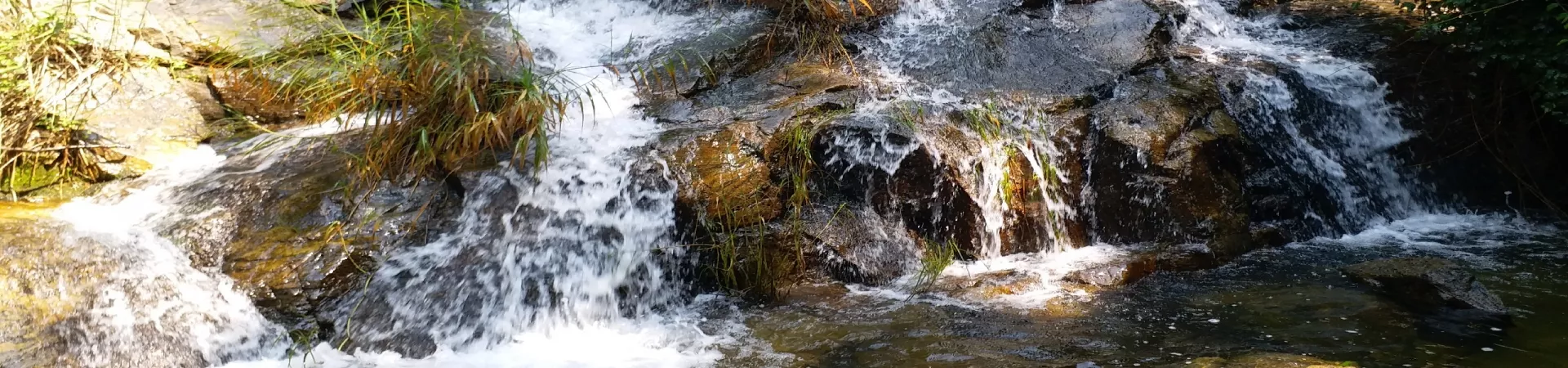
Nestled in the heart of Shandong province, Lushan stands as one of the four great mountains of the region. Its significance extends beyond its stature; it is the vital source of four major rivers—the Zi, Wen, Mi, and Yi—earning it the title "Water Tower of Central Shandong." The park itself is centered around the majestic Guanyun Peak, which soars to an elevation of 1,108.3 meters, making it the highest summit in the central Shandong area. Encompassing a vast area of 42 square kilometers within this core mountainous region, Lushan National Forest Park is a quintessential alpine landscape. Visitors are greeted by a dramatic topography of towering, rugged peaks, deep, winding ravines, cascading waterfalls, and crystal-clear streams, all blanketed under a dense, thriving forest canopy. This rich biodiversity and pristine environment establish it as a premier destination for nature enthusiasts, hikers, and those seeking a serene escape from urban life.
Getting to Lushan National Forest Park
Reaching the park is convenient from major cities across Shandong and neighboring provinces, with the town of Boshan serving as the primary gateway.
By Private Car The most flexible way to visit is by private vehicle. The following are key driving routes from various starting points: * From Zibo/Boshan: The most direct access. From Boshan district, follow the route via Shantou, Badou, Nanzhuang, Gushan, Yuanquan, Xiaofengkou to Lushan. Alternatively, from Zibo city, take the Binbo Expressway directly to Boshan and then follow signs to Lushan. * From Jinan: Take the Jiqing Expressway to Zibo, transfer to the Binbo Expressway to Boshan, and proceed to Lushan. A secondary scenic route is via Jinan's Jingshi Road through Wangcun, Lingzi, Cicun to Boshan. * From Qingdao, Weihai, Yantai, Dongying, Dezhou, & Liaocheng: All these routes converge by taking the Jiqing Expressway to Zibo, then transferring to the Binbo Expressway to Boshan. * From Weifang: A more direct route is available via Qingzhou, Linqu, Sancha, Chishang, and Xiaofengkou to Lushan. * From Tai'an, Heze, Jining, Zaozhuang, & Linyi: These routes typically involve taking expressways (like Jingfu or Jinghu) to connect with the Bolei Expressway at Laiwu, which leads directly to Boshan.
Important Note for Drivers: Be mindful of intersection signs near the scenic area. Using a reliable GPS or map application set for "Lushan National Forest Park" is highly recommended.
By Public Transport & Tourist Shuttle For those without a car, comfortable options are available: * Direct Tourist Shuttle (Zibo - Lushan): A dedicated tourist bus service operates from the west gate of the Zibo Museum. It departs at 7:00 AM and returns from the park at 4:00 PM. This service runs regularly on weekends and public holidays. Groups can arrange for charter services without time restrictions. * Public Bus Route: From Boshan city center, take public bus number 13 and alight at the Xiaofengkou station. From there, transfer to a local shuttle bus or taxi for the final ascent to the park entrance.
Essential Visitor Information
Operating Hours & Admission * Park Hours: The park is open from 8:00 AM to 3:30 PM daily. The last admission is strictly at 3:30 PM. These hours are in effect from January 1st through October 31st. It is advisable to confirm winter hours if visiting outside this period. * Admission Fee: The entrance ticket is priced at 40 RMB per person.
Planning Your Visit * Recommended Duration: To fully appreciate the main trails, scenic viewpoints, and natural attractions, a visit of 1 to 3 hours is typical. More avid hikers or photographers planning extensive exploration should allocate the longer end of this spectrum or even a full day. * Contact: For the latest information, inquiries, or group bookings, you can contact the park at 0533-4860001.
Exploring the Park: Landscape and Activities
The Majesty of Guanyun Peak The climb to or the view of Guanyun Peak is the centerpiece of any visit. As the highest point in the area, it offers breathtaking panoramic vistas. On clear days, the summit provides a spectacular platform for viewing sea of clouds that often envelop the lower valleys, a truly mesmerizing sight that justifies its name.
Diverse Ecosystems and Hydrology The park's role as a watershed is visibly evident in its landscape. The network of streams and waterfalls is a constant source of serene sound and visual beauty. The dense forest, comprising a mix of coniferous and broad-leaved trees, changes beautifully with the seasons—lush green in spring and summer, vibrant with colors in autumn. This environment supports diverse flora and fauna, making it an excellent spot for nature observation.
Hiking Trails and Natural Attractions A network of well-maintained trails caters to different fitness levels. These paths lead visitors through the park's most striking features: * Forest Trails: Meander through cool, shaded woods, offering a peaceful walk amidst ancient trees and rich undergrowth. * Valley and Stream Paths: Follow the courses of clear mountain streams, passing by small cascades and tranquil pools. * Ridge Walks: For the more adventurous, trails along ridges provide more challenging hikes with rewarding, elevated views of the surrounding mountain ranges and deep gorges.
Practical Tips for Visitors * Footwear and Clothing: Wear sturdy, comfortable hiking shoes or sneakers with good grip, as paths can be uneven or slippery, especially near streams. Dress in layers, as temperatures can be cooler at higher elevations. * Supplies: Carry sufficient water and some snacks. While there may be basic vendors near the entrance, options inside the park are limited. * Best Time to Visit: Spring through autumn offers the most pleasant weather. Early mornings on weekdays are ideal for avoiding crowds and experiencing the park's tranquility. * Respect the Environment: Help preserve the park's natural beauty by staying on designated trails, carrying out all trash, and avoiding disturbance to wildlife and plants.