Nanhai Zen Temple
Subtitle: A Journey into Grandeur and Serenity: Exploring the Nanhai Temple Complex
1. Introduction: A Spiritual Oasis in the Central Plains
Nestled in the southeastern outskirts of Runan County, Zhumadian City, in China's Henan Province, lies the Nanhai Chan Temple (Nanhai Chansi), a monumental sanctuary that transcends the typical scale of Buddhist temples. Encompassing over 500 acres (approximately 33 hectares), this vast temple complex, designated as a National AAAA-level tourist attraction, offers visitors not merely a glimpse into Buddhist architecture but an immersive experience of spiritual grandeur and artistic dedication. Its expansive grounds and meticulously planned layout stand as a testament to both ancient religious devotion and modern architectural ambition, creating a unique cultural landmark amidst the landscapes of the Central Plains.
2. Architectural Marvels: Scale, Symmetry, and Symbolism
The architecture of Nanhai Temple is characterized by its breathtaking scale, precise symmetry, and profound symbolic depth. The layout guides visitors on a deliberate journey from the worldly to the divine, with each structure contributing to a narrative of spiritual ascent.
2.1. The Grand Mountain Gate and the Avenue of Symbolism The visitor's journey begins at the imposing Shanmen (Mountain Gate) archway, a colossal structure measuring 50 meters in width and soaring 31 meters in height, setting the tone for the magnificence within. Beyond this gate unfolds a truly unique pathway: a 500-meter-long, 20-meter-wide stone walkway. Lining this sacred avenue are twelve majestic granite archways, each intricately carved and representing a profound sequence. They are arranged to illustrate the Buddhist concepts of the Twelve Links of Dependent Origination, paired with the Twelve Zodiac Animals and the Twelve Great Bodhisattvas. This sequential arrangement is not merely decorative; it invites contemplation on the cycle of existence, personal karma (represented by the zodiac), and the compassionate guidance available on the path to enlightenment, making the approach to the main hall itself a meditative experience.
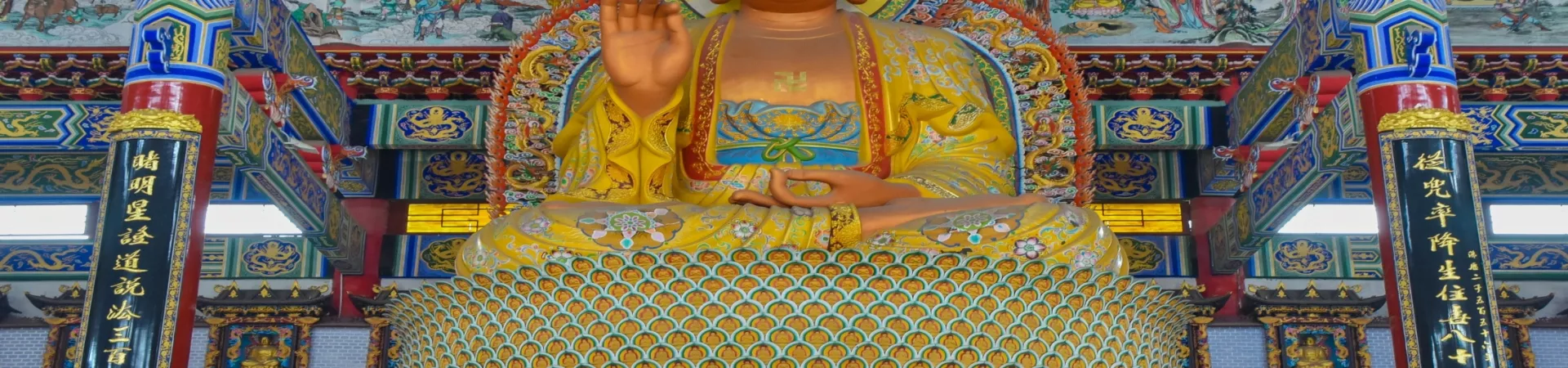
2.2. The Heart of the Temple: The Great Buddha Hall (Daxiong Baodian) The undisputed centerpiece of the complex is the Great Buddha Hall (Daxiong Baodian). Its statistics are staggering and speak to its unparalleled scale among modern Buddhist halls. The hall sits upon a raised platform 2 meters high, and its footprint is a perfect square with each side measuring 80 meters. This results in a total floor area of 6,400 square meters. Such dimensions create an interior space of awe-inspiring vastness, designed to humble the visitor and elevate the spirit. Within this cavernous hall, serene statues of the Buddhas preside, allowing for large congregations and profound quiet reflection beneath its majestic roof.
3. Sacred Tributes: The Abbot's Pagoda Courtyard
In the northeastern sector of the temple grounds, a more contemplative and tribute-focused space exists: the Pagoda Courtyard of Venerable Master Bai Gong. This area serves as the final resting place and memorial for a revered abbot associated with the temple's legacy. The courtyard is elegantly laid out with classical pavilions, stone steles, and tablets arranged in harmonious disorder, creating a peaceful, garden-like atmosphere for remembrance.
3.1. The Fusion Pagoda The focal point here is the Bai Gong Shangren Relic Pagoda. This stupa is a remarkable artistic synthesis. Crafted from fine granite, it skillfully blends the timeless elegance and structural principles of classical Chinese architecture with stylistic elements drawn from modern Southeast Asian pagoda design. This fusion symbolizes the transcendent and unifying nature of Buddhist teachings across cultures and eras, making the pagoda not just a memorial but a standalone piece of intercultural art.
4. Practical Visitor Information
To ensure a smooth and enriching visit, the following practical details are essential.
4.1. Location and Transportation Nanhai Chan Temple is situated in Runan County, which is under the administration of Zhumadian City. The most straightforward access is to take a regular intercity bus from Zhumadian's main bus terminal to Runan County. The temple is located within the county town itself, making it easily accessible by local taxi or a short walk upon arrival in Runan, depending on the drop-off point.
4.2. Admission and Operating Hours * Admission Fee: The standard entrance ticket is priced at 40 RMB per person. * Operating Hours: The temple follows seasonal schedules. * Summer Season (June 1 - August 31): Open from 07:00 to 17:00 daily. Last admission is at 16:30. * Winter Season (December 1 - February 28/29): Open from 06:00 to 17:00 daily. Last admission is at 16:30. (It is advisable to confirm hours for the shoulder months not explicitly listed.)
4.3. Suggested Duration and Contact * Suggested Visit Duration: To fully appreciate the scale, walk the lengthy ceremonial path, explore the main hall, visit the pagoda courtyard, and absorb the atmosphere, a visit of 1 to 3 hours is recommended. * Contact Information: For inquiries, the temple can be reached via phone at 0396-8039448 or 0396-8023633.