Sun Yat-sen Memorial Hall
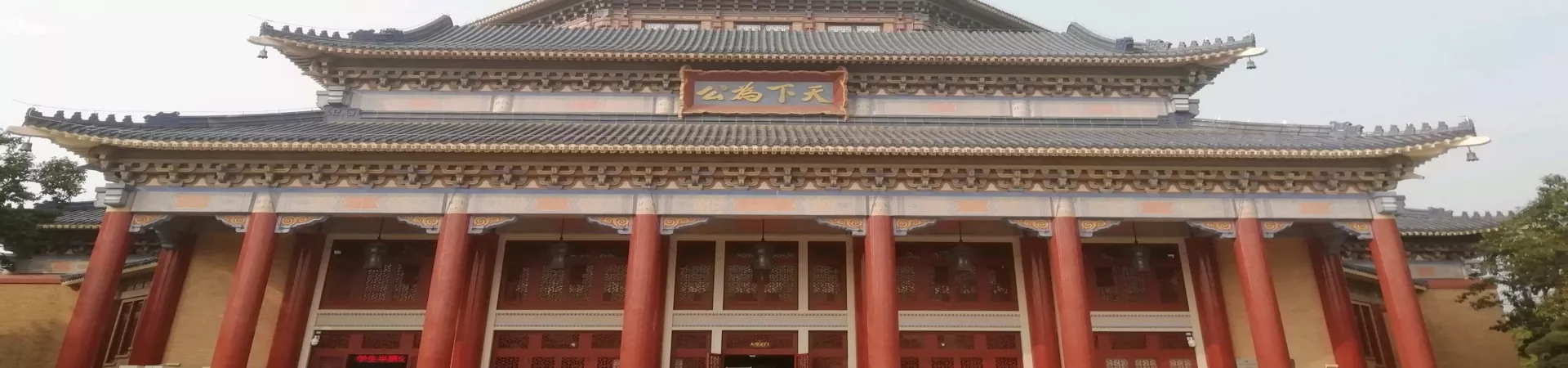
Subtitle: A Journey Through History and Legacy
1. Introduction: A Monument to a Visionary
Nestled in the heart of Zhongshan City, Guangdong Province, a place that bears his name, the Sun Yat-sen Memorial Hall stands not merely as a museum but as a profound testament to the life, ideals, and enduring legacy of Dr. Sun Yat-sen, the revered "Father of Modern China." For any visitor seeking to understand the roots of contemporary China, this site is an essential pilgrimage. It transcends being a simple collection of artifacts; it is a carefully curated spatial narrative that guides you through the tumultuous late 19th and early 20th centuries, illuminating the revolutionary fervor and visionary thinking that culminated in the overthrow of the Qing Dynasty and the founding of the Republic of China. The hall serves as a bridge connecting past aspirations with present-day realities, set within a city that is a living homage to its most famous son.
2. Planning Your Visit: Essential Practical Information
Before immersing yourself in history, a few practical details will ensure a smooth and focused experience.
2.1. Location and Significance The memorial is situated in Zhongshan City, part of the Greater Bay Area in Guangdong. The city itself, formerly known as Xiangshan, was renamed in 1925 in honor of Dr. Sun, making the entire urban landscape part of his memorial. The hall's location is central and easily accessible.
2.2. Admission and Hours One of the most welcoming aspects is its commitment to accessibility: admission is completely free of charge. This policy ensures that everyone, from scholars to schoolchildren, can engage with this important chapter of history. The memorial is open daily from 8:30 AM to 5:00 PM. It is crucial to note that last admission is at 5:00 PM, so visitors should plan to arrive well before this cutoff to allow ample time for exploration. These hours apply throughout the year, from January 1st to December 31st.
2.3. Suggested Duration To fully appreciate the extensive exhibits, archival materials, and the architectural solemnity of the hall itself, you should allocate a minimum of three hours for your visit. This allows for a leisurely pace to read descriptions, contemplate the historical context, and absorb the atmosphere without feeling rushed. For dedicated history enthusiasts, even more time could be rewarding.
2.4. Contact Information For any specific inquiries regarding special exhibitions, group visits, or accessibility services, you can contact the memorial hall at 010-62591264.
3. Exploring the Memorial Hall: A Thematic Journey
The experience within the Sun Yat-sen Memorial Hall is typically organized into several coherent sections, each detailing a pivotal phase of his journey and the broader revolutionary movement.
3.1. The Early Years: Roots in Zhongshan This section delves into Sun Yat-sen's formative years. It explores his birthplace, his early education in Hawaii and Hong Kong, and the development of his critical perspective on China's weaknesses under feudal rule. Exhibits often include personal effects, family history, and contextual information about the social fabric of Xiangshan County, illustrating how his local experiences shaped his global vision.
3.2. The Revolutionary Path: Exile, Planning, and Uprising Here, the narrative accelerates into the core of his revolutionary activity. The hall meticulously charts his extensive travels abroad to rally support from overseas Chinese communities, the founding of revolutionary societies like the Revive China Society and the Tongmenghui (Chinese Revolutionary Alliance), and the series of failed but influential uprisings that paved the way to success. This section highlights his resilience, strategic thinking, and his formulation of the Three Principles of the People (Nationalism, Democracy, and the People's Livelihood).
3.3. The Founding of a Republic and Beyond This pivotal area commemorates the Wuchang Uprising of 1911 and Sun Yat-sen's subsequent role as the provisional first president of the Republic of China. It examines the immense challenges of building a modern state from the ruins of an empire, including the period of warlordism. The exhibits also cover his later years, his reorganization of the Kuomintang, and his critical alliance with the nascent Communist Party, emphasizing his enduring focus on national unity and strength.
3.4. Legacy and Global Impact The final thematic section reflects on Sun Yat-sen's death in 1925 and his monumental legacy. It explores how his philosophies influenced subsequent political developments on both sides of the Taiwan Strait and his status as a unifying symbol for Chinese people worldwide. This part often features tributes from various international figures and displays the widespread reverence for his ideas across different sectors of society.
4. Architectural and Cultural Context
4.1. Design and Symbolism The architecture of the memorial hall itself is a subject of contemplation. While modern in its function as a museum, its design often incorporates traditional Chinese elements or symbolic modern features that reflect the spirit of Sun Yat-sen's work—blending Chinese heritage with progressive ideals. The spatial layout is designed to create a journey from darkness (the old society) into light (the new republic).
4.2. The City of Zhongshan Stepping outside the hall, your historical exploration can extend to the city. Zhongshan offers other sites connected to Sun Yat-sen, such as his former residence in Cuiheng Village, which is often part of a broader itinerary. The city's development and prosperity stand as a tangible, modern reflection of the "People's Livelihood" principle he advocated.
4.3. A Living Memorial The Sun Yat-sen Memorial Hall is more than a static repository; it is an active center for civic education and historical research. It hosts lectures, temporary exhibitions, and educational programs, ensuring that the dialogue about Sun Yat-sen's ideas, their historical context, and their contemporary relevance continues to evolve, engaging new generations of visitors from China and around the world.