Zhaoguan Stone Pagoda
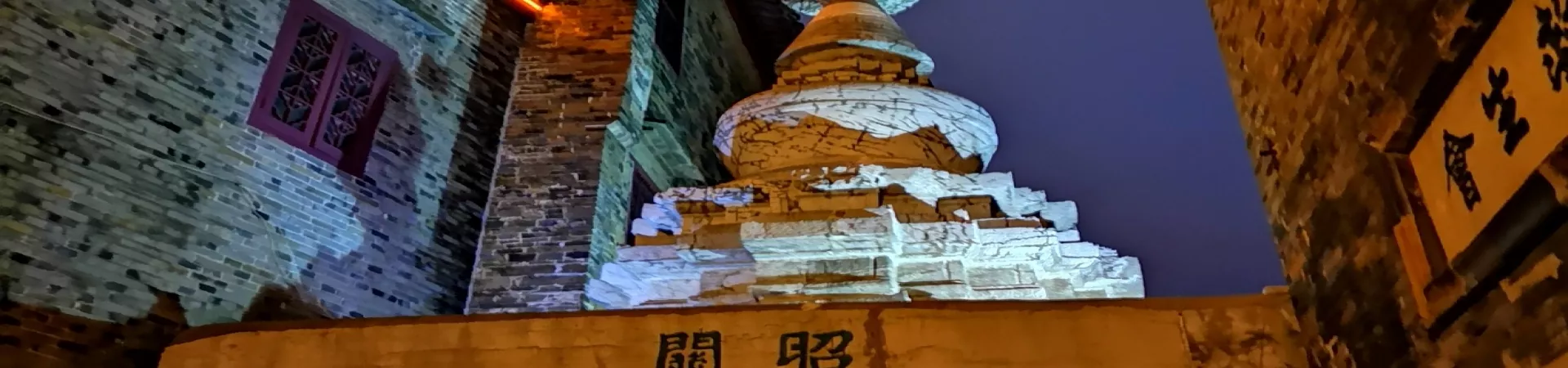
Subtitle: A Timeless Sentinel: Unveiling the Zhaoguan Stone Pagoda of Zhenjiang
Introduction: A Legacy in Stone
Perched upon the Fifty-Three Slope at the northern foot of Xiyuntai Mountain in Zhenjiang, with the mighty Yangtze River flowing to its north, stands the Zhaoguan Stone Pagoda. This enigmatic structure, silently witnessing centuries of history, is far more than a mere monument; it is a profound narrative carved in granite, blending architectural ingenuity, religious symbolism, and local lore into a captivating whole. Believed to have been constructed during the transitional period between the Yuan and Ming dynasties (circa late 14th to early 15th century), the pagoda serves as a rare and well-preserved example of a Lamaist-style stupa in the Jiangnan region, offering visitors a unique glimpse into the area's rich Buddhist heritage and historical tapestry.
Architectural Form and Symbolism: A Buddhist Edifice
2.1 The Lamaist Form and Its Significance The Zhaoguan Stone Pagoda is unequivocally identified as a Buddhist relic due to its distinct architectural form. It is constructed as a Lamaist stupa, a style prevalent in Tibetan Buddhism. This design immediately signals its religious purpose, intended as a sacred structure for housing relics or commemorating significant events in the Buddhist faith. Its alternative local name, "Bottle Pagoda," derives from its elegant, vase-like silhouette—a shape deeply resonant in Buddhist iconography, often symbolizing the treasure vase, one of the Eight Auspicious Symbols representing spiritual abundance and the containment of the nectar of enlightenment.
2.2 The Ingenious Frame: The Terrace Platform The pagoda's entire structure is an impressive feat of stone engineering, built without the use of mortar. Its foundation is a robust, framework-style terrace platform. This platform is supported by four sturdy stone pillars made of stacked stone blocks, topped with long stone slabs, creating a solid and elevated base. This design not only provides stability but also elevates the sacred monument, visually and symbolically separating it from the mundane world below.
2.3 Historical Inscriptions: A Record in Stone The platform itself is a historical document. The east and west crossbeams bear identical inscriptions. Flanking these are the engraved names of local magistrates and prefects from Dantu and Zhenjiang, anchoring the pagoda firmly within the local administrative history of the Ming Dynasty. Crucially, the rear beam carries the inscription "Repaired auspiciously in the tenth month of the Renwu year of the Wanli reign," corresponding to 1582 AD. This precise record confirms a major restoration during the Ming Dynasty, indicating the pagoda's continued importance over centuries.
Structural Composition and Iconography: From Base to Summit
3.1 The Three-Part Harmony: Base, Body, and Crown The stone pagoda itself, rising approximately 4.69 meters (note: the original text's "469米" is likely a typographical error; 4.69 meters is a plausible height for such a structure) from its platform, is a masterpiece of integrated stone carving. It is seamlessly divided into three traditional sections: the base (zuo), the body (shen), and the crown (ding), all crafted from bluestone.
3.2 The Elaborate Base: Double Sumeru Thrones The base is particularly noteworthy. It consists of two superimposed Xumizuo (Sumeru thrones). The Sumeru throne, named after the mythical central mountain of Buddhist cosmology, is a classic architectural element in Buddhist structures. The use of two identical ones stacked is described as "exquisitely styled," creating a complex, layered foundation that symbolizes the sacred, mountainous abode of the gods, elevating the spiritual status of the pagoda above it.
3.3 The Symbolic Body: Reaching for the Heavens Resting on the base is an inverted lotus plinth, leading to the pagoda's main body, which is shaped like a flattened drum. Above this drum section are thirteen distinct bands of bas-relief carving. These thirteen bands are not merely decorative; they hold profound cosmological significance, representing the "Thirteen Heavens" in Buddhist philosophy. Each tier symbolizes a successive stage or realm of existence within the celestial hierarchy, illustrating the pagoda's role as a vertical axis connecting the earthly realm with the higher spiritual planes.
3.4 The Sacred Crown: The Culmination of Symbolism The pinnacle of the pagoda begins with a small, upward-facing circular lotus seat, symbolizing purity and rebirth. Above this sits the chattravali (the disc-shaped spire), which is intricately carved with the "Eight Treasures" or "Eight Auspicious Symbols" of Buddhism. These symbols, which may include the parasol, the golden fish, the treasure vase, the lotus, the conch shell, the endless knot, the victory banner, and the Dharma wheel, collectively represent the teachings of the Buddha and the path to enlightenment. This ornate crown serves as the spiritual and visual climax of the entire structure.
Legend, Practicalities, and the Visitor Experience
4.1 The Romantic Legend: Sun Quan and Liu Bei Beyond its architectural and religious credentials, the pagoda is enshrined in local legend. It is traditionally said to have been erected as a "stone bottle" to commemorate the political marriage alliance between the warlords Sun Quan and Liu Bei during the Three Kingdoms period (circa 3rd century AD). While historical evidence points to a later construction date, this enduring legend adds a layer of romantic historical narrative, connecting the physical monument to one of the most celebrated eras in Chinese history and folklore.
4.2 Visiting the Sentinel: Essential Information For the modern visitor, the Zhaoguan Stone Pagoda offers a readily accessible journey into the past. It is situated in a public area with open access 24 hours a day, throughout the year. This allows for visitation at any time, with perhaps the most atmospheric moments occurring at dawn or dusk when the play of light accentuates the texture of the ancient stone. As the pagoda is located in an open historical site, there is typically no admission fee, though it is always advisable to check for any updates on local management policies. For formal inquiries, relevant local cultural heritage or tourism offices can be contacted.
Standing before the Zhaoguan Stone Pagoda, one encounters a multilayered artifact. It is a testament to Yuan-Ming dynasty stonemasonry, a textbook example of Buddhist symbolic architecture, a stone canvas bearing historical administrative records, and a subject of enduring local legend. Its silent presence on the Fifty-Three Slope, overlooking the eternal flow of the Yangtze, continues to inspire awe and curiosity, inviting each visitor to contemplate the layers of history and belief it so steadfastly represents.