Talin
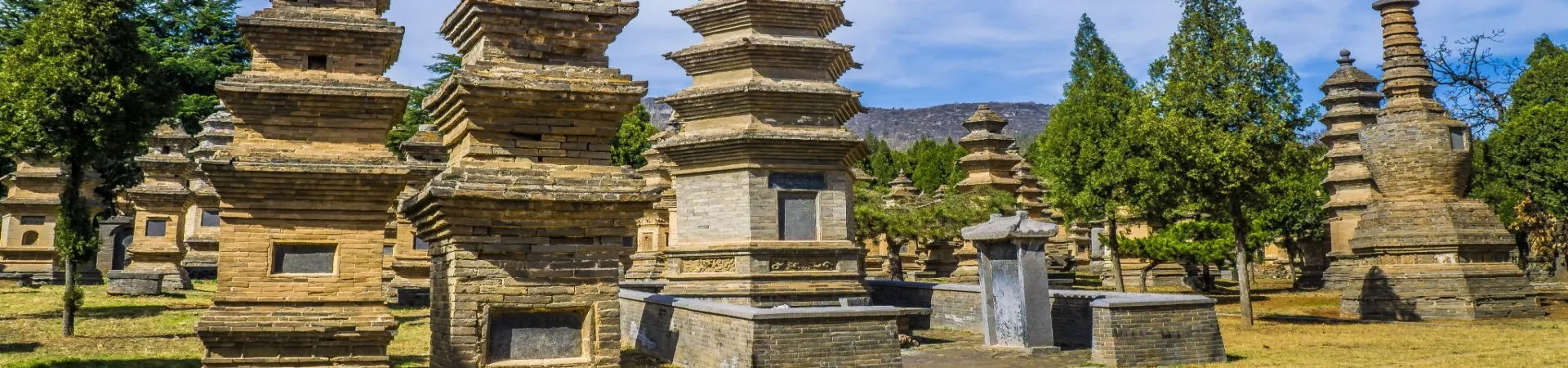
Subtitle: A Silent Forest of Stone: Exploring the Shaolin Pagoda Forest
Introduction: The Sacred Necropolis of Shaolin
Nestled approximately a few hundred meters west of the world-renowned Shaolin Temple in Dengfeng, Henan Province, lies a profound and serene landscape known as the Pagoda Forest (Ta Lin). This is not merely a collection of ancient structures but the sacred resting ground for eminent Shaolin monks and abbots, a tangible chronicle of the monastery's spiritual lineage carved in stone. As the largest and most historically significant assemblage of funerary pagodas in China, it offers visitors a unique, contemplative counterpoint to the dynamic energy of the main temple complex. Stepping into this forest of stone pagodas is akin to walking through a silent, open-air museum of Buddhist art, architecture, and history, where each tower whispers tales of devotion, wisdom, and enlightenment spanning over a millennium.
Architectural Diversity and Symbolic Meaning
The most immediate and striking feature of the Pagoda Forest is its astonishing architectural variety. Far from being uniform, the 232 pagodas showcase a rich tapestry of designs and forms, reflecting the evolving artistic styles and religious sentiments of different dynasties.
2.1. A Symphony of Shapes and Forms Visitors will observe pagodas with square, rectangular, hexagonal, octagonal, and circular cross-sections. The number of stories varies, and the roofs may be pyramidal, conical, or decorated with intricate carvings. This diversity is not arbitrary; it often corresponds to the Buddhist sect affiliation, the prevailing architectural fashion of the era in which the pagoda was built, and the artistic preferences of the time.
2.2. Hierarchy in Stone: Size, Height, and Ornamentation More significantly, the physical stature of each pagoda—its height, size, and the elaborateness of its decoration—was directly determined by the status, spiritual achievements, and contributions of the monk it commemorates. A monk with profound doctrinal understanding, high prestige within the monastic community, and significant merits in teaching, temple administration, or charitable works would be honored with a taller, larger, and more ornately carved pagoda. Thus, the landscape itself becomes a visual hierarchy, mapping the spiritual lineage and honoring the individual paths to enlightenment pursued by these revered masters.
Historical Depth and Dynastic Legacy
The Pagoda Forest serves as an unparalleled historical record, with tombs dating from the Tang Dynasty (618-907 AD) through the Qing Dynasty (1644-1912 AD). This continuity provides a concrete timeline of Shaolin's enduring presence.
3.1. Chronological Distribution and Rarity The forest currently encompasses pagodas from nearly every major Chinese dynasty. Among its treasures are 2 rare Tang Dynasty pagodas and 2 from the Song Dynasty, which are of immense archaeological and historical value due to their age. The collection includes 10 from the Jin Dynasty, 46 from the Yuan Dynasty, and a substantial 148 from the Ming Dynasty, indicating a period of particular prosperity and activity for the temple. The remaining structures are from the Qing Dynasty or periods that are less precisely documented.
3.2. An Evolving Artistic Record Walking through the forest allows one to trace the evolution of Chinese Buddhist funerary art. The simpler, more robust forms of the earlier dynasties gradually give way to the more elaborate and detailed carvings seen in Ming and Qing structures. Many pagodas feature inscriptions, Buddha images, floral motifs, and symbolic patterns, offering invaluable insights into the religious iconography and stone masonry techniques of their respective periods.
Practical Visitor Information
4.1. Location and Access The Pagoda Forest is located within the broader Shaolin Temple Scenic Area. Access is included in the general admission ticket to the Shaolin Temple. There is no separate entrance fee for the Pagoda Forest itself. Visitors typically explore the main temple halls first before proceeding on foot to the Pagoda Forest, which is a short and pleasant walk away along clearly marked paths.
4.2. Transportation Options Within the Scenic Area * On Foot: The most recommended and immersive way to reach the Pagoda Forest from the main temple is by walking. The distance is short, and the path offers scenic views of the Songshan mountain foothills. * Electric Cart: While available (approximately 10 RMB per person), it is generally unnecessary for able-bodied visitors due to the short distance. * Cable Cars: Two cable car options originate near the Pagoda Forest area: * Shaolin Cable Car: Connects to the spectacular Sanhuangzhai hiking trails. A one-way trip costs 50 RMB, and a round trip is 60 RMB. The ride takes about 20 minutes, and the lower station is a 5-minute walk from the Pagoda Forest. This is highly recommended for those interested in stunning mountain scenery. * Songyang Cable Car: Leads to the Erzu Abbey (Double Ancestors' Nunnery). A round trip costs 40 RMB. This site is relatively small, and visitors with limited time may prioritize other areas.
4.3. Opening Hours and Visit Duration The Pagoda Forest is open daily from 08:00 to 16:30. These hours are integrated with the Shaolin Temple Scenic Area schedule. Allocating about 30 to 60 minutes is sufficient for a respectful and thorough exploration of the pagoda grounds. This allows time to appreciate the scale of the forest, examine the details of several key pagodas, and absorb the profound atmosphere of the site.
4.4. Tips for a Respectful Visit * Maintain a quiet and respectful demeanor, as this is an active burial ground and a site of deep spiritual significance. * Observe all signage and barriers. Do not climb on or touch the ancient pagodas, as the stone is fragile. * Photography is permitted, but using flash is discouraged as it can be disruptive and potentially damaging over time. * The paths are generally well-maintained, but wearing comfortable walking shoes is advisable. * For any specific inquiries, the general contact number for the Shaolin Scenic Area is +86 371 62745000.