Taishi Mountain
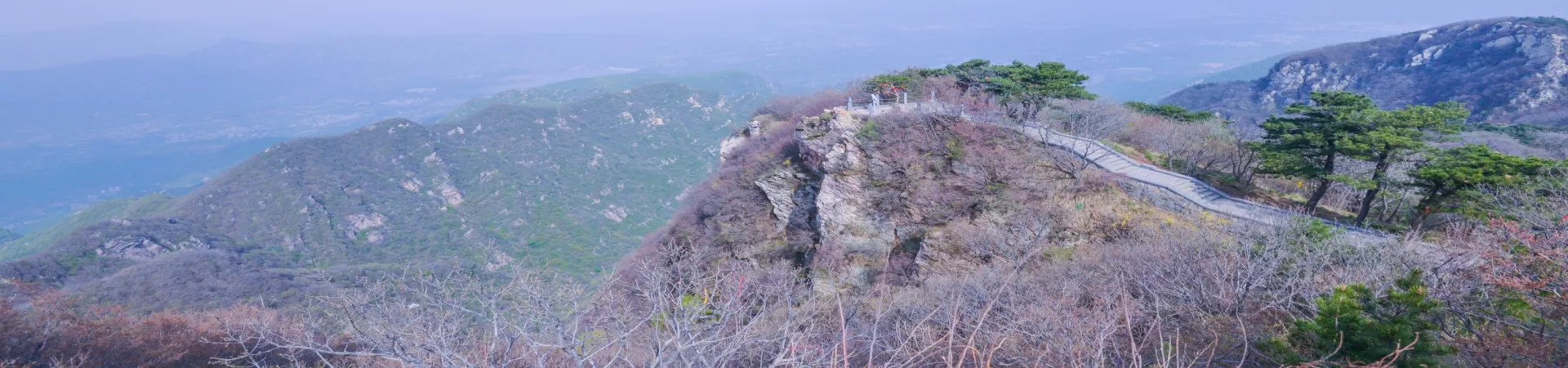
Subtitle: The Eastern Summit of Songshan: A Journey Through Time, Nature, and Spirituality
1. Introduction to Taishi Mountain Nestled in the northern reaches of Dengfeng City, Henan Province, Taishi Mountain stands as the majestic eastern peak of the revered Songshan mountain range. It is not merely a geographical feature but a profound cultural and spiritual symbol, integral to China's historical and religious landscape. As one of the core components of the Central Sacred Mountains, a UNESCO Global Geopark, and a key element within the "Historic Monuments of Dengfeng" UNESCO World Heritage site, Taishi offers visitors a multifaceted experience. It seamlessly blends awe-inspiring natural scenery, ancient architectural marvels, and millennia of philosophical and religious thought. The mountain is characterized by its thirty-six distinct peaks, which create a dramatic and varied topography of rugged cliffs, deep valleys, and serene forests, all centered around the commanding presence of its highest point, the Junji Peak.
2. The Natural Grandeur: Peaks, Trails, and Vistas 2.1. The Summit: Junji Peak Crowning Taishi Mountain at an elevation of 1,440 meters, Junji Peak is the ultimate destination for many visitors. The name "Junji" translates to "Extremely Lofty," a fitting description for a summit that has attracted emperors, scholars, and pilgrims for centuries. The climb to the top is a rewarding challenge, culminating in a breathtaking panoramic view. On a clear day, the vast North China Plain stretches out to the horizon, offering a powerful sense of scale and achievement. The summit itself is a place of contemplation, where one can truly appreciate the mountain's role as a traditional axis mundi—a link between heaven and earth.
2.2. A Network of Scenic Trails The thirty-six peaks of Taishi are interconnected by a network of trails ranging from ancient, stone-paved paths to more modern hiking routes. These trails wind through diverse ecosystems: * Forest Paths: Meander through dense groves of pine and cypress, offering shade and the tranquil sounds of nature. * Ridge Walks: Provide exhilarating open views along mountain spines, where the wind sweeps across the rocky outcrops. * Cultural Pathways: Many trails are historically significant, once trodden by monks and literati, leading directly to the mountain's cultural heart.
This variety ensures that hikers of different interests and fitness levels can find a route that suits them, whether seeking a strenuous full-day summit hike or a shorter, culturally focused walk.
3. A Living Museum of Culture and Religion Taishi Mountain is often described as an open-air museum of Chinese civilization. Its slopes are dotted with some of the most significant temples and institutions in Chinese history.
3.1. The Zhongyue Temple 3.1.1. Architectural and Historical Significance Located at the foot of Taishi Mountain, the Zhongyue Temple is a monumental complex dedicated to the God of Mount Song. With a history spanning over 2,000 years, its architecture is a textbook of Chinese palatial temple design, reflecting styles from the Han through the Qing dynasties. The temple's grand halls, ancient cypress trees, and numerous stone steles inscribed with historical texts create an atmosphere of deep antiquity and reverence.
3.1.2. Role in Imperial Ritual As the principal temple for the worship of the Central Mountain, Zhongyue Temple was a focal point for imperial Fengshan sacrifices. Emperors would journey here to legitimize their rule by communicating with heaven and earth, underscoring the mountain's central role in the Chinese cosmological and political order.
3.2. The Songyang Academy Perched on the mountainside, the Songyang Academy is one of China's four great ancient academies. Founded in the Northern Wei dynasty, it served as a premier center of Confucian learning for centuries. Scholars like the Neo-Confucian masters Cheng Hao and Cheng Yi lectured here, shaping the intellectual course of China. Visiting its lecture halls, libraries, and courtyards allows one to walk in the footsteps of these great thinkers and understand the mountain's contribution to philosophical education.
3.3. A Tapestry of Beliefs Beyond Confucianism, Taishi Mountain embodies the syncretic "Three Teachings" tradition. The presence of Buddhist temples like the Fawang Temple and Taoist sites such as the Zhongyue Temple itself demonstrates how the mountain served as a sacred convergence point. This harmonious coexistence of different faiths adds a rich, layered dimension to the cultural landscape, inviting reflection on the diverse spiritual heritage of China.
4. Practical Information for Visitors 4.1. Operating Hours and Best Times to Visit The mountain's opening hours vary seasonally to accommodate daylight and weather conditions: * Summer Period (June 1 - August 31): 07:00 - 18:00 (Last admission at 17:00) * Winter Period (December 1 - February 28/29): 06:50 - 17:30 (Last admission at 16:30) * Spring and Autumn: Hours typically fall between these two schedules; it is advisable to confirm locally during shoulder seasons.
The ideal times to visit are spring (April-May) and autumn (September-October). During these months, the weather is mild and pleasant, with spring bringing blooming wildflowers and autumn showcasing vibrant foliage. Summer can be hot and humid, though the forested trails offer cool respite, while winter presents a stark, quiet beauty with possible snow on the peaks, requiring appropriate cold-weather gear.
4.2. Planning Your Visit and Accessibility A comprehensive visit to Taishi Mountain requires at least a full day. A typical itinerary might start with an early exploration of the Zhongyue Temple at the base, followed by a hike or use of the cable car system (which covers a significant portion of the ascent) to reach higher elevations. From the cable car upper station, a hike of 1-2 hours leads to Junji Peak. Sturdy, comfortable hiking shoes are essential, as is carrying sufficient water and snacks, though vendors are found at key points. The trails are well-signposted, but a physical or digital map is recommended. Dengfeng City offers a full range of accommodation, from budget hostels to comfortable hotels, making it a convenient base. The mountain is part of the integrated Songshan Scenic Area, and combination tickets are often available for access to multiple sites, including its sister peak, Shaoshi Mountain (home to the Shaolin Temple).