Songyang Academy
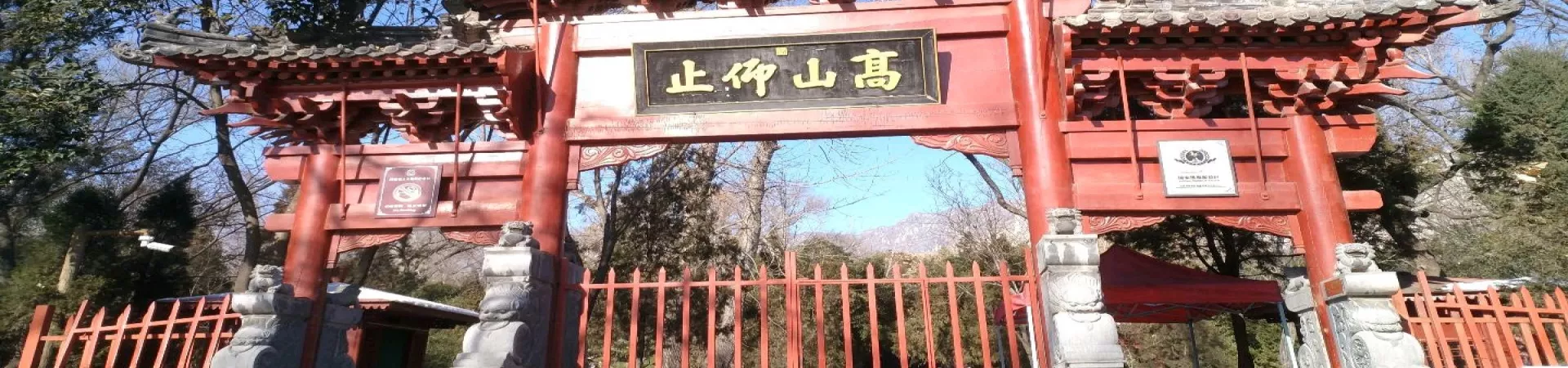
A Journey Through Time: The Scholarly Legacy of Songyang Academy
Nestled at the sacred foot of Mount Song, the central peak of China's Five Great Mountains, stands the Songyang Academy (Songyang Shuyuan). More than just a collection of ancient buildings, it is a profound testament to the evolution of Chinese intellectual and spiritual thought, a physical chronicle etched in wood, stone, and landscape over fifteen centuries.
From Sacred Ground to Scholarly Peak: A Historical Transformation
The academy's story begins not as a Confucian school, but as a sanctuary for Buddhist meditation. Founded in 484 AD during the Northern Wei Dynasty, it was originally known as the Songyang Temple. Its serene location attracted spiritual seekers, setting a precedent for the site as a place of contemplation. The tides of belief shifted during the Sui and Tang Dynasties, when it was converted into a Taoist temple, even briefly serving as a temporary imperial palace for Emperor Gaozong of Tang and the formidable Empress Wu Zetian.
However, the site's defining chapter commenced in the Northern Song Dynasty (960–1127 AD). It was during this cultural renaissance that the location was transformed into one of China's most prestigious centers of learning—the Songyang Academy. It attracted the era's brightest philosophical minds, including the renowned statesman and literary figure Fan Zhongyan, and the brothers Cheng Hao and Cheng Yi, who were pivotal figures in developing Neo-Confucianism. The great historian and statesman Sima Guang also worked here, compiling parts of his monumental historical work, Zizhi Tongjian (Comprehensive Mirror in Aid of Governance). The convergence of such luminaries not only cemented Songyang Academy's status as the foremost among the "Four Great Academies" of the Northern Song but also established it as a vital birthplace for the influential School of Principle (Lixue) in Chinese philosophy.
Architectural Harmony: The Blueprint of a Traditional Academy
The existing structures, meticulously preserved, date from the Qing Dynasty and offer a textbook example of traditional Chinese academy architecture. Encompassing over 9,000 square meters, the complex masterfully blends the solemnity of a public institution with the intimate, human scale of residential design, reflecting the Confucian ideal of a scholarly community.
The layout is organized along a central axis, featuring five sequential courtyards—a design symbolizing order, hierarchy, and the progressive journey of learning. Each courtyard, enclosed by halls and connected by gateways, creates a series of tranquil, focused environments. The academy comprises 106 ancient rooms, including lecture halls, libraries, study chambers, and shrines for venerating Confucius and past masters. This architectural composition fosters a sense of quiet separation from the outside world, conducive to study, debate, and introspection.
Whispers in Stone and Wood: The Academy's Treasures
Walking through the silent courtyards, one encounters a rich collection of cultural relics that breathe life into its history.
- Ancient Stelae and Sutra Pillars: The grounds are adorned with precious stone stelae (bei) and sutra pillars (jingchuang) from various dynasties. These are not mere decorations; they are historical documents carved in stone, recording imperial edicts, philosophical texts, and commemorations of the academy's restoration. They serve as direct links to the scholars and patrons who shaped its legacy.
- The Millennial Guardian Trees: Perhaps the most awe-inspiring treasures are the ancient cypress trees. Legend holds that three "General Cypresses" were bestowed titles by Emperor Wu of Han over 2,000 years ago. Two of these giants still stand within the academy grounds, their gnarled trunks and sprawling canopies embodying resilience and serving as living witnesses to the entire span of the academy's existence, from its Buddhist origins through its scholarly heyday.
The Enduring Legacy: From Imperial Institution to Modern Inspiration
The formal academy system, as an official institution of higher learning, was abolished in the late Qing Dynasty with the advent of modern educational reforms. Yet, Songyang Academy transcends its original function. It stands today as an unparalleled cultural vessel for a vanished system. It provides scholars with a complete template for studying the architecture, pedagogical organization, and daily life of ancient Chinese academies. Its role in the development and dissemination of Neo-Confucianism makes it indispensable for understanding the intellectual foundations of late imperial China.
For the modern visitor, it is a place of powerful resonance. It challenges contemporary notions of education, showcasing a model where moral cultivation, philosophical inquiry, and reverence for tradition were paramount. As a historical monument, its significance for modern educational culture is both profound and far-reaching, offering timeless insights into the pursuit of knowledge and virtue.
Visitor Information
- Location: At the foot of Mount Song, in Dengfeng City, Zhengzhou, Henan Province.
- Opening Hours:
- December 1 to February 28/29: 8:00 AM - 5:00 PM (last entry at 4:30 PM).
- June 1 to August 31: 8:00 AM - 6:00 PM (last entry at 6:00 PM).
- Please verify hours for spring and autumn seasons.
- Admission Fee: 30 RMB.
- Suggested Visit Duration: 1 to 3 hours.
- Contact: +86-371-62870409; +86-371-62830518.