kangbaiwan manor
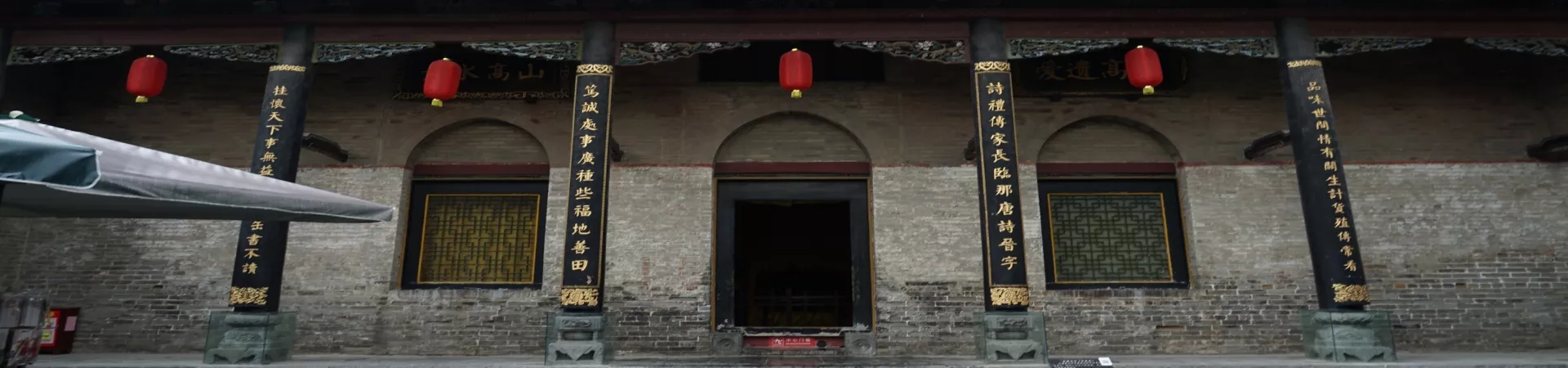
Subtitle: A Journey Through Four Centuries of Opulence: The Kang Baiwan Manor in Zhengzhou
Introduction: The Legacy of the Kang Family
Nestled in the ancient heartland of China, near the modern city of Zhengzhou in Henan province, stands the Kang Baiwan Manor, a monumental testament to a family's enduring wealth and influence. Also known as Heluo Kangjia, this estate is far more than a collection of old buildings; it is a physical chronicle of Chinese socio-economic history from the Ming Dynasty through the Republican era. Constructed by the family progenitor Kang Shaojing, the manor's foundations were laid during the Ming Dynasty. It gradually rose to prominence in the early Qing Dynasty, reached its zenith of power and prosperity during the reign of Emperor Qianlong, and began a slow decline after the Xianfeng era, ultimately fading into obscurity by the mid-20th century. Its historical significance is underscored by its recognition as one of China's "Three Great Manors," alongside the Liu Wencai Manor in Sichuan and the Mou Erhei Manor in Shandong.
The most staggering aspect of the Kang family saga is its longevity. From the 6th generation ancestor Kang Shaojing to the 18th generation scion Kang Tinglan, the family maintained immense wealth across twelve successive generations, spanning over 400 years through the Ming, Qing, and Republican periods. Their commercial empire dominated the regions of Henan, Shandong, and Shaanxi. A vast fleet of ships navigated six major rivers: the Luo, Yellow, Grand Canal (Yun), Yi, Jing, and Wei. They owned thousands of hectares of prime farmland, and their accumulated wealth was beyond calculation. A contemporary saying vividly captured their reach: "Their heads rested on Jingyang and Xi'an, their feet stepped on Linyi and Jinan; their horses could run a thousand li without eating grass from others' land, and a person could travel a thousand li entirely on Kang family property."
Architectural Layout: A Microcosm of a Self-Sufficient Empire
The manor is an architectural marvel of scale and planning, resembling a fortified town rather than a simple residence. It encompasses a total of 33 courtyards, 53 multi-story buildings, over 1,300 rooms, and 73 cave-dwellings (yaodong). This sprawling complex is meticulously organized into distinct functional zones, reflecting the family's comprehensive and self-sufficient way of life.
I. The Core Living Quarters * The Fortified Hilltop Residence (Zhaishang Main Residential Area): This is the defensive and administrative heart of the manor, perched on higher ground. It housed the core family members and served as the ultimate refuge. * The Lower Residential Area (Zhaixia Residential Area): Adjacent to the hilltop section, this area contained additional living quarters for extended family and important retainers. * The Southern Compound (Nan Dayuan): Often used for receiving distinguished guests or housing specific family branches, this large courtyard complex showcases refined architectural details.
II. Spaces for Ritual, Production, and Sustenance * The Ancestral Temple (Ancestral Hall Area): This sacred space was dedicated to family worship and rituals, emphasizing the Confucian value of filial piety and the importance of lineage that underpinned the family's cohesion for centuries. * The Workshop District (Workshop Area): This crucial zone was the industrial engine of the manor. Here, artisans engaged in various crafts—perhaps textiles, metalwork, or food processing—supporting both the estate's needs and its commercial ventures. * The Vegetable Garden (Vegetable Garden Area): Ensuring a constant supply of fresh produce, this area highlights the estate's agricultural base and its pursuit of self-reliance. * The Granary and Warehouse Zone (Stack Room Area): Acting as the commercial logistics center, these buildings stored grain, goods, and commodities before they were shipped via the family's riverine network, representing the tangible hub of their trading wealth.
III. Defensive and Leisure Expanses * Longwo Gully and Jingu Fort (Longwogou & Jingu Zhai): These areas, likely incorporating natural topography, formed part of the manor's defensive perimeter. Jingu Zhai, in particular, suggests a fortified outpost for security. * The Family Garden (Garden Area): A space for leisure, contemplation, and aesthetic enjoyment, the garden would have featured traditional Chinese landscaping with ponds, rockeries, and pavilions, illustrating the family's cultural aspirations and their enjoyment of the fruits of their labor.
Practical Visitor Information
For travelers seeking to explore this historical treasure, the following details are essential. The manor is located in Gongyi, administered by Zhengzhou City. A visit requires a considerable investment of time to appreciate its scale; it is recommended to allocate a minimum of three hours for a thorough exploration. The site is open daily from 8:00 AM to 5:30 PM, with the last admission at 5:00 PM. Admission is ticketed, with a standard full-price ticket costing 50 RMB and a discounted half-price ticket available for 25 RMB, applicable to eligible groups such as students and seniors. For any inquiries prior to your visit, you may contact the manor at 0371-64322766 or 0371-64324004.
Walking through the silent courtyards and along the high walls of the Kang Baiwan Manor, one does not merely see old stones and wood. One senses the echoes of a bustling commercial empire, the meticulous order of a self-contained society, and the slow passage of time that witnessed the rise and fall of a legendary family. It offers a profound, tangible connection to a chapter of China's history where family, commerce, and tradition intertwined to create a legacy etched in architecture.