Yunnan Dashanbao Black necked Crane Nature Reserve
Subtitle: A Seasonal Sanctuary: From Alpine Meadows to Wintering Cranes
1. Introduction Nestled within the Zhaotong region of Yunnan Province, the Dashanbao Black-necked Crane National Nature Reserve presents a compelling paradox. It is a place where the raw, sweeping grandeur of the high-altitude plateau meets delicate ecological drama, offering profoundly different yet equally mesmerizing experiences across the seasons. Far more than a single-species sanctuary, Dashanbao transforms throughout the year, establishing itself as a premier destination for nature photographers, birdwatchers, and travelers seeking landscapes of stark beauty and serene isolation. Its appeal lies in this very transformation—from a vibrant, flower-drenched mosaic in the warmer months to a solemn, frost-kissed stage for one of the world's most elegant and endangered birds in winter.
2. The Optimal Travel Windows: A Tale of Two Seasons 2.1. The Autumn Palette: A Photographer's Paradise Contrary to many highland destinations, Dashanbao's most visually spectacular period spans from early August to early October. During these months, the often bleak and imposing plateau undergoes a remarkable metamorphosis. Vast, undulating slopes erupt in a breathtaking tapestry of color. Buckwheat fields bloom with delicate pink and white flowers, while lush oat fields create swathes of gold and green, interspersed with the deep hues of wild grasslands. These agricultural and natural patches layer upon one another, crafting a landscape of rich texture and vibrant contrast against the vast sky and distant mountain silhouettes.
This season rightfully earns Dashanbao its reputation as a photographer's Eden. The soft, angled light of dawn and dusk illuminates the patchwork terrain, creating ideal conditions for landscape photography. It is common to encounter professional and amateur photographers alike, traversing the hills with tripods and long lenses, in search of the perfect composition that captures the harmonious blend of human cultivation and wild beauty. The temperature is mild, and the skies are often clear, making exploration on foot or via the mandatory scenic area transport a genuinely pleasant endeavor.
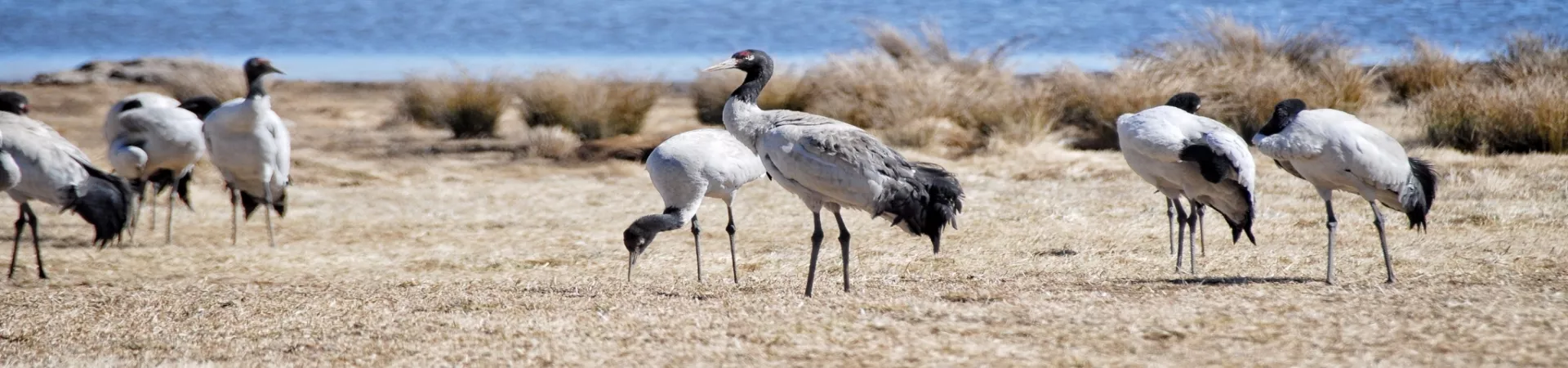
2.2. The Winter Spectacle: Realm of the Black-necked Crane As autumn's colors fade and a deep chill settles over the plateau from November through March, Dashanbao reveals its other, globally significant identity. The reserve forms a critical part of the northern Yunnan wetlands, which constitute the largest single overwintering habitat for the Black-necked Crane (Grus nigricollis). These majestic birds, the only cranes that breed and live entirely on high plateaus, migrate to Dashanbao's frozen marshes and lakeshores to escape the even harsher Tibetan winter.
Witnessing hundreds of these tall, graceful cranes—with their striking black neck, white body, and red crown patch—against a backdrop of snow-dusted hills and icy waters is an unforgettable, almost ethereal experience. Their resonant calls echo across the silent landscape, and observing their intricate social dances, foraging behaviors, and flight patterns becomes the central activity. Birdwatchers and conservation enthusiasts will find this period unparalleled, offering intimate glimpses into the life of a species once on the brink of extinction. The atmosphere is one of serene stillness, punctuated by the wild elegance of its avian guests.
3. Essential Visitor Information 3.1. Ticketing and Access The management of Dashanbao operates on a conservation-focused access model. Notably, there is no general admission fee to enter the reserve area itself. However, to protect the fragile ecosystem and manage visitor flow, access to the core scenic spots and viewing areas requires the mandatory purchase of a sightseeing bus ticket, priced at 68 RMB per person. This policy is in effect year-round. Private vehicles are generally not permitted on the core reserve roads, and the sightseeing buses provide scheduled transport between key observation points, including the best vantage points for crane watching in winter and panoramic landscape views in autumn.
3.2. Operating Hours and Visit Duration The reserve is open daily from 07:00 to 19:00, with the last entry permitted at 19:00. These hours apply consistently throughout the year. Given the size of the area and the reliance on shuttle buses, visitors should allocate a minimum of 3 to 4 hours for a fulfilling visit. This allows sufficient time for bus transfers, walking to specific viewpoints, and patiently waiting for and observing wildlife or ideal lighting conditions. A full day is recommended for photography enthusiasts or dedicated birdwatchers who wish to explore multiple sites at a leisurely pace.
4. Planning and Practical Considerations 4.1. Seasonal Preparation Your preparation must align closely with your chosen season. For the autumn visit (Aug-Oct), pack layered clothing, as temperatures can shift dramatically between day and night. Sturdy, comfortable walking shoes, sun protection (hat, sunglasses, sunscreen), and rain gear are advisable. For the winter season (Nov-Mar), extreme cold weather preparation is non-negotiable. This includes insulated, windproof jackets, thermal layers, gloves, warm hats, scarves, and waterproof boots with good traction for potentially icy paths. Binoculars and telephoto lenses (200mm minimum, 400mm+ recommended) are essential for appreciating the cranes.
4.2. Altitude and Health Dashanbao is situated at an average elevation of over 3,000 meters. Visitors should be mindful of the potential for altitude sickness. It is prudent to acclimatize for a day in a lower-altitude town like Zhaotong before ascending, avoid strenuous activity upon arrival, stay well-hydrated, and consider consulting a physician beforehand if concerned. The reserve's remote nature also means limited immediate medical facilities, so carrying personal medication and a basic first-aid kit is wise.
4.3. Conservation and Etiquette As a protected nature reserve, visitor conduct is paramount. This is especially critical during the winter when the Black-necked Cranes are present. Always observe cranes and other wildlife from designated viewing platforms and blinds, using binoculars or scopes for closer views. Maintain silence, avoid sudden movements, and never attempt to approach or feed the birds. Adhere strictly to marked trails to prevent soil erosion and damage to the sensitive wetland habitat. The principle of "leave no trace" should guide all activities, ensuring this sanctuary remains pristine for the cranes and future generations of visitors.
4.4. Contact and Connectivity For the latest information on crane populations, road conditions, or bus schedules, visitors can contact the reserve management at 0870-2868838. Given the remote location, cellular network coverage can be intermittent. It is advisable to download offline maps, inform someone of your itinerary, and carry sufficient cash, as electronic payment options may be limited at the ticket office or nearby small vendors.