Wuchidao Scenic Area
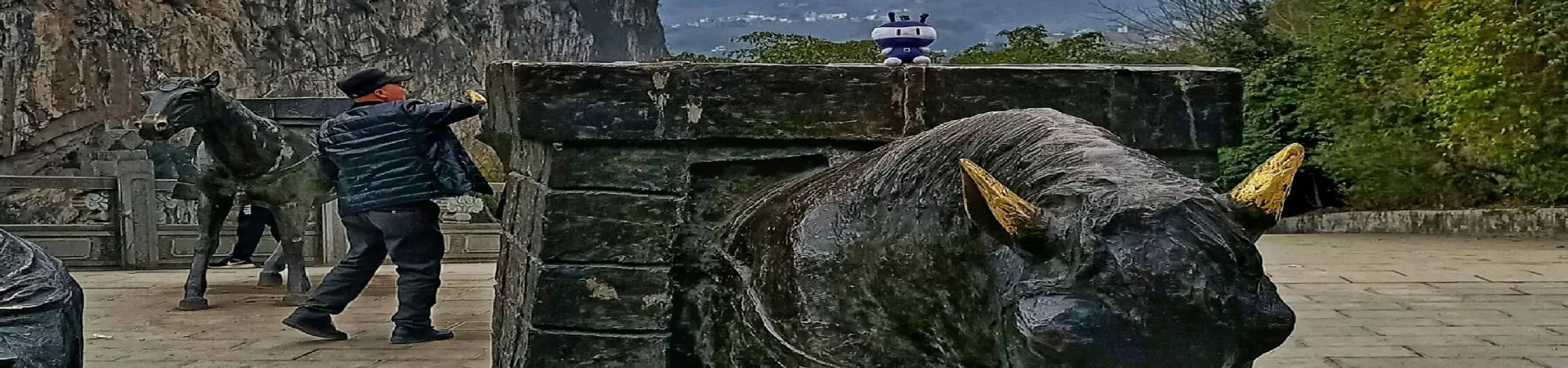
Subtitle: Treading the Ancient Path: A Journey Through History on the Wuchi Dao Trail
Introduction: The Silk Road’s Southern Artery
Nestled in the dramatic landscapes of Zhaotong, Yunnan, lies a historical treasure far removed from the bustle of modern highways—the Wuchi Dao Scenic Area. This ancient pathway, whose name translates to the "Five-Chi Road" (approximately 1.7 meters or 5.5 feet wide), represents one of the oldest and most significant official roads connecting the once-remote province of Yunnan with the heartlands of imperial China. While its physical dimensions may seem modest, especially when compared to the grand, fifty-pace-wide imperial "Chidao" (Speedways) commissioned by Qin Shi Huang, its historical and cultural importance is monumental. For centuries, it served as a vital commercial and cultural lifeline, the indispensable conduit for trade, military movements, and ethnic exchange between Yunnan, the Sichuan basin, and the Central Plains. To walk the Wuchi Dao is to walk in the footsteps of caravans, soldiers, and migrants who shaped the region's destiny, offering a profound, tangible connection to China's rich and layered past.
Section 1: The Historical Significance of the Corridor
1.1. An Engineering Feat of Antiquity The construction of the Wuchi Dao is a testament to the logistical ambitions of ancient Chinese dynasties. Built primarily during the Qin (221-206 BC) and Han (206 BC – 220 AD) dynasties, its creation was an act of integrating the southwestern frontier into the empire's fold. The road was carved through challenging terrain of mountains, gorges, and rivers, showcasing early engineering ingenuity. Its standardized width of five chi was not a sign of insignificance but rather a pragmatic adaptation to the rugged geography, allowing for the efficient passage of single-file horse caravans and troops—the lifeblood of administration and trade. In this sense, it was functionally equivalent to the broader plains roads; it was the "Chidao" of the highlands, a crucial artery for imperial control and cultural unification.
1.2. The Pulse of Commerce and Culture Beyond its military-strategic role, the Wuchi Dao flourished as the premier commercial corridor. It formed a critical segment of the southern Silk Road network, facilitating the flow of high-value commodities. Sichuan's exquisite silks and sophisticated ironware traveled southwest, while Yunnan's precious resources—notably tin, silver, and horses—journeyed north and east. This constant exchange did more than enrich merchants; it fostered a sustained dialogue between diverse ethnic groups, including the Han, Yi, and Bai peoples. Ideas, religions, and technologies moved along with goods, slowly weaving the disparate cultures of southwest China into the broader tapestry of Chinese civilization. The road was less a boundary and more a vibrant, dynamic zone of contact and fusion.
Section 2: Experiencing the Scenic Area Today
2.1. A Walk Through Living History Modern visitors to the Wuchi Dao Scenic Area are offered a unique opportunity for immersive historical exploration. Carefully preserved and restored sections of the ancient stone path allow you to physically trace the route. The worn, smooth flagstones underfoot, grooved by countless cart wheels and hoofbeats over millennia, are powerful, silent narrators of history. The route winds through stunning natural scenery—past steep cliffs, overlooking deep valleys, and across tranquil rural landscapes—providing a context that vividly illustrates the challenges faced by ancient travelers. Interpretive signs and designated viewpoints highlight key historical and geological features, helping to bridge the centuries for the contemporary explorer.
2.2. Key Landmarks and Vistas Along the trail, several specific features command attention. Look for the ancient stone bridge crossings, marvels of simple, durable construction that tamed mountain streams. Sections where the road is cut directly into cliff faces demonstrate the sheer effort involved in its creation. From certain high observation points, you are rewarded with panoramic views that showcase the strategic rationale behind the road's placement, controlling passage through the natural maze of Zhaotong's topography. The contrast between the timeless, serene countryside and the enduring human-made path creates a poignant and contemplative atmosphere.
Section 3: Practical Visitor Information
3.1. Admission and Operating Hours To plan your visit effectively, please note the following practical details: * Admission Fee: The entrance ticket is priced at 40 RMB per person. * Operating Schedule: The scenic area is open daily from 8:00 AM to 5:00 PM. This schedule is generally maintained throughout the year, from January 1st to December 31st, including weekends. It is always advisable to confirm timings locally on the day of your visit, as management policies can occasionally be subject to change for maintenance or weather-related reasons.
3.2. Planning Your Visit Given the historical terrain, comfortable, sturdy walking shoes with good grip are essential. The weather in Zhaotong can be changeable; carrying water, sun protection (hat, sunscreen), and a light rain layer is recommended. The walk itself is a moderate physical activity suitable for most fitness levels, but it does involve some uneven steps and slopes. Allocate at least 2-3 hours to fully appreciate the main trail sections, read informational displays, and enjoy the scenery at a leisurely pace. The site offers a profound experience that resonates more deeply with unhurried exploration.
Section 4: The Road's Enduring Legacy
4.1. From Ancient Path to Cultural Heritage The transition of the Wuchi Dao from a bustling thoroughfare to a protected scenic area marks its evolution from a commercial tool to a recognized cultural relic. It stands today not as a forgotten ruin but as a consciously preserved heritage site. This status acknowledges its irreplaceable value in understanding China's expansion, its economic history, and the interactions that defined its southwestern frontier. Preservation efforts ensure that this open-air museum continues to educate and inspire, safeguarding the physical evidence of a remarkable historical narrative for future generations.
4.2. A Symbol of Connection Ultimately, the enduring power of the Wuchi Dao lies in its timeless theme of connection. In an era of high-speed rail and global air travel, this narrow stone path reminds us of the fundamental human endeavors of exploration, exchange, and overcoming geographical barriers. It symbolizes the long, intricate process of building a nation and a shared identity. A visit here is more than a scenic hike; it is an engagement with the deep roots of Yunnan's history and a reflection on the journeys—both literal and figurative—that link landscapes, peoples, and epochs.
Information last verified: February 3, 2023. Credit and thanks to contributor 鯛鱼_焼 for collaborative input.