The Yuejiang Tower
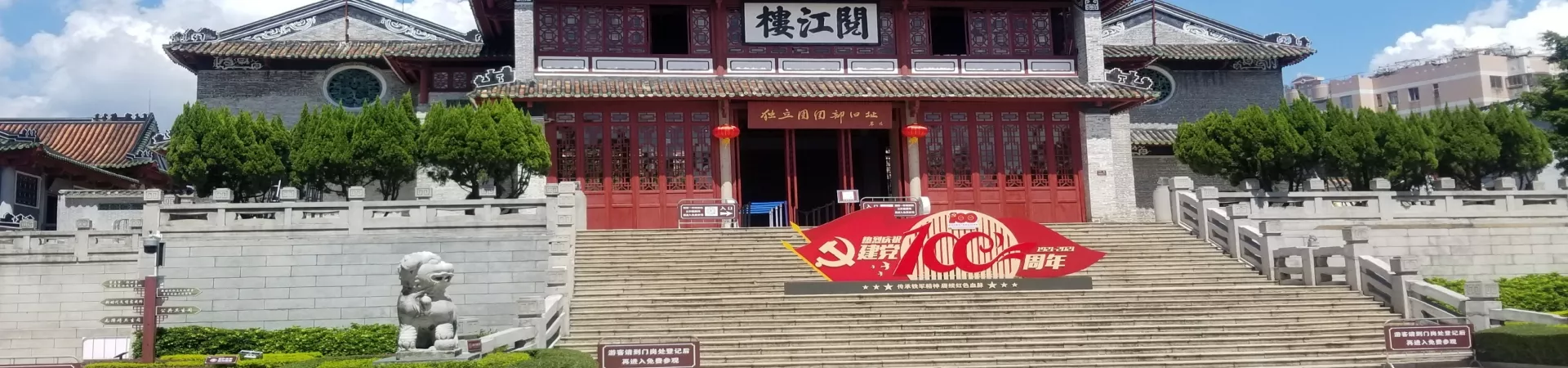
Subtitle: A Riverside Jewel of Lingnan: Unveiling the History, Architecture, and Serenity of Zhaoqing's Yuejiang Tower
1. Introduction: A Riverside Legacy Perched majestically on the banks of the majestic Xi River in Zhaoqing, Guangdong province, the Yuejiang Tower complex stands as a timeless testament to the refined architectural artistry and deep cultural heritage of the Lingnan region. More than just a historical site, it is a living landscape where classical design, literary history, botanical wonders, and profound philosophical symbolism converge. For centuries, the captivating scene of "River Tower at Dusk," one of the eight famed scenic spots of Zhaoqing, has drawn visitors and poets alike to witness the sun setting over the shimmering waters, casting a golden glow upon this elegant architectural ensemble. A visit here is not merely a tour but an immersive journey into a space where every courtyard, inscription, and ancient tree whispers stories of the past.
2. Architectural Harmony: The Lingnan Courtyard Style 2.1 The Essence of "Siheyuan" in the South The Yuejiang Tower complex is a quintessential example of a Lingnan-style "Siheyuan," or courtyard residence. This architectural form, characterized by its symmetrical layout with buildings surrounding a central courtyard, is adapted here to the subtropical climate of southern China. The design emphasizes openness, ventilation, and a harmonious integration with the natural environment. Wandering through the interconnected halls and verandas, visitors experience a profound sense of balance and tranquility, shielded from the outside world while remaining connected to the sky and garden within.
2.2 Spatial Layout and Aesthetic Principles The buildings typically feature sloping roofs with graceful eaves, intricate wood carvings, and decorative panels, all hallmarks of Lingnan craftsmanship. The central courtyard serves as the heart of the complex, a stage for light, shadow, and seasonal changes. This layout was not only practical for family life and scholarly pursuit but also reflected Confucian ideals of order, hierarchy, and the harmonious coexistence of humanity and nature.
3. Living History: The Ancient Trees and the Songtai Academy 3.1 The Three Centenarian Milan Trees At the very core of the courtyard, defying centuries, stand three venerable Milan trees (Aglaia odorata), each over 300 years old. Local lore holds that these trees were planted by scholars studying at the adjacent Songtai Academy. These are not silent monuments but active participants in the site's life. Remarkably, they bloom twice a year. When the flowering season arrives, the entire complex is filled with their delicate, incredibly fragrant blossoms—a sweet, pervasive aroma that delights the senses and elevates the spirit, creating an unforgettable multisensory experience that has been enjoyed by generations.
3.2 The Songtai Academy: A Hub of Scholarship The presence of the Songtai Academy underscores the site's deep association with education and literary culture in imperial China. It was a place where aspiring scholars, or "xiucai," prepared for the rigorous civil service examinations. The ancient Milan trees, therefore, symbolize perseverance, scholarly endeavor, and the enduring fragrance of knowledge. The academy grounds themselves invite contemplation of the intense intellectual pursuits that once animated these quiet halls.
4. Cultural Treasures: The Mystical "Fu Shou" Inscriptions 4.1 The Unique Calligraphic Masterpiece Carved into a stone stele on the eastern side of the Songtai Academy is one of Yuejiang Tower's most extraordinary artifacts: the "Fu Shou" (福寿) inscriptions, meaning "Fortune" and "Longevity." Their uniqueness lies not just in their age but in their extraordinary conception. They are attributed to the legendary Taoist sage and philosopher Chen Tuan, who lived during the transitional period between the Tang and Song dynasties.
4.2 Decoding the Symbolism of the Characters The genius of this work is in its deliberate contrast. The character for "Longevity" (寿) is written in the ancient Zhuan script (Seal script), which is older and more formal. The character for "Fortune" (福) is rendered in the later, more fluid and cursive Xing script (Running script). This pairing is deeply symbolic: the "Longevity" character represents an elder—stable, revered, and rooted in tradition (like the ancient script). The "Fortune" character represents youth—dynamic, flowing, and full of potential. Together, they visually and philosophically embody the classic blessing: "May your fortune be as vast as the Eastern Sea, and your longevity as enduring as the Southern Mountains."
4.3 An Enduring Cultural Practice The power of these inscriptions transcended the stone stele. For generations, people, particularly in the Lingnan region, have revered Chen Tuan's "Longevity" character. It became a common and cherished practice to have this specific character copied and displayed in homes, often as a hanging scroll or plaque, as a talisman to invite health, long life, and auspicious blessings for the family. This practice highlights how the cultural artifact at Yuejiang Tower directly influenced folk customs and domestic spirituality.
5. Practical Visitor Information 5.1 Location and Transportation The Yuejiang Tower is conveniently located in Zhaoqing. Visitors can easily reach the site by public bus. Taking bus routes 15 or 27 and alighting at the "Yuejiang Lou" (阅江楼) stop will bring you directly to the entrance.
5.2 Admission and Opening Hours Admission to the Yuejiang Tower complex is granted free of charge upon presentation and registration of a valid identification document (such as a passport or ID card). This policy makes this cultural treasure accessible to all. The site is open daily from 8:00 AM to 5:30 PM. The last admission is at 5:00 PM. These hours are consistent throughout the year, from January 1st to December 31st.
5.3 Contact Information For any inquiries prior to your visit, you may contact the site administration at 025-58590292.