Mei'an
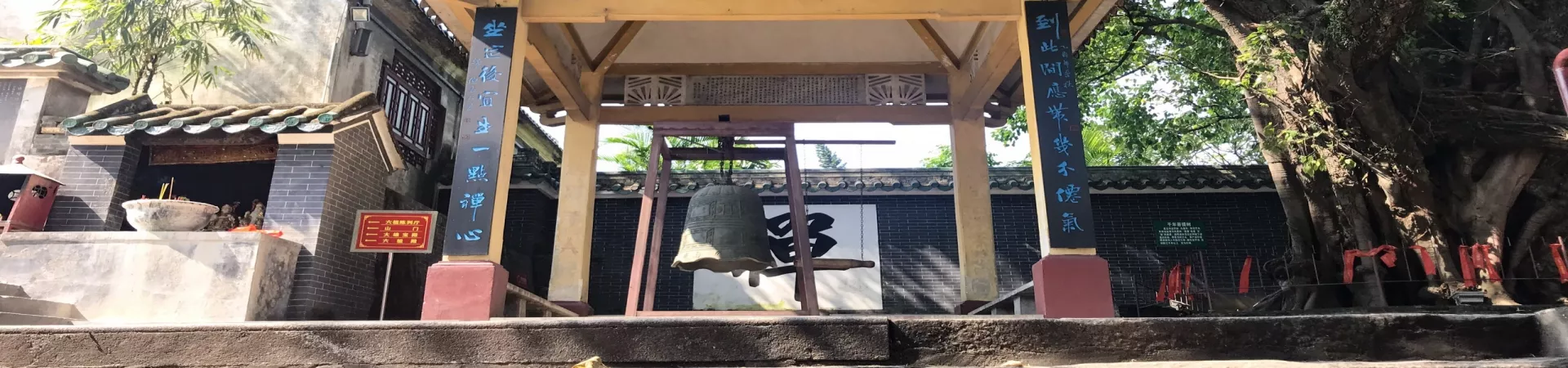
Subtitle: A Journey Through Time: Unveiling the Serenity and Architectural Marvel of Zhaoqing's Meian Temple
Introduction: A Sanctuary Steeped in Legend
Nestled upon Meian Hill in the western outskirts of Zhaoqing City, Guangdong Province, lies the Meian Temple, an ancient sanctuary whispering tales from the dawn of the second millennium. More than just a temple, Meian is a profound cultural landmark, its very existence rooted in a poetic legend associated with Huineng, the revered Sixth Patriarch of Zen Buddhism. It is believed that during the Tang Dynasty, Huineng paused here on his journey south and planted a plum tree. Centuries later, in 996 AD during the Northern Song Dynasty (specifically the second year of the Zhidao era), the temple was constructed on this hallowed ground to commemorate this symbolic act. The name "Meian" itself translates to "Plum Retreat," a permanent homage to that moment. This deep connection to a foundational figure in Chinese Buddhism imbues the site with an atmosphere of deep spirituality and historical continuity, offering visitors a rare chance to walk in the footsteps of ancient masters.
Architectural Splendor: A Rare Window into the Song Dynasty
The Crown Jewel: The Mahavira Hall The paramount reason for Meian Temple's national significance lies not just in its age, but in its extraordinary state of preservation. The heart of the complex, the Mahavira Hall (Da Xiong Bao Dian), stands as an architectural treasure of inestimable value. It is celebrated as one of the most pristine and important surviving examples of wooden-frame architecture from the Song Dynasty in the entire Lingnan region (southern China).
Features of a Millennium-Old Masterpiece Stepping into the hall is akin to stepping back in time. Its construction employs the classic tailiang timber framing system, characterized by its elegant, clean lines and sophisticated joinery that uses complex interlocking brackets (dougong) to support the wide, overhanging eaves. The proportions of the hall, the design of its pillars, and the subtle details of its components are textbook representations of Northern Song architectural aesthetics and engineering principles. Unlike many ancient structures that have undergone extensive reconstruction, the core wooden skeleton of this hall retains a remarkable authenticity. This integrity has rightfully earned it accolades such as "The Millennium Ancient Retreat" and "A National Treasure," making it an essential pilgrimage site for scholars of Chinese architecture and history enthusiasts alike.
A Living Testament to Cultural Fusion The temple's design is a silent narrative of cultural exchange. While embodying the quintessential Song style, its location in Lingnan also hints at local adaptations. The structure represents a crucial link in the architectural history of China, showcasing how imperial building techniques from the central plains were implemented and preserved in the south. It serves as a tangible, awe-inspiring document of ancient craftsmanship, where every beam and bracket tells a story of artistic philosophy and technical mastery that has defied the centuries.
Practical Information for the Visit
Planning Your Journey To fully absorb the tranquility and details of Meian Temple, visitors should allocate approximately 1 to 3 hours. This allows sufficient time to admire the architectural details of the main hall, explore the quieter courtyards, contemplate the site's history, and enjoy the peaceful ambiance of the hillside location.
Getting There Meian Temple is accessible via Zhaoqing's public bus system. You can take Bus 12 and alight at the Meian Lu (Meian Road) station. Alternatively, Bus 5 or Bus 16 will bring you to the Shi Pifu Bing Yiyuan (City Dermatology Hospital) stop, located at the intersection of Meian Road, from which the temple is a short walk away.
Admission and Opening Hours The temple maintains very accessible visiting hours and a modest entrance fee, ensuring it remains open for all to appreciate. * Admission Fee: A nominal fee of 5 RMB is charged per person. * Opening Hours: The temple is open daily from 9:00 AM to 5:00 PM. This schedule is consistent throughout the year, from January 1st to December 31st, including weekdays and weekends.
The Visitor Experience: More Than Stone and Wood
Beyond the architectural analysis, a visit to Meian Temple is a multisensory experience. The climb to the hillside location builds anticipation, separating the serene world of the temple from the modern city below. Within the compound, the interplay of light and shadow through the ancient wooden structures, the scent of aged timber and incense, and the quiet sounds of wind and distant chanting (if visiting during a service) create a deeply meditative environment. It is a place where one can appreciate not only a masterpiece of human ingenuity but also a lasting sanctuary for reflection, connecting the spiritual quest of the past with the seeking mind of the present-day visitor. The temple grounds, likely encompassing the space where Huineng's legendary plum tree once stood, encourage a moment of pause, inviting contemplation on the enduring legacy of faith, art, and the simple, profound acts that inspire greatness across generations.