Dinghushan National Nature Reserve
A Visitor's Guide to Dinghu Mountain National Nature Reserve
Nestled in the Zhaoqing region of Guangdong Province, China, Dinghu Mountain stands as one of the province's "Four Famous Mountains," alongside Danxia, Luofu, and Xiqiao. Often poetically described as an "Emerald on the Tropic of Cancer," this ancient landscape has been a revered Buddhist sanctuary since the Tang Dynasty. Today, as a UNESCO-recognized biosphere reserve, it offers visitors a profound escape into pristine nature, rich cultural history, and breathtaking scenery.
• Planning Your Visit: Essential Information Before embarking on your journey, it's helpful to have the key logistical details at hand.
•• Admission and Fees The reserve operates on a ticketed system. The standard scenic area entrance fee is approximately 70 RMB. Within the reserve, some specific attractions require separate tickets. Most notably, the captivating Butterfly Valley has its own admission. Additionally, boat tours, such as those within the valley, are available for around 35 RMB for an adult ticket. Please note: All price information is for reference only. It is strongly recommended to verify the latest official prices before your visit, as they are subject to change.
•• Opening Hours Dinghu Mountain is generally open to visitors daily from 08:00 to 18:00, with the last admission typically at 17:30. These hours apply throughout the year, but checking for any seasonal adjustments or special holiday schedules is always prudent.
•• Suggested Duration To truly appreciate the scale and beauty of the reserve, a visit of 3 to 5 hours is recommended. This allows ample time to explore one or two of the main scenic areas at a comfortable pace. For hiking enthusiasts or those wishing to see more, a full day can easily be filled.
• Exploring the Core Scenic Areas Dinghu Mountain is broadly divided into three major scenic zones: Tianxi (Heavenly Stream), Tianhu (Heavenly Lake), and Yunxi (Cloud Stream). Each offers a distinct experience, from cultural landmarks to serene natural wonders.
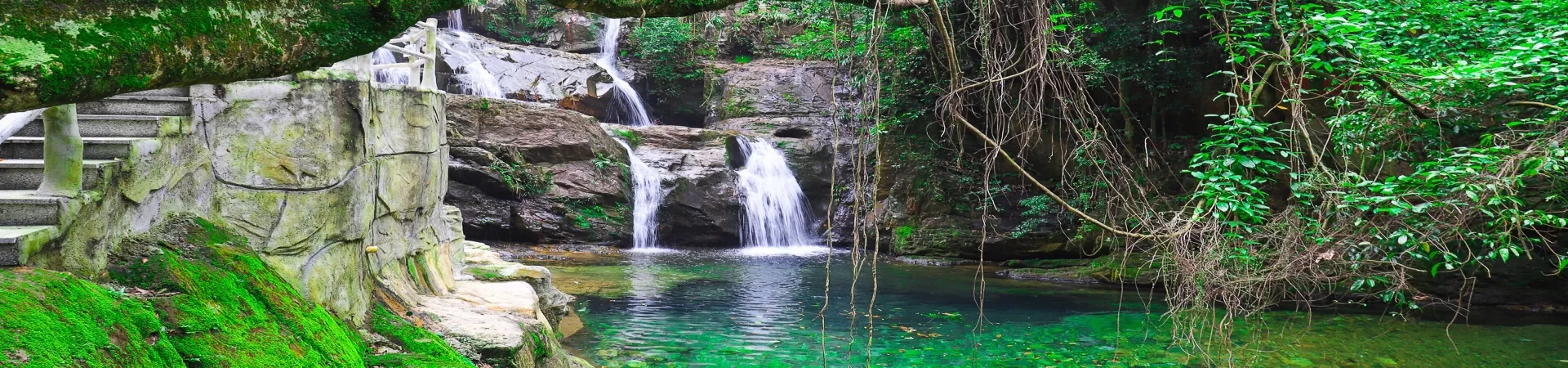
•• Tianxi Scenic Area: Cultural Heart and Forest Trails This area is the most frequented and houses several of the mountain's iconic sites. Well-paved paths wind through lush forests, leading to key attractions. - Baoding Garden (Treasure Tripod Garden): This unique garden is dedicated to ancient Chinese ding (ritual tripods). Its centerpiece is a massive, modern reproduction of a bronze tripod, symbolizing stability and peace. The garden offers panoramic views of the surrounding forest and lakes. - Qingyun Temple: As one of Guangdong's most important Buddhist temples, with origins tracing back over a millennium, Qingyun Temple is a site of profound tranquility. The complex of halls, set against the mountain backdrop, exudes a serene atmosphere. The sound of chanting and the scent of incense contribute to a deeply spiritual experience. - Feishui Tan (Flying Water Pool): This is arguably the most famous single spot in Dinghu Mountain. A powerful waterfall cascades into a deep, clear emerald pool, creating a scene of majestic beauty. Its historical significance is marked by a cliff-side inscription in the calligraphy of Soong Ching-ling that reads, "Sun Yat-sen Swimming Place," commemorating the visit and swim here by Dr. Sun Yat-sen and his wife. The pool area is cool, refreshing, and filled with negative ions.
•• Yunxi and Butterfly Valley: A Journey into Primeval Nature For those seeking deeper immersion into untouched ecosystems, the Yunxi area and the separately-ticketed Butterfly Valley are essential. - Butterfly Valley: Accessible via a scenic boat ride across a tranquil lake, the valley feels like a step into a lost world. It protects a segment of original subtropical monsoon forest with incredibly diverse vegetation. The valley is a haven for biodiversity, and as the name suggests, numerous butterfly species can be observed in season. The terrain is characterized by babbling streams and a series of stunning waterfalls. - Waterfalls of the Valley: The network of trails leads visitors past multiple cascades. Notable among them are the "Renzi Waterfall" (shaped like the Chinese character for 'person') and the "White Elephant Waterfall," each with its own distinctive character and roar. The air here is exceptionally fresh and humid, offering a true forest-bathing experience.
• The Ecological and Historical Significance Beyond its immediate beauty, Dinghu Mountain's value is immense. As a protected nature reserve on the Tropic of Cancer—a global zone often associated with deserts—it is a vital green lung and a living laboratory for studying subtropical flora and fauna. Its forests are centuries old, containing rare plant species and contributing to crucial ecological research. Simultaneously, its 1,200-year history as a Buddhist center has layered the landscape with cultural depth. The harmonious coexistence of ancient temples within the primeval forest creates a unique sense of place where natural and spiritual heritage are intertwined.
• Practical Tips for Visitors - Footwear and Clothing: Comfortable, non-slip walking or hiking shoes are essential, as paths can be steep and slippery, especially near waterfalls. Light, breathable clothing is advisable, but carry a light jacket for the cooler, shaded forest areas. - Hydration and Snacks: While there are small vendors near major sites, carrying water and some energy snacks is recommended for longer walks. - Photography: The play of light through the forest canopy, the dynamic waterfalls, and the misty vistas offer fantastic photographic opportunities. A protective case or bag for your camera against humidity and potential water spray is useful. - Respect the Environment: As a protected area, it is crucial to stay on designated paths, avoid disturbing wildlife, and carry out all trash to help preserve this fragile ecosystem for future generations.
In essence, Dinghu Mountain National Nature Reserve is more than just a scenic spot; it is a destination for rejuvenation, learning, and awe. It invites visitors to walk through living history, breathe deeply in one of China's most precious forests, and witness the powerful beauty of nature that has inspired pilgrims and poets for centuries.
Information last verified/updated: September 26, 2023. Credit for user contributions to this summary extends to community members such as bentayga and feel.