Deqing Yuecheng Dragon Mother Ancestral Temple
Subtitle: A Journey into the Heart of Lingnan's Spiritual Heritage: The Dragon Mother Ancestral Temple
1. Introduction: The Legendary Hometown of the Dragon Mother
Nestled within the town of Yuecheng in Deqing County, Zhaoqing, lies a site of profound cultural resonance and architectural wonder: the Dragon Mother Ancestral Temple (龙母祖庙). Revered as the legendary hometown of the Dragon Mother, a central figure in Lingnan region folklore and water deity worship, Yuecheng serves as the spiritual epicenter for a tradition that has captivated millions for centuries. The temple itself stands as one of the largest and most significant ancient temples in the entire Lingnan area (encompassing Guangdong, Guangxi, and parts of neighboring provinces). More than just a place of worship, it is a living museum of exquisite traditional craftsmanship and a repository of enduring mysteries that continue to intrigue historians and visitors alike. Its enduring fame is encapsulated in four defining characteristics: Divine (神), Peerless (绝), Ingenious (巧), and Efficacious (灵), with its architectural and artistic "Ingenuity" being immediately apparent to every observer.
2. Architectural Marvel: The "Ingenuity" of Craftsmanship
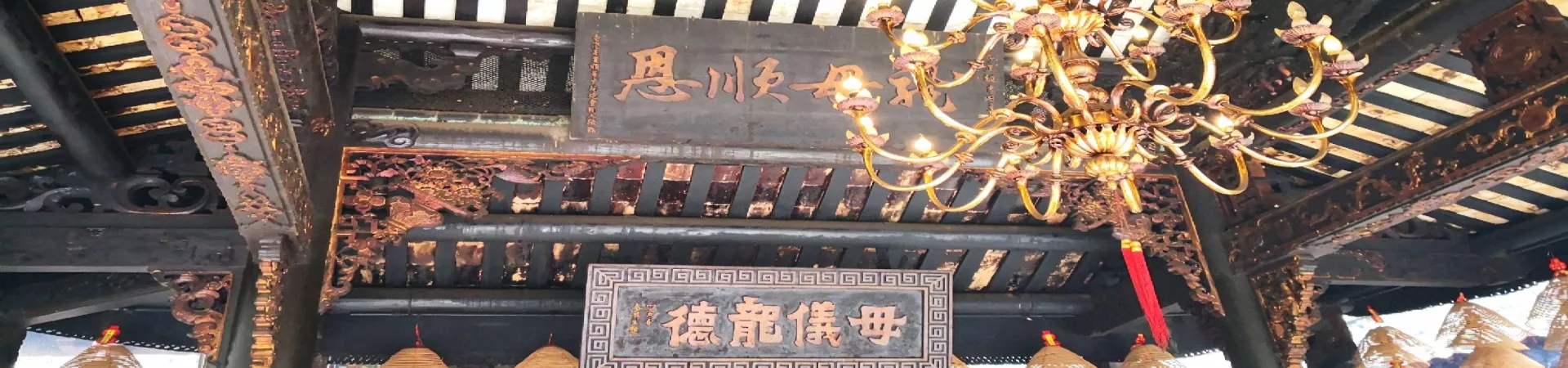
The Dragon Mother Ancestral Temple is a masterpiece of traditional Chinese temple architecture and decorative art, rightfully earning its reputation for "Ingenuity" (巧). This is most vividly demonstrated in the breathtaking array of carvings that adorn the complex, each a testament to the sublime skill of Qing Dynasty artisans.
2.1. A Symphony in Stone, Wood, Brick, and Clay: The temple is an open-air gallery of sculptural art. The stone carvings, often found on pillars, bases, and archways, are robust and intricate. Wood carvings grace the eaves, beam brackets (dougong), and temple furnishings, depicting mythological scenes, auspicious symbols, and intricate patterns with lifelike precision. The brick carvings, a more delicate and challenging art form, showcase detailed pictorial narratives. Perhaps most distinctive are the pottery sculptures and clay figurines that adorn the roof ridges and gables. These vibrant, glazed creations depict dragons, phoenixes, immortals, and historical figures, adding a dynamic, colorful dimension to the temple's silhouette against the sky. The seamless integration and exceptional quality of these four carving techniques create a harmonious and awe-inspiring visual feast, truly justifying the description of "artistry rivaling the work of heaven."
2.2. Enduring Mysteries in Construction: Beyond its beauty, the temple's construction holds fascinating puzzles. It is said that the building complex possesses remarkable natural ventilation and drainage properties. Despite its location near the river and in a region prone to humidity, the interior remains relatively dry and well-ventilated. Furthermore, legends persist that the temple is constructed in such a way that spiders do not spin webs inside, and dust and fallen leaves seem to accumulate less than expected. While modern explanations may be sought, these enduring traits contribute to the temple's aura of the "Peerless" (绝) and the "Divine" (神), blurring the lines between architectural genius and mystical lore.
3. Living Culture: Rituals, Festivals, and the "Efficacious" Legacy
The Dragon Mother Ancestral Temple is far from a static relic; it is a pulsating heart of living folk culture and religious practice, embodying the "Efficacious" (灵) aspect of its fame. This vitality is most spectacularly displayed during its annual festivals.
3.1. The Dragon Mother Birthday Festival: The most significant event in the temple's calendar is the Dragon Mother Birthday Festival, centered around the 8th day of the 5th lunar month (usually falling in June). This grand celebration spans over ten days, transforming the temple and the vast stone archway plaza in front of it into a scene of immense fervor. Tens of thousands of pilgrims and devotees, primarily from across the Pearl River Delta, Hong Kong, and Macau, converge here. The air thickens with the scent of incense as devotees present offerings and prayers for good fortune, health, and prosperity. The scale and devotion witnessed during this period are a powerful testament to the deity's enduring significance in regional culture and identity.
3.2. Historical Customs and Practices: In times past, the festival featured unique and vivid customs that highlighted the deep connection between the Dragon Mother, water, and fertility. Two notable practices included:
- 3.2.1. "Offering to the Green Snake": The green snake was considered a messenger or embodiment of the Dragon Mother's sons. Ritual offerings to snakes were part of the worship, symbolizing respect for the natural world and the deity's protective power over rivers and communities.
- 3.2.2. "Touching the Dragon Bed for Fertility": A particularly poignant custom involved women seeking children touching or sitting on a designated "Dragon Bed" within the temple. This practice reflected the Dragon Mother's role as a compassionate, matriarchal figure associated with blessing families with offspring and safeguarding children.
While some specific customs may have evolved, the core purpose of seeking blessings, expressing gratitude, and participating in a shared cultural heritage remains the driving force behind the temple's vibrant ritual life.
4. Practical Information for the Visit
4.1. Opening Hours: The temple is open daily from 8:30 AM to 5:30 PM. The last admission is at 5:30 PM. It is advisable to allocate sufficient time for a thorough visit.
4.2. Suggested Duration: A comprehensive visit to appreciate the architecture, carvings, and atmosphere requires a minimum of 3 hours. Visitors attending during the festival period should expect significantly larger crowds and plan accordingly.
4.3. Transportation: * By Bus: Regular long-distance bus services are available from Zhaoqing's main bus station directly to Deqing County. From Deqing, local transportation (such as taxis or local buses) can be taken to the temple in Yuecheng Town. * By Car (Sample route from Guangzhou): The drive offers flexibility. A typical route involves taking the G55 Er-Guang Expressway or the G80 Guang-Kun Expressway from Guangzhou towards Zhaoqing/Wuzhou. Exit at the appropriate interchange for Zhaoqing/Deqing, proceed via Zhaoqing Avenue, and follow signs to Deqing and subsequently to Yuecheng Town and the Dragon Mother Temple. The journey typically takes between 2.5 to 3.5 hours depending on traffic.
4.4. Visitor's Note: As an active place of worship, visitors are encouraged to observe respectful behavior. During peak times like the Dragon Mother Birthday, the temple experiences an overwhelming influx of pilgrims. Visitors seeking a quieter, more contemplative experience to study the architecture might consider visiting outside of the main festival days.