Lamp tower corner
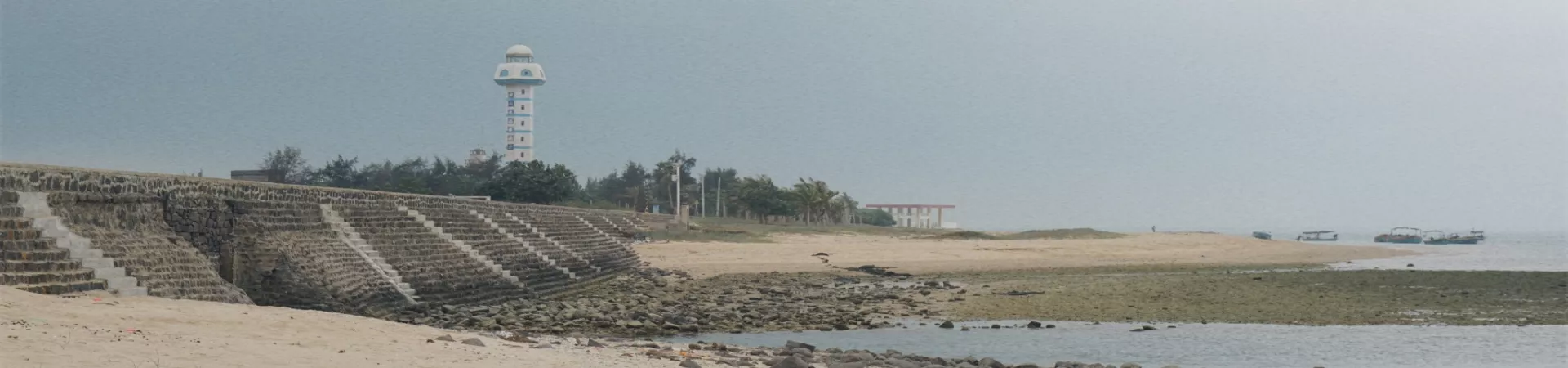
Subtitle: A Beacon at the Edge of the Mainland: History, Scenery, and Solitude at Zhanjiang's Southernmost Point
Introduction Nestled on the southernmost tip of mainland China in Xuwen County, Zhanjiang, Dengloujiao (Lighthouse Cape) stands as a silent sentinel overlooking the Qiongzhou Strait. More than just a geographical marker, this site is a poignant tapestry woven with threads of maritime history, colonial echoes, and breathtaking natural beauty. Built in 1890 during the 16th year of Emperor Guangxu's reign in the Qing Dynasty, the lighthouse has guided countless vessels navigating the crucial waters between the mainland, Hainan Island, the South China Sea islands, and the Beibu Gulf. Its enduring presence makes it not only the sole beacon for this vast maritime crossroads but also the definitive symbol of the continent's southern extremity.
A Crossroads of History and Colonial Imprint
The Sentinel of the Strait The primary function of Dengloujiao has always been one of navigation and safety. For over a century, its light has pierced the fog and darkness, serving as an indispensable guide for fishermen, merchant ships, and explorers traversing these sometimes-treacherous straits. It represents a legacy of human endeavor to conquer and safely navigate the seas, a fixed point in the mutable world of ocean currents and weather.
Architectural Echoes of a Bygone Era The significance of this strategic location was not lost on global powers in the late 19th and early 20th centuries. Beyond the Chinese-built lighthouse, the cape bears subtle yet tangible scars and memories of foreign interest. Historical records indicate that French, British, and Russian entities established a presence here, constructing residences and facilities. Today, scattered around the lighthouse, visitors can find the remnants of Western-style manor walls—weathered bricks and foundations slowly being reclaimed by lush vegetation. These silent ruins are not grand monuments but haunting fragments, inviting contemplation on the area's complex past as a microcosm of broader geopolitical currents. They add a layer of historical depth, transforming a visit from a simple sightseeing trip into a walk through a layered historical landscape.
The Unparalleled Natural Tapestry
A Panorama of Tropical Splendor While its history is compelling, Dengloujiao truly captivates the soul with its raw and vibrant natural scenery. Ascending the cape offers a visual feast that is uniquely its own. The vista is a dramatic study in contrasts and expanses: the boundless, azure sky meets the shimmering, seemingly infinite sea of the Qiongzhou Strait, while the immediate foreground bursts with the vigorous life of a tropical ecosystem.
Flora at the Continent's Edge The land itself is cloaked in a dense, green mantle of hardy coastal flora. A resilient forest of coconut palms and casuarina (ironwood) trees bends gracefully in the salty sea breezes. Thickets of acacia trees, prickly pear cacti, and dense shrubs create a textured undergrowth. In suitable areas, one can find the delicate blooms of beach morning glory and, most importantly, stretches of mangrove forests. These mangroves, with their intricate root systems, are not just scenic but ecologically vital, protecting the coastline and nurturing marine life. This specific combination of maritime grandeur and lush, wind-swept tropical greenery is a signature spectacle found only at this southernmost verge.
Dynamic Coastal Phenomena The panoramic view is never static. At dawn and dusk, the cape becomes a premier stage for the sun's dramatic daily performances, painting the sky and sea in breathtaking hues of gold, crimson, and purple. Furthermore, fortunate visitors might witness a remarkable marine phenomenon known locally as "wave trains" or "排浪" (pái làng). This occurs when long, rhythmic lines of swells roll in successively from the distant waters near Hainan, creating a mesmerizing and powerful pattern of parallel waves crashing onto the shore in a steady, awe-inspiring procession. It is a powerful display of the ocean's raw energy and rhythm.
Practical Information for the Visit
Location and Accessibility Dengloujiao is located in Xuwen County, which is under the administration of Zhanjiang City in Guangdong Province. The site is relatively remote, offering a sense of escape and isolation. Visitors typically need to arrange private transport or join a tour from Zhanjiang city center or nearby towns in Xuwen. The journey itself, through rural and coastal landscapes, forms part of the adventure.
Visiting Details * Admission Fee: There is no entrance fee to access the Dengloujiao area. * Opening Hours: The site is accessible to the public 24 hours a day, every day of the year. This allows for flexibility to visit for sunrise, sunset, or under the starlit sky. * Suggested Duration: To fully appreciate the historical remnants, climb to the vantage points, immerse in the scenery, and wait for potential wave phenomena, a visit of three hours or more is highly recommended. It is a place that rewards patience and quiet observation rather than a hurried stop.
Final Considerations A trip to Dengloujiao is a journey to the very edge of the Chinese mainland. It is an experience that combines the contemplation of history etched in stone and ruin with the immersive pleasure of standing before a majestic, unspoiled natural panorama. It remains a place where the whispers of the past meet the constant roar of the sea, offering a profound sense of place and perspective.