Yongfusi
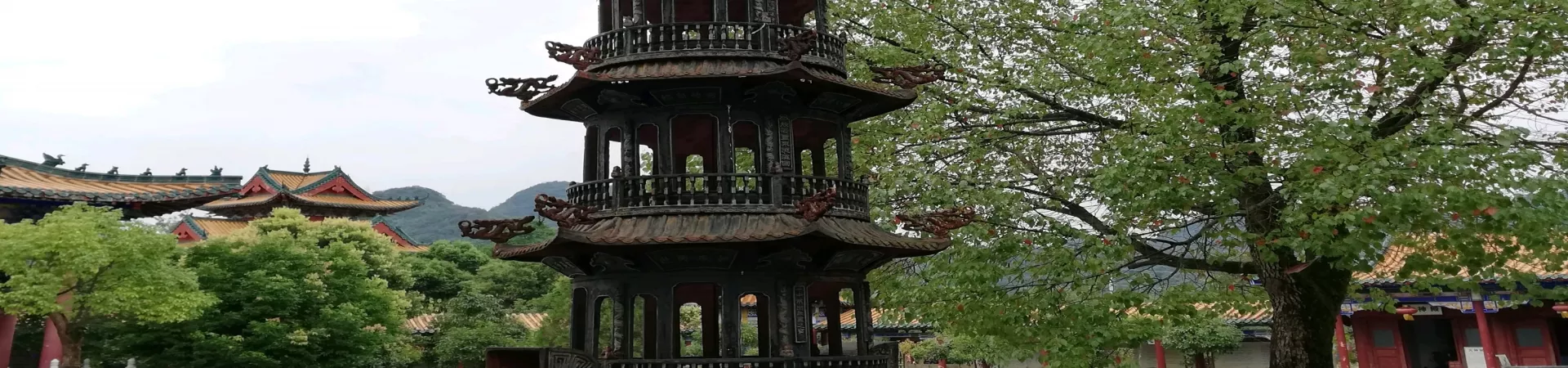
A Journey Through Time and Serenity: Unveiling the Mysteries of Yongfu Temple in Yongzhou
Subtitle: From Imperial Patronage to Spiritual Sanctuary: The Living Legacy of a Tang Dynasty Gem
Nestled amidst the serene, rolling hills of Yongzhou in China's Hunan province, lies a monument not just of stone and timber, but of enduring faith and historical resonance—the Yongfu Temple. More than a mere tourist destination, it is a portal into a rich tapestry of Buddhist culture, architectural evolution, and tranquil contemplation that has drawn pilgrims, scholars, and seekers for over a millennium. This guide delves into the essence of Yongfu Temple, offering visitors a deeper understanding of its significance, its layout, and the profound experience it promises.
I. Historical Roots and Spiritual Significance
A. Foundations in the Tang Dynasty The story of Yongfu Temple begins in the golden age of Chinese civilization, the Tang Dynasty (618-907 AD). Established during this period of flourishing arts, religious tolerance, and expansive cultural exchange, the temple was born into an era where Buddhism was deeply integrated into the imperial court and public life. Its founding is intrinsically linked to the journey of Buddhist scriptures from India to China. It served as a crucial spiritual and academic center for the translation, study, and dissemination of Buddhist teachings, contributing to the Sinicization of Buddhism and its spread throughout East Asia.
B. The Patronage of Emperor Xuanzong A pivotal chapter in the temple's early history involves the personal patronage of Emperor Xuanzong (reigned 712-756 AD). Renowned for his initial reign of prosperity (the "Kaiyuan Era"), Xianzong was a significant supporter of Buddhist institutions. His endorsement and likely financial contributions to Yongfu Temple elevated its status, transforming it from a local monastery into a nationally recognized center of Buddhist learning. This imperial connection provided the resources for expansion and solidified its reputation for centuries to come.
C. A Legacy of Resilience and Renovation Like many ancient structures in China, Yongfu Temple's history is not a linear narrative of uninterrupted glory but one of resilience. It has witnessed the rise and fall of dynasties, surviving periods of neglect, damage, and subsequent restoration. Major renovations, particularly during the Ming (1368-1644) and Qing (1644-1912) dynasties, have left their architectural imprint on the complex. Each restoration effort was not merely about repair but a reaffirmation of the temple's enduring spiritual and cultural value, allowing it to function as a living, breathing institution into the modern day.
II. Architectural Layout and Sacred Spaces
The temple complex is a classic example of traditional Chinese Buddhist temple architecture, designed to facilitate a journey from the profane world into a sacred realm of peace and enlightenment. The layout typically follows a central north-south axis, with key halls arranged in sequence.
A. The Mountain Gate and Heavenly Guardians The visitor's journey commences at the Shanmen (Mountain Gate), the formal entrance to the temple grounds. Flanking the gate inside are often statues of the Four Heavenly Kings, fierce-looking deities who protect the Dharma (Buddhist teachings) and the temple precincts from negative forces. Their imposing presence serves as a symbolic transition, marking the boundary between the external chaos of the everyday world and the internal order of the spiritual sanctuary.
B. The Hall of the Four Heavenly Kings Immediately following the gate, this hall houses the larger-than-life statues of the Kings, each representing a direction and a virtue necessary for spiritual practice: protection, growth, wisdom, and compassion. The atmosphere here is one of awe and reminder of the moral and vigilant foundation required for the deeper exploration to come.
C. The Grand Mahavira Hall The architectural and spiritual heart of Yongfu Temple is undoubtedly the Daxiong Baodian (Grand Mahavira Hall). "Daxiong" is an epithet for the Buddha, meaning "Great Hero." This central hall is the most spacious and ornate structure within the complex. * Central Sanctum: It typically enshrines a majestic triad of Buddha statues. The central figure is often Sakyamuni Buddha, the historical founder. To his sides, you may find Medicine Buddha (representing healing and well-being) and Amitabha Buddha (representing infinite light and the Pure Land). * The Eighteen Arhats: Along the walls, statues of the Eighteen Arhats—enlightened disciples of the Buddha who have vowed to remain in the world to protect the Dharma—exhibit a fascinating array of expressions and postures, each with its own story. * Architectural Details: The hall showcases traditional Chinese wooden bracketing systems (dougong), intricate roof beams often adorned with murals or carvings of Buddhist motifs, and a solemn, incense-filled atmosphere conducive to prayer and meditation.
D. The Sutra Library and Bell Tower Other significant structures within the grounds may include a Sutra Library (Cangjing Ge), which historically housed precious scrolls of Buddhist texts, and a Bell Tower. The ringing of the temple bell at dawn and dusk is a practice meant to dispel ignorance and suffering, its sound waves symbolically spreading compassion to all beings.
III. Cultural and Artistic Treasures
Beyond its architecture, Yongfu Temple is a repository of intangible and artistic heritage.
A. Sculpture and Iconography The temple's collection of statues, from the serene Buddhas and Bodhisattvas to the dynamic Arhats and guardians, represents significant artistic achievement across different periods. These sculptures are not merely decorative; they are pedagogical tools, embodying philosophical concepts and providing focal points for devotion and contemplation.
B. A Living Center for Buddhist Practice Yongfu Temple remains an active monastery. The sight of resident monks engaged in their daily routines—chanting sutras, practicing meditation, maintaining the grounds—adds a profound layer of authenticity. Visitors may witness or even participate in ceremonies, especially during important Buddhist festivals like Buddha's Birthday or the Ullambana Festival, offering a rare glimpse into living religious traditions.
IV. Practical Information for Visitors
To ensure a respectful and fulfilling visit, please note the following practical details.
A. Visiting Hours and Schedule The temple is open to the public daily. The general operating hours are: * 09:00 - 17:30 (Monday - Sunday, throughout the year) It is advisable to allocate at least 2-3 hours for a thorough visit. Mornings on weekdays are often less crowded, providing a more peaceful experience.
B. Visitor Etiquette and Guidelines As a place of active worship and retreat, observing proper etiquette is paramount: 1. Dress Modestly: Avoid sleeveless tops, short shorts, or skirts. Clothing should be respectful and cover shoulders and knees. 2. Respectful Conduct: Speak in a hushed tone. Refrain from loud conversations, laughter, or any behavior that may disturb those in prayer or meditation. 3. Photography: Always look for signs indicating if photography is permitted inside specific halls. Flash photography is usually prohibited as it can damage ancient artworks. Never photograph monks or worshippers without explicit permission. 4. Interacting with Rituals: Observe rituals from a distance unless invited to participate. Do not touch religious artifacts, statues, or ritual implements. 5. Donations: If you wish to make an offering, do so discreetly at the designated donation boxes.
C. Contact Information For specific inquiries regarding special ceremonies, group visits, or other questions, the temple can be contacted at: +86 577 8796 5671.