Shanggantang Village
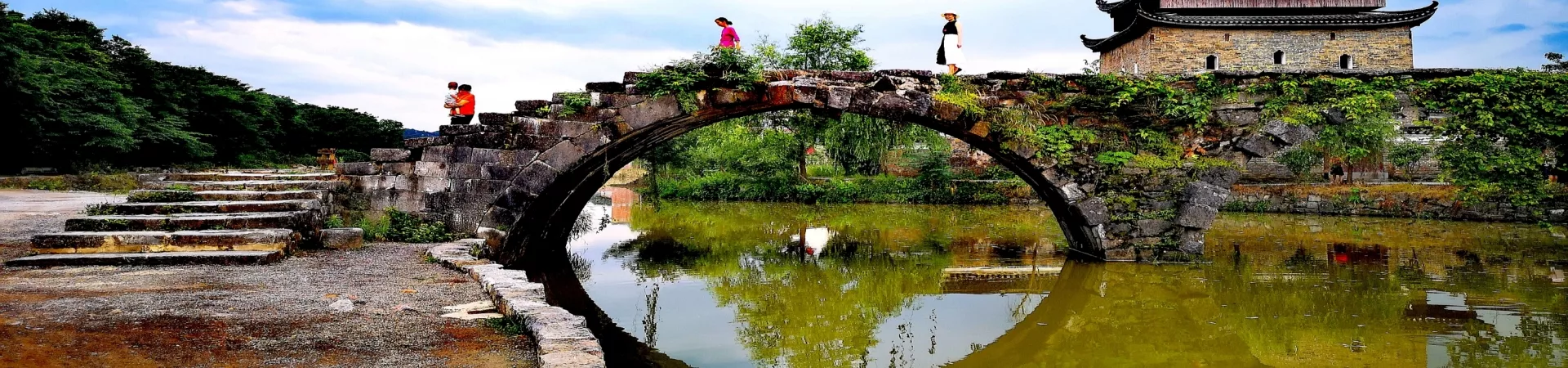
Subtitle: A Journey Through Time in Hunan's Ancient Zhou Clan Village
Introduction: A Living Legacy
Nestled approximately 25 kilometers southwest of Jiangyong County in Hunan Province, the village of Shanggantang offers a rare and profound encounter with China's enduring rural history. More than just a scenic spot, it is a living, breathing community where time seems to have folded upon itself. With a population of 1,865 people residing in 453 households, Shanggantang is remarkably homogeneous; all but seven families share the surname Zhou, tracing their direct lineage back to ancestors who settled here before the Song Dynasty (960-1279 AD). This unbroken continuity of clan and place makes Shanggantang one of the oldest continuously inhabited ancient villages discovered in Hunan, a claim substantiated by over a millennium of whispered stories in its alleyways and etched into its stones.
A Walk Through the Centuries: Architecture and Layout
The village's layout is a textbook example of traditional Chinese geomancy and clan-based planning, harmoniously integrated with the natural landscape. It is strategically positioned between the Yuxi River to the west and a mountain ridge to the east, following the classic principle of "backing onto hills and facing water."
The Ancient Couple's Rock and the Stele Forest At the village's southern entrance, the "Ancient Couple's Rock" (Shougang Shi) stands as a silent, moss-covered sentinel. This massive, split limestone boulder is the village's iconic landmark and symbolic guardian. Nearby, a stele forest preserves a priceless archive of local history. Over 24 meticulously carved stone steles date from the Song to the Qing dynasties, recording everything from moral admonitions and village regulations to poetry and accounts of significant local events. These stones are not mere relics but the literal written memory of the Zhou clan.
The Moon Pond and the Temple of Virtue and Longevity The heart of the village is the serene, crescent-shaped Moon Pond. Reflecting the white-walled, black-tiled houses and the distant mountains, it served both practical purposes for firefighting and irrigation and aesthetic ones, creating a picture-perfect scene of pastoral tranquility. Flanking the pond is the Temple of Virtue and Longevity (Buyi Tang), the ancestral hall of the Zhou clan. This solemn structure was the spiritual and administrative core of the village, where rituals were performed, elders gathered, and clan affairs were deliberated, reinforcing the social bonds that have held the community together for generations.
The Ancient Commercial Street and the Gates Running through the village is a 300-meter-long flagstone path known as the Ancient Commercial Street. Lined with shops that once catered to travelers on the old post road, its worn steps bear witness to centuries of bustling trade and daily life. The village's defensive and symbolic needs are met by its several ancient gates. The most significant is the North Gate (Buqing Men), a sturdy structure that controlled access and, according to local belief, helped channel beneficial qi (energy) into the village according to Feng Shui principles.
The Cultural Tapestry: Traditions and Daily Life
Shanggantang's heritage is not confined to its architecture; it is vibrantly alive in the customs and daily rhythms of its people. The deep-rooted Confucian values of the Zhou clan emphasized education, filial piety, and communal harmony, principles that continue to subtly shape village life.
Clan Rituals and Folk Beliefs While large-scale ancestral worship ceremonies in the Temple of Virtue and Longevity may be less frequent today, respect for ancestors remains a cornerstone of local culture. Folk beliefs are intertwined with the landscape, from the protective power of the Ancient Couple's Rock to various local deities and taboos observed by residents, offering a glimpse into the blend of orthodox Confucianism and grassroots spirituality that characterized historical Chinese rural society.
The Enduring Agricultural Rhythm Despite the passage of time, Shanggantang remains fundamentally an agricultural community. The terraced fields surrounding the village, irrigated by the ancient system connected to the Yuxi River and Moon Pond, still yield crops. Observing villagers tending to their fields or washing vegetables by the water's edge provides an authentic snapshot of a lifestyle that has persisted here for hundreds of years.
Practical Information for Visitors
Admission and Opening Hours Access to Shanggantang village is free of charge, making it an accessible destination for all. The village is open to visitors 24 hours a day, every day of the year. This open-door policy allows for flexibility in planning, whether you wish to catch the soft morning light over the Moon Pond, explore under the midday sun, or experience the quiet ambiance of the ancient streets at dusk.
Suggested Duration and Contact To fully appreciate the architecture, history, and atmosphere of Shanggantang, a visit of 1 to 3 hours is recommended. This allows sufficient time for a leisurely walk through the main landmarks, some quiet contemplation, and perhaps brief interactions with local residents. For any specific inquiries prior to your visit, you may contact the local management at 0746-5811576.
Getting There and Context The village is located about 25 kilometers from Jiangyong County. Visitors typically travel to Jiangyong first, via regional bus or car from larger transport hubs like Yongzhou City, and then take a local taxi or minibus to Shanggantang. Its historical significance is often noted within Hunan province, where it is recognized as one of the earliest ancient settlements, providing a crucial window into the sustained clan-based social structure of southern China.